Algeria
 Egypt
 Libya
 Morocco
 Sudan
 Tunisia
 Benin
 Burkina Faso
 Cabo Verde
 Côte d'Ivoire
 Ghana
 Guinea
 Guinea-Bissau
 Liberia
 Mali
 Mauritania
 Niger
 Nigeria
 Senegal
 Sierra Leone
 The Gambia
 Togo
 Cameroon
 Central African Republic
 Chad
 DR Congo
 Equatorial Guinea
 Gabon
 Republic of the Congo
 São Tomé and Príncipe
 Burundi
 Comoros
 Djibouti
 Eritrea
 Ethiopia
 Kenya
 Madagascar
 Malawi
 Mauritius
 Mozambique
 Rwanda
 Seychelles
 Somalia
 South Sudan
 Tanzania
 Uganda
 Angola
 Botswana
 Eswatini
 Lesotho
 Namibia
 Zambia
 Zimbabwe
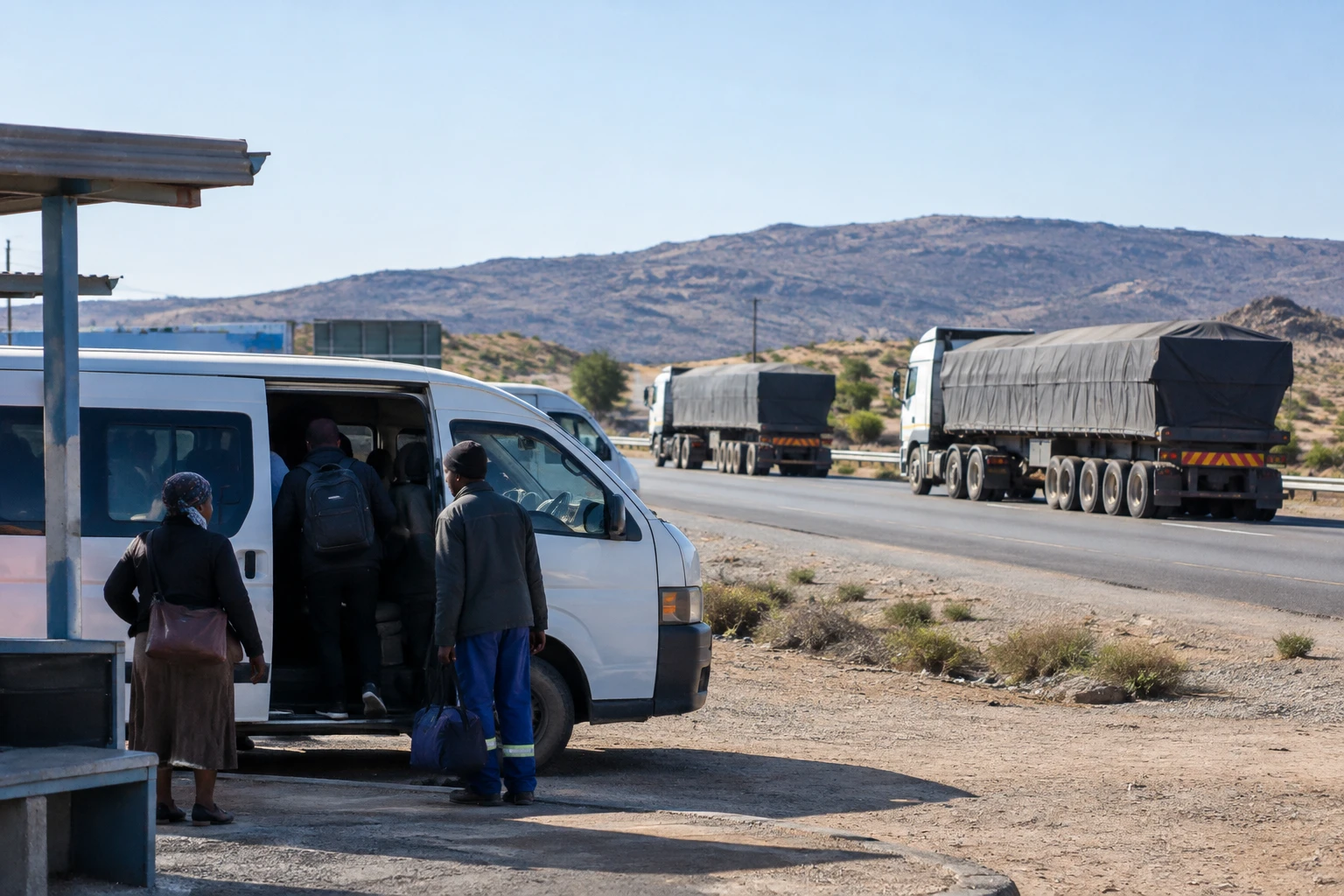
In the Northern Cape province, a former mining site could soon produce spodumene concentrate, an ore used to extract lithium. For South Africa, the stakes go beyond a few additional tonnes: the challenge is to turn geological potential into a sustainable activity, backed by data and financing and with a share of value added locally.
A project still to be tested against the numbers
On 7 October 2026, Lithium Africa announced that it intended to move the Springbok project towards first production in the second half of 2027. The company is targeting spodumene concentrate at Norrabees, a former mine in the Northern Cape. This is a target announced by the company, not production that is already assured.
The timetable still depends on key steps. An initial resource estimate and a preliminary economic assessment are expected in the first half of 2027. These studies are intended to clarify recoverable volumes, costs and the project’s viability. The necessary financing and permits also remain to be secured.
Springbok plans initially to process ore stockpiles at the site, then extract additional ore. The mining permit covers five hectares, while the associated exploration area extends over 1,675 km². Revenue from any future production could help fund this exploration, but the scale of that contribution has not yet been established.
This caution is essential: the company does not yet have an updated resource estimate in line with the announced milestones, or a study demonstrating that mining would be profitable. The results of technical work will therefore carry as much weight as the target date in assessing the project’s real prospects.
An existing activity, but one that is difficult to compare
South Africa is not without lithium ore production. Official data cited in an African Development Bank study show that 416,131 tonnes of ore were extracted in 2023 and about 409,643 tonnes exported. These volumes refer to ore, not the lithium it contains, so they are not directly comparable with figures for contained lithium production published for other countries.
The distinction matters. It partly explains why South Africa’s position in the sector appears modest or is poorly documented in international comparisons. The Blesberg project, developed by Marula Mining, and the historic Norrabees site are among the assets associated with the country’s mining prospects. Their presence, however, guarantees neither regular production nor a complete industrial value chain.
Across the continent, growth in supply in 2025 was driven mainly by Zimbabwe and Mali, according to Benchmark Mineral Intelligence. This expansion is taking place in a region where projects and investment are advancing rapidly. Springbok does not immediately put South Africa on the same footing as these producers; rather, it is a test of the country’s ability to restart sites and turn geological indications into economically viable operations.
Mining strategy faces the challenge of processing
The South African government approved its Critical Minerals and Metals Strategy in May 2025. Lithium is classified in it as a resource of moderate importance to the country. The document calls for exploration to be strengthened, particularly to renew mining projects as some operations reach the end of their lives.
The strategy goes beyond the discovery of deposits. It also emphasises local processing, research, skills and more resilient value chains. Pretoria’s challenge, therefore, is not to measure success solely by the tonnage exported. The question is also whether mining activity can support jobs, suppliers and industrial capacity locally.
These benefits are not automatic. A mining project’s initial spending and direct jobs may be concentrated around the site and benefit specialist companies. Wider gains depend in particular on local procurement, training, infrastructure and ore processing. Without these links, increased production may mainly lead to higher shipments of raw materials.
Springbok is in the Northern Cape, far from the most densely populated economic centres. Local effects will therefore also depend on requirements for water, energy, roads and labour, as well as benefits for nearby communities. The information available does not yet detail these aspects. They will need to be assessed alongside the project’s financial viability and permits.
Regional significance will depend on the value created
In southern Africa, Springbok is being developed in a region where lithium is gaining importance, particularly in Zimbabwe. The Southern African Development Community, or SADC, brings together the region’s states and provides a potential framework for economic cooperation. But the presence of several neighbouring projects does not in itself create a regional value chain: that requires infrastructure, compatible rules and accessible processing capacity.
The debate is continental. Several countries are seeking to derive greater benefit from their minerals, beyond extraction. For South Africa, Lithium Africa’s announcement opens up a possibility, not a guarantee. The next concrete milestone will be the publication, expected in the first half of 2027, of studies on the project’s resources and economics. They will make it possible to assess whether Springbok can contribute sustainably to national supply, and under what conditions the benefits can extend beyond the mine site.