Algeria
 Egypt
 Libya
 Morocco
 Sudan
 Tunisia
 Benin
 Burkina Faso
 Cabo Verde
 Côte d'Ivoire
 Ghana
 Guinea
 Guinea-Bissau
 Liberia
 Mali
 Mauritania
 Niger
 Nigeria
 Senegal
 Sierra Leone
 The Gambia
 Togo
 Cameroon
 Central African Republic
 Chad
 DR Congo
 Equatorial Guinea
 Gabon
 Republic of the Congo
 São Tomé and Príncipe
 Burundi
 Comoros
 Djibouti
 Eritrea
 Ethiopia
 Kenya
 Madagascar
 Malawi
 Mauritius
 Mozambique
 Rwanda
 Seychelles
 Somalia
 South Sudan
 Uganda
 Angola
 Botswana
 Eswatini
 Lesotho
 Namibia
 South Africa
 Zambia
 Zimbabwe
When AI becomes a matter of state
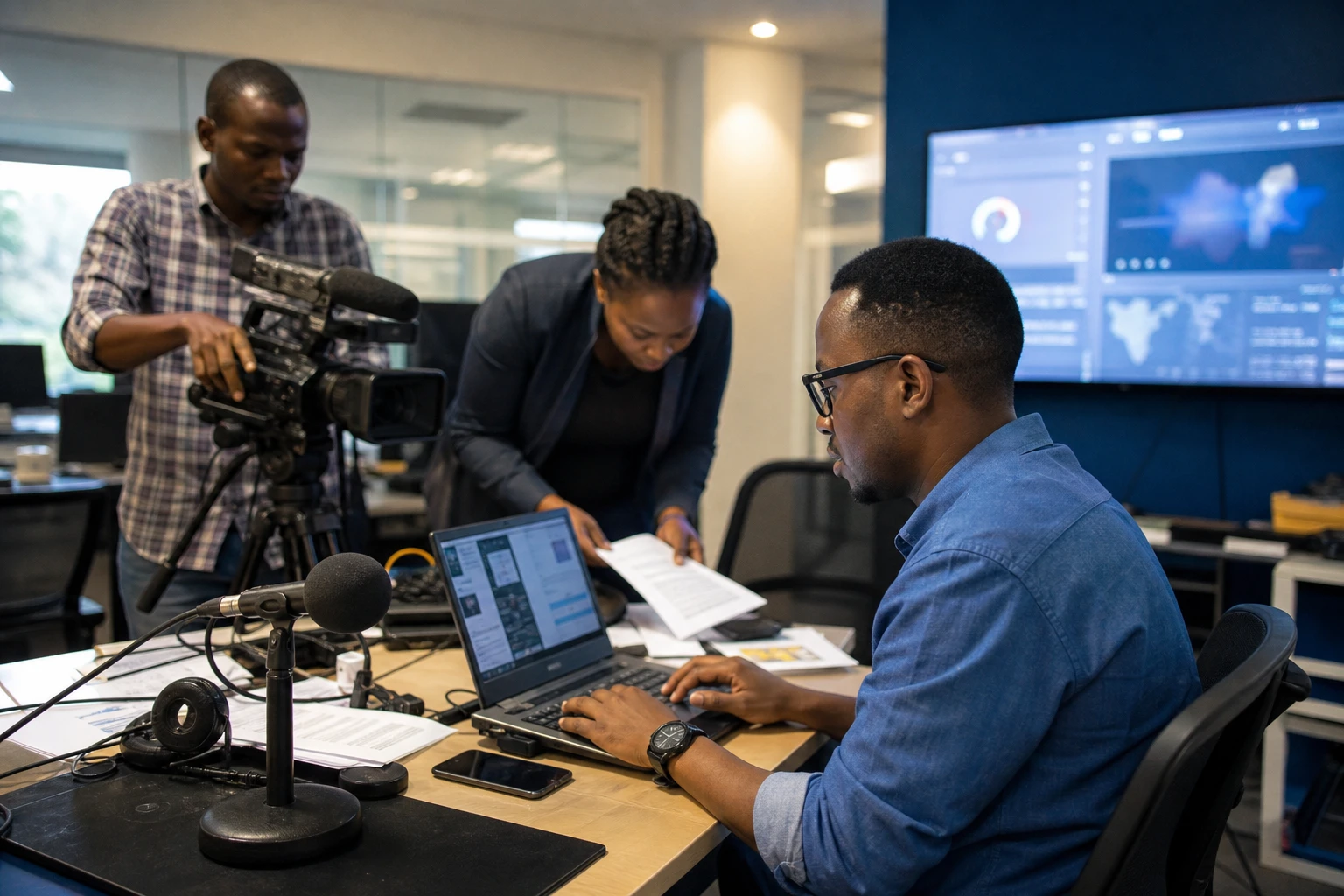
In Dar es Salaam and Arusha, the debate is no longer just about cables, telecoms towers or internet packages. The real question is now whether Tanzanians can design, train and govern their own digital tools, rather than remain mere consumers of technologies developed elsewhere. In this race, higher education, data and skills are becoming levers of sovereignty as well as tools for growth.
It is against this backdrop that Seoul has approved a $170 million loan to finance a Tanzanian institute dedicated to artificial intelligence, robotics, data analysis and the Internet of Things. The project is part of South Korea’s Economic Development Cooperation Fund (EDCF), a public concessional-loan facility for developing countries.
Tanzania at the heart of the digital regionalisation drive
The choice of Tanzania is no accident. The country, whose capital is Dodoma, has for several years pursued a modernisation strategy that puts digital technology at the service of administration, education and investment. On its official portal, the Tanzanian government refers to a digital transformation framework and the Dira ya Taifa ya Maendeleo 2050, adopted in 2025 to guide the country’s long-term development.
This direction is also part of a broader regional movement. East Africa, driven by the East African Community (EAC), is accelerating the harmonisation of data flows, e-commerce and digital public services. Meetings held in Dar es Salaam and Arusha in 2026 specifically highlighted secure data flows and the interoperability of systems as conditions for a credible regional digital economy.
In this region, an AI school would be more than just another building. It would become an anchor for training engineers, structuring a start-up ecosystem, strengthening public administrations and preparing cross-border applications in health, logistics, payments and education. The Tanzanian project therefore concerns the economic capital as much as inland cities, where training needs remain high.
What the South Korean financing provides
The loan approved in Seoul covers far more than a classroom or laboratory. The project includes the construction of a campus, teaching facilities, practical training equipment and ICT networks. South Korean authorities cite AI laboratories, IoT systems, robotics equipment, drones and 3D printers. The future institute is also to have suitable computing capacity, including AI processors, HBM memory and high-speed connectivity.
Seoul also wants to export its own educational model. Korean authorities say their AI technologies and training methods will be applied at the institute, particularly in its laboratories, the management of the institution and the upskilling of teaching staff. This is important: the aim is not just to fund equipment, but to establish a complete chain of expertise, from the curriculum to maintenance.
The financing is described as a tied loan. In practice, this limits contracts to South Korean companies. The mechanism offers commercial opportunities for Korean AI, edtech and construction firms, while giving Seoul an entry point into an African market that is still taking shape. This commercial aspect does not negate the cooperation dimension, but makes it more apparent.
Training, technology transfer and governance
For Tanzania, the decisive question will be whether the loan is turned into lasting capacity. Training students matters, of course. But a project of this kind will achieve its full value only if it produces researchers, teachers, engineers and businesses able to develop local solutions that serve the Tanzanian and regional markets. Without that, the institute risks becoming a costly showcase rather than an industrial engine.
Governance is an equally sensitive issue. Who controls the servers, training data, computing platforms and rules governing access to the equipment? Who decides on maintenance, updates and further training? These choices will determine the project’s real value for the Tanzanian state, local universities and businesses looking to collaborate with it.
The project also comes as Tanzania seeks to attract more investment in next-generation industries. The government has outlined a development goal for 2050, involving a move up the value chain and better integration into the regional market. In this context, artificial intelligence is not an abstract issue. It affects agricultural productivity, urban management, public administrations, transport and the competitiveness of small businesses.
A battle for influence in digital Africa
South Korea’s move is part of a competition already visible across the continent. China has gained an early lead in telecommunications and several digital infrastructure projects. The United States is strengthening its presence in AI and data. Gulf countries are also investing in data centres and platforms. In this landscape, Seoul is pursuing a clear approach: combining development, training and commercial opportunity.
For East Africa, the stakes extend beyond a single project. If the Tanzanian institute succeeds, it could serve as a model for other countries in the region, as the EAC pushes digital integration and secure data exchange. If, by contrast, the transfer of skills remains limited, the region will continue to depend on equipment, software and standards designed elsewhere.
The message is clear: artificial intelligence is no longer just a conference topic or a technological promise. In Tanzania, it is becoming an arena for public policy, economic competition and strategic choices. For Dodoma, the challenge is to turn this money into local capacity. For Seoul, it is about opening a lasting gateway to East Africa. For the region, it is a practical test of digital sovereignty.