Algeria
 Egypt
 Libya
 Morocco
 Sudan
 Tunisia
 Benin
 Burkina Faso
 Cabo Verde
 Côte d'Ivoire
 Ghana
 Guinea
 Guinea-Bissau
 Liberia
 Mali
 Mauritania
 Niger
 Nigeria
 Senegal
 Sierra Leone
 The Gambia
 Togo
 Cameroon
 Central African Republic
 Chad
 DR Congo
 Equatorial Guinea
 Gabon
 Republic of the Congo
 São Tomé and Príncipe
 Burundi
 Comoros
 Djibouti
 Eritrea
 Ethiopia
 Kenya
 Madagascar
 Malawi
 Mauritius
 Mozambique
 Rwanda
 Seychelles
 Somalia
 South Sudan
 Tanzania
 Uganda
 Angola
 Botswana
 Eswatini
 Lesotho
 Namibia
 Zambia
 Zimbabwe
A new stand-off extending beyond visas
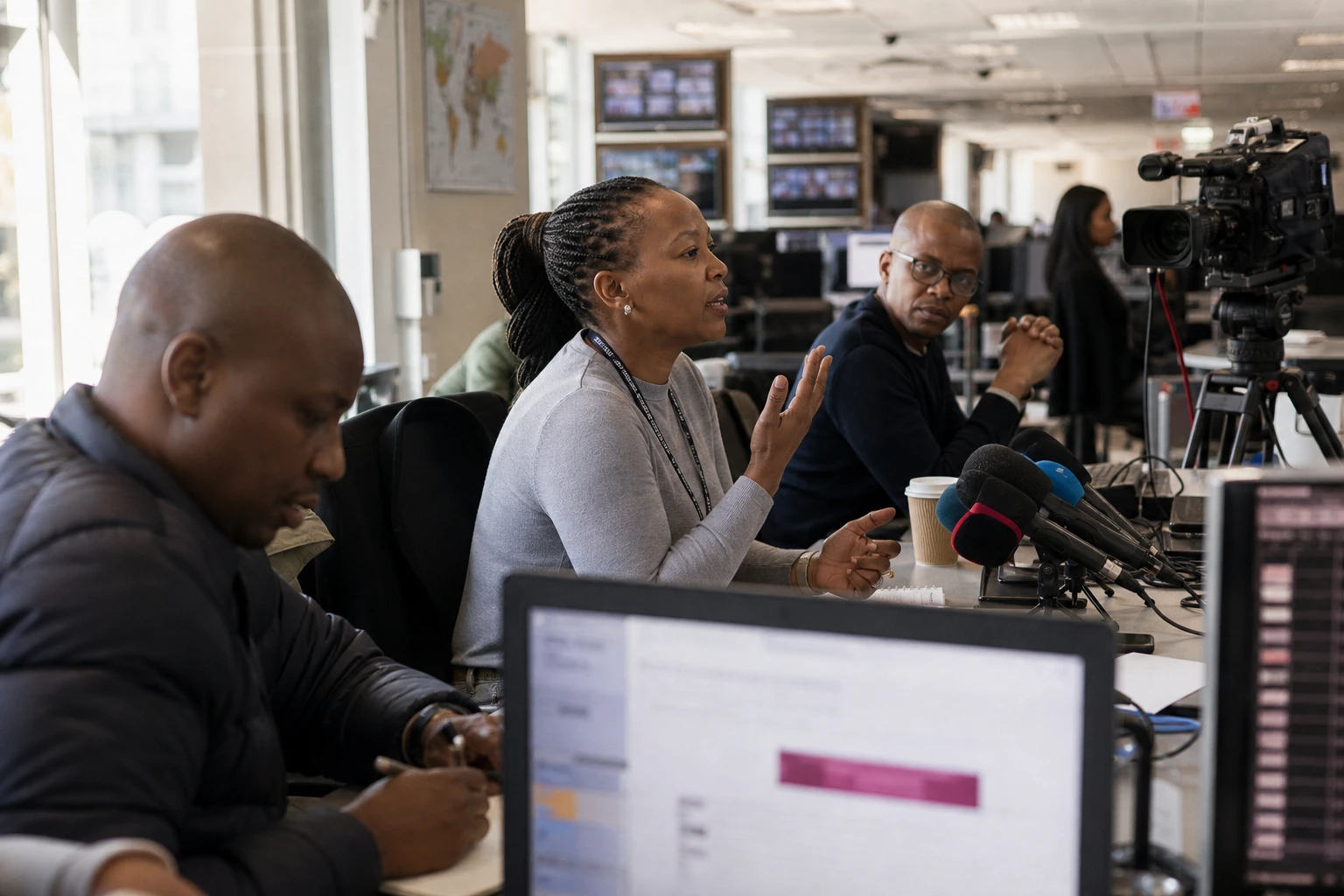
In Pretoria, relations with Washington are now playing out on two fronts: diplomatic language and the battle over the narrative. On one side, South African authorities defend their social redress policies, rooted in apartheid and governed by the Constitution. On the other, the US administration presents these same policies as a form of racial discrimination targeting minorities, particularly white Afrikaners. The result is clear: a trade and migration dispute has become a test of political sovereignty.
This issue has not emerged in a vacuum. Since the beginning of 2026, Washington has already taken a tougher line towards South Africa, reducing access for some Afrikaners to the refugee resettlement programme and stepping up pressure on Pretoria amid an already frosty diplomatic climate. At the same time, South African authorities have continued to reform their own migration system, notably through digitisation measures and the processing of backlogs, demonstrating that the country is seeking to take control of its administrative borders as well as its image abroad.
What Washington announced, and what Pretoria disputes
On Tuesday 15 September, US Secretary of State Marco Rubio announced a new visa restriction policy targeting foreign nationals in South Africa. The text targets people “responsible for or complicit in” laws or policies allowing expropriations without compensation, race-based discrimination and, according to Washington, incitement to imminent violence against ethnic or racial minorities. The US administration says it is acting out of what it considers to be persistent concern about Afrikaners and other minorities.
The announcement is part of a longer sequence. Since returning to the White House, Donald Trump has repeatedly criticised Pretoria, going so far as to denounce affirmative action programmes introduced to address the lasting effects of racial segregation. The US stance has been accompanied by other decisions: cuts to aid, priority for the admission of some Afrikaners as refugees, and now targeted visa restrictions. South Africa sees things very differently: the government rejects the idea of institutionalised racial persecution and points out that the country remains marked by the inequalities created by apartheid, without this legitimising current discriminatory policies.
The most sensitive point of friction remains the land question. US authorities refer to “land seizures without compensation”, a phrase that speaks to the South African debate over expropriation in the public interest. In South Africa, this issue is politically explosive because it touches on land distribution, the memory of apartheid and the still-unfulfilled promise of historical redress. But a domestic debate is one thing; an accusation of state discrimination made from Washington is another. The two are not the same.
Why the decision matters for the economy, diplomacy and the region
For South Africa, the risk is not merely symbolic. Relations with the United States matter for exports, investment and political cooperation. In a country where growth remains fragile and the government is already focusing on reforms to visas, borders and public administration, any further tightening adds another layer of uncertainty. The private sector is also following the matter closely, as diplomatic tensions can quickly lead to frictions affecting business travel, academic exchanges and supply chains.
The US message also has domestic repercussions in South Africa. It rekindles a sensitive fault line between debates over redressing past injustices and narratives of racial victimhood that sometimes circulate far beyond the country. The South African government, for its part, stresses another point: economic and social difficulties affect the entire population, regardless of race or skin colour. This formulation matters because it aims to defuse the idea of a binary conflict between communities and to place the debate in the broader context of post-apartheid transformation.
At regional level, the issue also resonates across Southern Africa. South Africa remains the SADC’s main economic hub, and its diplomatic choices weigh on regional balances. When Pretoria clashes with Washington, the question is not merely bilateral: it concerns how a major African economy negotiates with an external power without allowing other capitals to speak on its behalf. In a region where migration policies, labour flows and tensions over citizenship remain highly sensitive, this issue becomes a test of sovereignty and institutional cohesion.
The timing adds another layer of significance. South Africa has recently hosted or prepared for several regional and sectoral meetings, including the SADC summit in Durban and meetings on border management and migration reform. In this context, the new US offensive leaves Pretoria facing a delicate balancing act: respond firmly without closing the door to dialogue, while preventing the conflict from fuelling domestic identity-based mobilisation. This is where the continental stakes lie. For the African Union and SADC alike, the issue is a reminder that an African state can be called upon to defend itself over its domestic policies, its place in the region and its relationship with the great powers.