Algeria
 Egypt
 Libya
 Morocco
 Sudan
 Tunisia
 Benin
 Burkina Faso
 Cabo Verde
 Côte d'Ivoire
 Ghana
 Guinea
 Guinea-Bissau
 Liberia
 Mali
 Mauritania
 Niger
 Nigeria
 Senegal
 Sierra Leone
 The Gambia
 Togo
 Cameroon
 Central African Republic
 Chad
 DR Congo
 Equatorial Guinea
 Gabon
 Republic of the Congo
 São Tomé and Príncipe
 Burundi
 Comoros
 Djibouti
 Eritrea
 Ethiopia
 Kenya
 Madagascar
 Malawi
 Mauritius
 Mozambique
 Rwanda
 Seychelles
 Somalia
 South Sudan
 Tanzania
 Uganda
 Angola
 Botswana
 Eswatini
 Lesotho
 Namibia
 Zambia
 Zimbabwe
A case that goes beyond a simple criminal matter
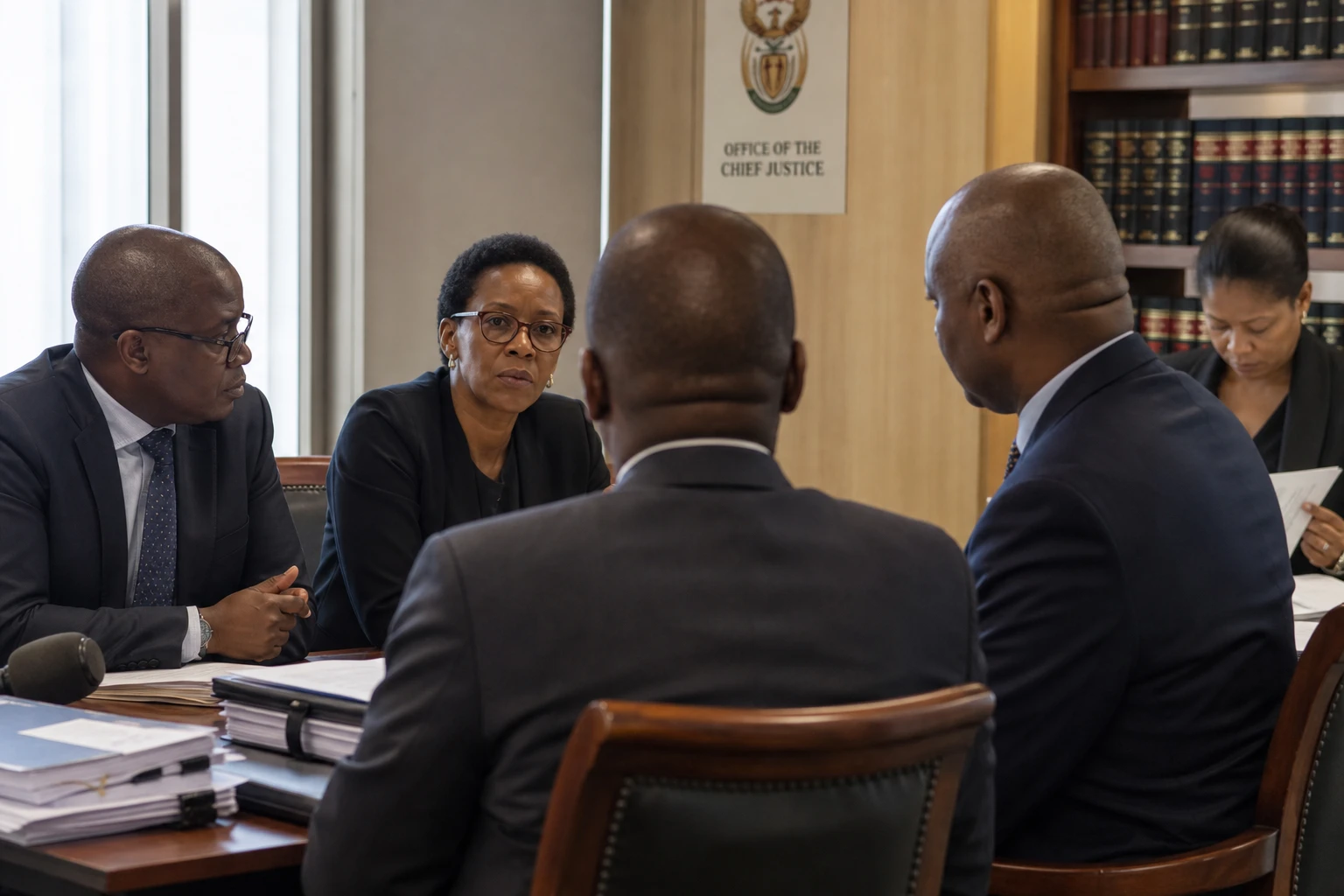
In Johannesburg, a man expected to face extradition proceedings first shifted the debate to a broader question: how does a state deal with a foreign fugitive when several legal proceedings overlap? In this case, South Africa’s response is being shaped in Pretoria, the seat of the justice ministry, but is also playing out in the corridors of the Johannesburg court.
The case concerns Ndodana Mkhanyisi Tshuma, described by the authorities as a British national of Zimbabwean origin, who is wanted in the United Kingdom in an investigation into the deaths of his wife and their two daughters. The victims, Nothabo Zandile Tshuma, 42, Natalie, 15, and Nala, 5, were found dead in a house near Bedford, in south-east England. Initial findings point to head injuries.
The legal proceedings in South Africa
In South Africa, the man was arrested on 10 July 2026 in Kensington, Johannesburg, in an operation conducted with Interpol and the South African police. The authorities then initiated two separate proceedings: a local case involving unlawful possession of a firearm and ammunition, and extradition proceedings to the United Kingdom.
On 7 September 2026, the South African prosecution said it was ready to proceed, having received the documents requested by London. But the defence asked for more time to consult its client. As a result, the two cases were postponed until 8 and 10 September 2026. This delay is not insignificant. In extradition cases, the South African courts must first decide whether a person is extraditable, before a final order is made by the minister of justice and constitutional development.
In the local proceedings, Tshuma pleaded guilty to unlawful possession of a firearm, unlawful possession of ammunition and an immigration offence. The charges are linked to his arrest in Johannesburg, where he was found carrying a pistol and cartridges. The South African authorities also referred to a possible plan to take his own life, without establishing it as a definitive fact beyond their statements.
Why Pretoria matters in this case
The case highlights Pretoria’s central role in international judicial cooperation. South Africa’s Department of Justice and Constitutional Development is the central authority for requests for mutual legal assistance and extradition. South African law provides for requests from foreign states to pass through this channel, followed by review by a magistrate and, ultimately, the executive decision required under the legal framework.
For South Africa, the stakes go beyond this one name. The country is seeking to show that it is neither a grey area nor a refuge for fugitives. The national police made that message clear at the time of the arrest. At the same time, the courts must apply the law strictly, because a poorly prepared extradition can be challenged and delayed.
The situation also sheds light on the pressures facing South Africa’s criminal justice system. On the one hand, the public expects swift responses to violent crime and illegal firearms, in a country where violence remains a major public concern. On the other, the courts must handle complex, often cross-border cases, involving documents from the United Kingdom, checks on immigration status and separate hearings.
Regional perspective and continental significance
The case also resonates across southern Africa. The man in question is described as being of Zimbabwean origin, but was arrested in South Africa after leaving the United Kingdom. In the SADC region, the movement of people, transfers of case files and police cooperation increasingly rely on mechanisms involving Interpol, justice ministries and national police services.
The Tshuma case also illustrates an often underestimated reality across the continent: transnational justice is not just about arresting a suspect. Evidence must then be secured, the foreign request formalised, defence rights respected and the case kept from becoming bogged down in adjournments. That is precisely what the September 2026 hearing schedule demonstrates.
Across Africa, this kind of case matters because it bears on the credibility of states in tackling cross-border crime. It also shows that judicial cooperation between African countries and external partners works only if national institutions, from Pretoria to Johannesburg, uphold two requirements together: effectiveness in combating impunity and procedural rigour. In this case, South Africa still has to demonstrate that it can strike this balance.