Algeria
 Egypt
 Libya
 Morocco
 Sudan
 Tunisia
 Benin
 Burkina Faso
 Cabo Verde
 Côte d'Ivoire
 Ghana
 Guinea
 Guinea-Bissau
 Liberia
 Mali
 Mauritania
 Niger
 Nigeria
 Senegal
 Sierra Leone
 The Gambia
 Togo
 Cameroon
 Central African Republic
 Chad
 DR Congo
 Equatorial Guinea
 Gabon
 Republic of the Congo
 São Tomé and Príncipe
 Burundi
 Comoros
 Djibouti
 Eritrea
 Ethiopia
 Kenya
 Madagascar
 Malawi
 Mauritius
 Mozambique
 Rwanda
 Seychelles
 Somalia
 South Sudan
 Tanzania
 Uganda
 Angola
 Botswana
 Eswatini
 Lesotho
 Namibia
 Zambia
 Zimbabwe
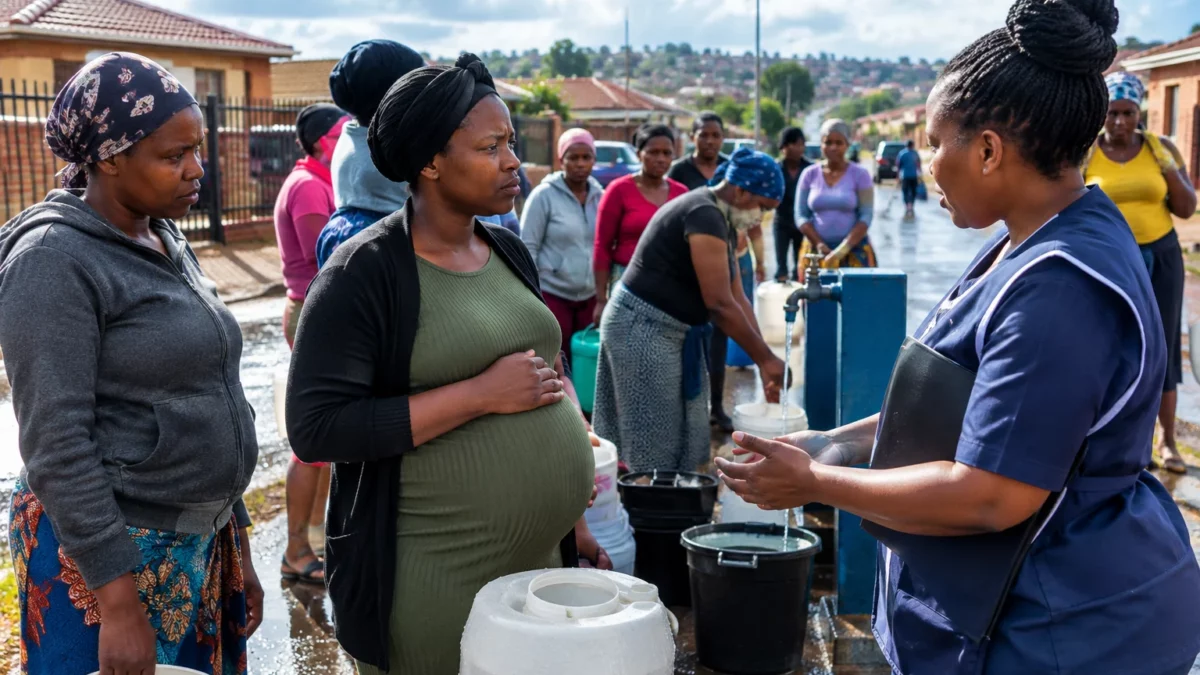
In Mamelodi, in Gauteng province, the heat does not stop at the doors of health centres. Pregnant women feel it on journeys, in homes that retain heat and in sometimes difficult access to water or electricity. The effects of a hot spell therefore depend as much on living conditions as on the thermometer.
Symptoms and medical observations in Mamelodi
At the antenatal unit at Stanza Bopape, patients report dizziness, swollen feet and difficulty getting around when temperatures rise. Health workers say they have observed more premature births than in previous summers. This local observation is concerning, but on its own it is not statistical evidence that the heat caused these births.
Health workers also warn that dehydration and heat stress can put maternal health under strain. A reduction in foetal movements warrants prompt attention. The advice given to patients is practical: drink regularly, monitor these movements and contact a health professional if there are signs of exhaustion or an unusual change.
Heat can weigh more heavily in neighbourhoods where homes offer little protection from high temperatures and running water or electricity is not always available. Without reliable access to water, staying hydrated is more difficult. Without ventilation or a fan, it is also harder to cool the home. Journeys to appointments, often arduous on hot days, can add to the burden.
A scientific signal, not an individual prediction
A review of studies cited by researchers at the University of the Witwatersrand links each one-degree Celsius rise to a 4% increase in the risk of premature birth. This is an association observed across the research reviewed, not a certainty for every pregnancy. Nor does the figure mean that an individual’s risk automatically rises by four percentage points.
This distinction matters. The studies cover different populations, periods and methods. Heat may be one factor among others, alongside health status, housing conditions and access to care. The observations at Stanza Bopape offer a glimpse of conditions on the ground; on their own, they cannot quantify the share of premature births attributable to temperatures.
South African research is seeking to clarify these mechanisms. The University of the Witwatersrand’s Bio-HEAT project is following 200 pregnant women in a disadvantaged urban community to study heat exposure and its possible links to maternal and infant health. Meanwhile, the HAPI programme, which focuses on adapting care for pregnant women and infants, is examining practical responses at household, facility and community level. Preliminary findings presented by HAPI point to high indoor temperatures in some homes in Tshwane; these should not be confused with measurements specific to every home in Mamelodi.
Vulnerability also depends on infrastructure
The consequences are not evenly distributed. Someone with a better-insulated home, water at home and a means of transport can more easily find somewhere cool and reach a health centre. By contrast, women living in informal settlements may face prolonged exposure, limited resources and greater difficulty accessing appointments. The difference is therefore not just a matter of individual behaviour: it also reflects infrastructure and how services are organised.
This reality calls for medical advice to be complemented by collective measures. Drinking water, shade in waiting areas, ventilation in facilities and better-protected homes can reduce exposure. HAPI is studying several options, including roof insulation, reflective paint, water points and training for health workers. These are research and adaptation options, not proof that each has already reduced obstetric complications.
Health authorities also have a role in preparing for extreme heat: issuing clear guidance, adapting care for patients and ensuring services have water and less exposed spaces. Interventions must take local realities into account. A fan, for example, does not meet the same need when power cuts are frequent or a home stays hot all night.
A South African issue within a regional trend
In Pretoria, South Africa’s capital, health and climate preparedness policies are set at national level. But the issue extends beyond the country’s borders. Southern Africa, where several states co-operate through the Southern African Development Community (SADC), must also contend with the health effects of extreme heat. This regional co-operation can facilitate the sharing of data and practices, without erasing differences between cities, rural areas and national health systems.
For pregnant women in Mamelodi, the immediate question remains access to appropriate care on hot days. For researchers and public officials, the challenge is to measure exposure more accurately and distinguish statistical association from cause and effect. Further data from South Africa’s monitoring and adaptation programmes will help clarify which protections work, for whom and under what conditions.