
 Algeria
 Egypt
 Libya
 Morocco
 Sudan
 Tunisia
 Benin
 Burkina Faso
 Cabo Verde
 Côte d'Ivoire
 Ghana
 Guinea
 Guinea-Bissau
 Liberia
 Mali
 Mauritania
 Niger
 Nigeria
 Senegal
 Sierra Leone
 The Gambia
 Togo
 Cameroon
 Central African Republic
 Chad
 DR Congo
 Equatorial Guinea
 Gabon
 Republic of the Congo
 São Tomé and Príncipe
 Burundi
 Comoros
 Djibouti
 Eritrea
 Ethiopia
 Kenya
 Madagascar
 Malawi
 Mauritius
 Mozambique
 Rwanda
 Seychelles
 Somalia
 South Sudan
 Tanzania
 Uganda
 Angola
 Botswana
 Eswatini
 Lesotho
 Namibia
 Zambia
 Zimbabwe
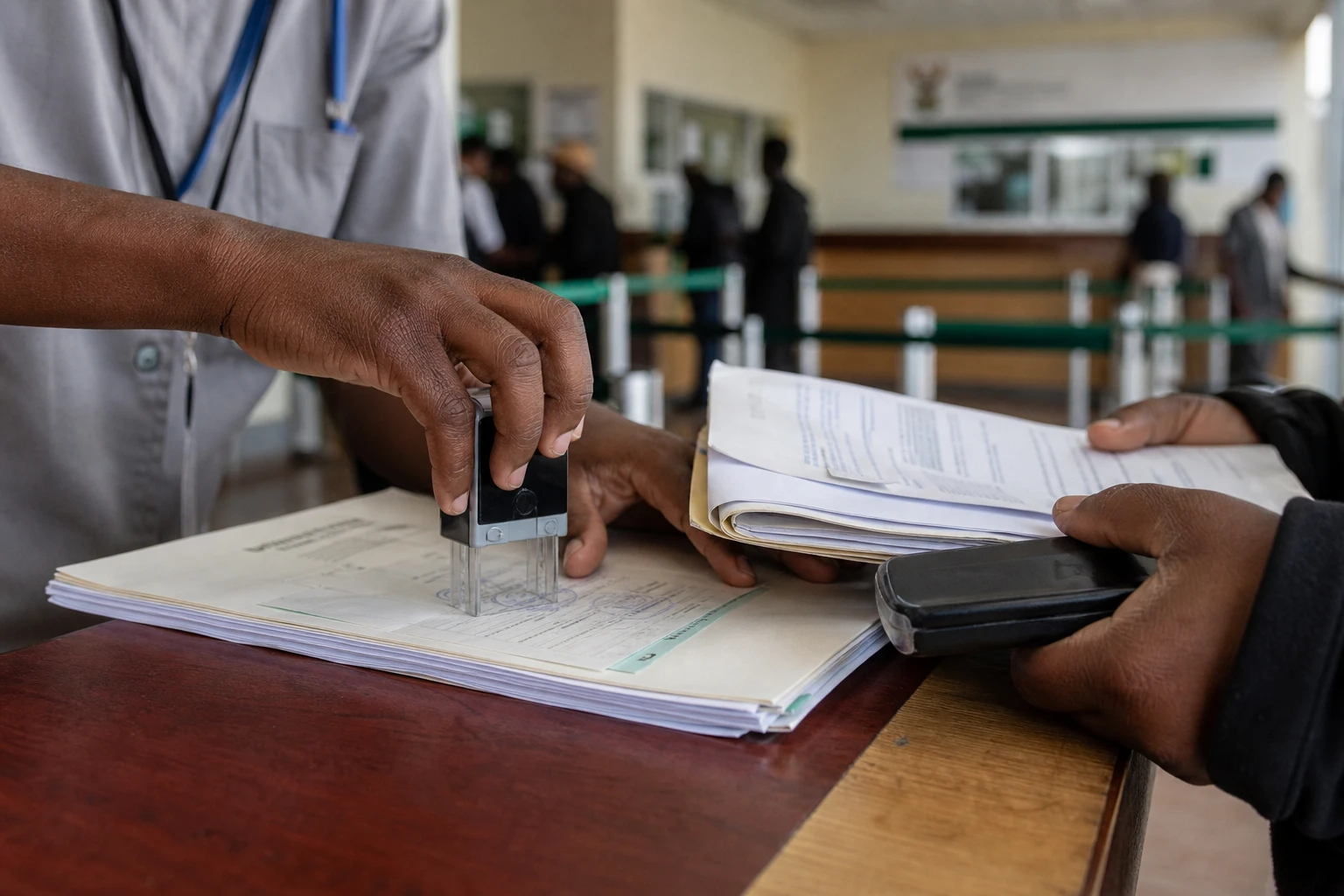
In Bellville, migration spills onto the streets
In Cape Town, a few dozen demonstrators brought migration back to the centre of local debate in a neighbourhood where many foreign nationals live and work. The message is familiar: demanding more checks, more papers and more deportations. But behind the slogans, it is above all social anxiety that is being expressed, in a city where the informal economy, local businesses and housing are already competing for space under pressure.
The demonstration comes in a country that now treats migration as a public security issue, but also as a question of national cohesion. In early June 2026, the government in Pretoria launched a five-pronged response: controlling irregular entries, combating fraud, strengthening laws, targeted inspections of employers and cooperation with African countries. The South African government says it wants to act within the framework of the Constitution and regional commitments, while ruling out violence and vigilante groups.
The location is no coincidence. Bellville, in the Cape Town metropolitan area, is a densely commercial district, with a strong presence of street businesses and communities from elsewhere on the continent. In neighbourhoods like this, the slightest crisis of confidence can quickly turn into disputes over permits, rents, selling spaces or access to opportunities. Protesters say they are defending South Africans; foreign traders, for their part, often see these marches as a direct threat to their safety and livelihoods.
Pretoria wants to move the debate to the continental level
The heart of the issue, however, lies beyond Cape Town. Pretoria has called for an African debate on migration, saying continental dialogue has become urgent. The official reasoning is clear: migration does not stop at a single state’s administrative borders. It affects work, security, rights, public services and relations between neighbours. The South African government therefore wants to frame the crisis within the African Union and SADC, the Southern African Development Community.
This approach fits into an existing African framework. In 2018, the African Union adopted a revised migration policy framework for the period 2018-2030. The document serves as a reference for member states and regional economic communities. It links migration to development, regional integration, labour mobility, the protection of rights and the production of reliable data. In 2026, the AU also published a mid-term assessment of the policy, a sign that the issue is no longer marginal to the continental agenda.
In this context, South Africa’s call is not an isolated one. Migration regularly returns to the agenda at SADC and African Union meetings, as well as in bilateral exchanges between states. This time, the difference lies in domestic pressure. South Africa is not only a transit country; it is also a major destination for workers, small traders, asylum seekers and families from other African countries. This attraction fuels the urban economy. It also feeds tensions when employment contracts and public services appear to be overwhelmed.
Figures to treat with caution
Recent weeks have seen voluntary expulsions, organised departures and returns under pressure. The South African government says that over the past year, the Border Management Authority intercepted more than 450,000 people trying to enter the country illegally. The same authority said in early July that more than 45,000 undocumented migrants had been processed and removed from the country since the presidential plan was announced. A few days later, SABC News reported that the total had risen to more than 53,000 cases of repatriation or deportation. These figures reflect the scale of the ongoing campaign, but they do not tell the whole story of actual flows or departures prompted by fear.
On the ground, casualty figures remain sensitive. South Africa’s Department of Home Affairs has acknowledged several deaths in recent violence, while some foreign governments believe the number of victims could be higher. Here, too, caution is needed. In this type of crisis, victim lists, police figures and consular accounts do not always immediately match. This discrepancy fuels mistrust, rumours and diplomatic escalation. The case of Ghanaian and Nigerian nationals, who have called for the issue to be addressed at AU level, clearly shows that the South African crisis has already crossed national borders.
The South African government, for its part, insists on walking a tightrope: enforcing the law without allowing tensions to slide into a hunt for foreigners. In its statement of 26 June, it said violence, hatred and intimidation have no place in democratic debate. It also said that South Africa continues to be shaped by migration, particularly from the SADC region. This reminder is not merely symbolic. It says that a country reliant on labour, cross-border trade and regional ties cannot treat its neighbours as a mere security variable.
What this episode says about southern Africa
Across the region, the South African case is acting as a revealer. On one hand, states want better control over their borders, labour markets and documentation systems. On the other, they know that southern African economies also depend on mobility: small traders, artisans, seasonal workers, students, transport operators and cross-border families. Closing the space entirely would be economically costly. Allowing mistrust to take hold is just as costly. That is why existing African tools, such as the AU migration framework, are becoming more important. They provide a common language. They remind us that migration is governed, not resolved through fear.
For South Africa, this episode also presents a domestic political test. Pretoria must respond to concerns in poorer neighbourhoods without normalising hostility towards foreigners. It must show that it controls its borders without undermining its continental commitments. And it must convince SADC and the African Union that debate on migration can produce more than routine communiqués: shared data, clear rules, cooperation mechanisms and, above all, a common response to xenophobia. In the coming weeks, this is where the main challenge will lie: not in the size of a demonstration in Cape Town, but in the country’s ability to prevent local anger from becoming a regional divide.



