Algeria
 Egypt
 Libya
 Morocco
 Sudan
 Tunisia
 Benin
 Burkina Faso
 Cabo Verde
 Côte d'Ivoire
 Ghana
 Guinea
 Guinea-Bissau
 Liberia
 Mali
 Mauritania
 Niger
 Nigeria
 Senegal
 Sierra Leone
 The Gambia
 Togo
 Cameroon
 Central African Republic
 Chad
 DR Congo
 Equatorial Guinea
 Gabon
 Republic of the Congo
 São Tomé and Príncipe
 Burundi
 Comoros
 Djibouti
 Eritrea
 Ethiopia
 Kenya
 Madagascar
 Malawi
 Mauritius
 Mozambique
 Rwanda
 Seychelles
 South Sudan
 Tanzania
 Uganda
 Angola
 Botswana
 Eswatini
 Lesotho
 Namibia
 South Africa
 Zambia
 Zimbabwe
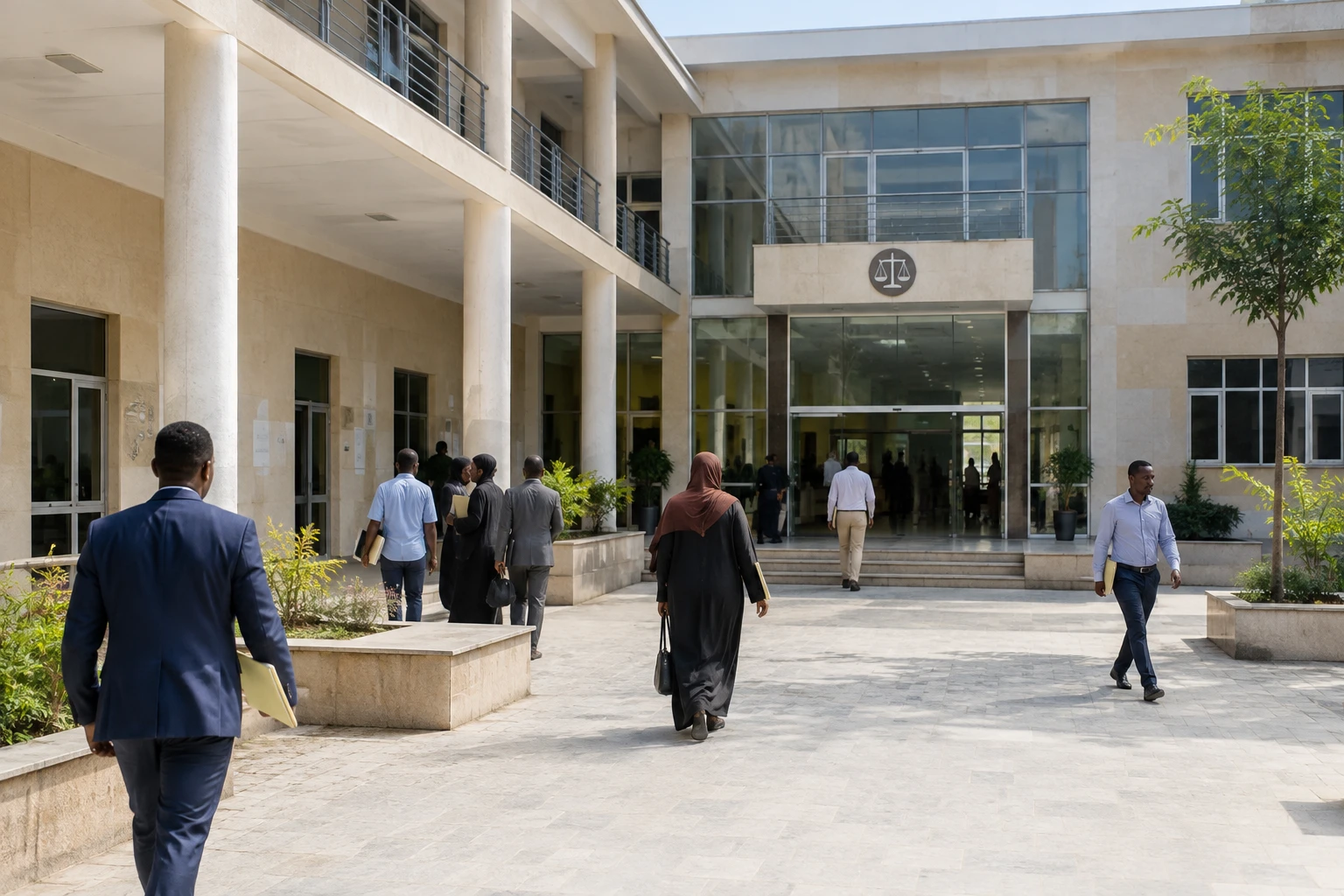
In Somalia, uncertainty over the date of the next elections is compounded by a central question: who can set the length of the presidential term, and through what procedure? The debate became more tense after the removal of the Supreme Court president, announced by the presidency on 4 November 2026.
A contested constitutional reform
The crisis pits the federal government, based in Mogadishu, against opposition figures and several regional leaders. It concerns the Constitution, the electoral timetable and the division of powers between the federal state and the member states of the federation.
In March 2026, the federal parliament adopted constitutional amendments extending federal terms from four to five years. President Hassan Cheikh Mohamoud signed the text on 8 March. The government argues that the new rules allow the institutions currently in office to remain in place until 2027. The opposition disputes their application to terms already under way. It says the presidential term ended on 15 May 2026.
The disagreement goes beyond the length of the term. The amendments form part of a long process to revise the provisional Constitution adopted in 2012. They also affect the organisation of elections and relations between the federal government and the member states. Puntland and Jubaland, in particular, have rejected the process, which they consider insufficiently consultative and likely to strengthen the federal centre.
The Supreme Court at the heart of the standoff
On 4 November, the presidency announced the removal of Supreme Court president Baashe Yusuf Ahmed and the appointment of Ibrahim Idle Suleiman in his place. The reasons given by the presidency concerned the administration of justice. Somali media nevertheless reported that the decision came as the Court was due to hear a case challenging the constitutional amendments. The link between the removal and the court case has not been independently established.
One point calls for caution: as of 5 November, available information does not confirm a Court ruling declaring the president’s continued hold on power illegal or ordering elections within 90 days. A Somali media outlet reported that the government had requested an extension to present its defence, until 7 November. Another analysis published in late October said that no ruling on the merits had been made public at that point. It would therefore be premature to present a ruling reportedly announced on 5 November as established fact.
This distinction matters. A Court ruling could clarify whether the amendments apply to officials already in office. But the validity of a ruling, its enforcement and its acceptance by political actors are three different questions. The disputed removal of the head of the court also makes judicial independence particularly sensitive.
Direct elections and federalism under strain
The constitutional debate overlaps with the question of the voting system. The government supports a move towards direct voting, under the principle of “one person, one vote”. Until now, the federal president has been elected by MPs, who are themselves chosen through an indirect process involving community representatives. A shift to direct elections requires agreed rules, operational electoral institutions and agreement on the role of the federal states.
Supporters of the reform argue that direct voting can broaden citizen participation. Opponents fear that the timetable and rules will be decided without sufficient consensus. They also challenge the federal balance: member states, including Puntland and Jubaland, fear that Mogadishu will concentrate more power. These concerns form part of a constitutional revision process marked by repeated disagreements between the federal government and regional administrations.
The controversy is not without precedent. In 2021, an attempt to extend the term of the then president, Mohamed Abdullahi Mohamed, triggered a political crisis and clashes in Mogadishu. That precedent is fuelling fears of another confrontation if the institutions fail to agree on a recognised transition.
A regional and institutional issue
For Somalis, the consequences are not limited to the leaders. A deadlock could delay elections, undermine confidence in institutions and divert attention from public services and security. The effects may also vary by region: local authorities do not all recognise the same federal decisions, while residents of Mogadishu experience political tensions around national institutions directly.
At regional level, the Intergovernmental Authority on Development (IGAD), an East African cooperation organisation, provides a relevant framework for dialogue between neighbouring countries. Somalia’s institutional stability is also a concern for the African Union, particularly as security and the responsibilities of national institutions evolve. The United Nations’ political mission in Somalia closed in late October, with no replacement mechanism agreed to support the handling of electoral disputes.
The next immediate step is judicial: the government is due to respond to the case according to the timetable reported by the media, while political talks announced for mid-November could provide an opportunity for negotiation. What happens next will depend on the publication of a verifiable ruling, how the institutions handle it, and whether the federal government, member states and opposition can agree on common electoral rules.