Algeria
 Egypt
 Libya
 Morocco
 Sudan
 Tunisia
 Benin
 Burkina Faso
 Cabo Verde
 Côte d'Ivoire
 Ghana
 Guinea
 Guinea-Bissau
 Liberia
 Mali
 Mauritania
 Niger
 Nigeria
 Senegal
 Sierra Leone
 The Gambia
 Togo
 Cameroon
 Central African Republic
 Chad
 DR Congo
 Equatorial Guinea
 Gabon
 Republic of the Congo
 São Tomé and Príncipe
 Burundi
 Comoros
 Djibouti
 Eritrea
 Ethiopia
 Kenya
 Madagascar
 Malawi
 Mauritius
 Mozambique
 Rwanda
 Seychelles
 South Sudan
 Tanzania
 Uganda
 Angola
 Botswana
 Eswatini
 Lesotho
 Namibia
 South Africa
 Zambia
 Zimbabwe
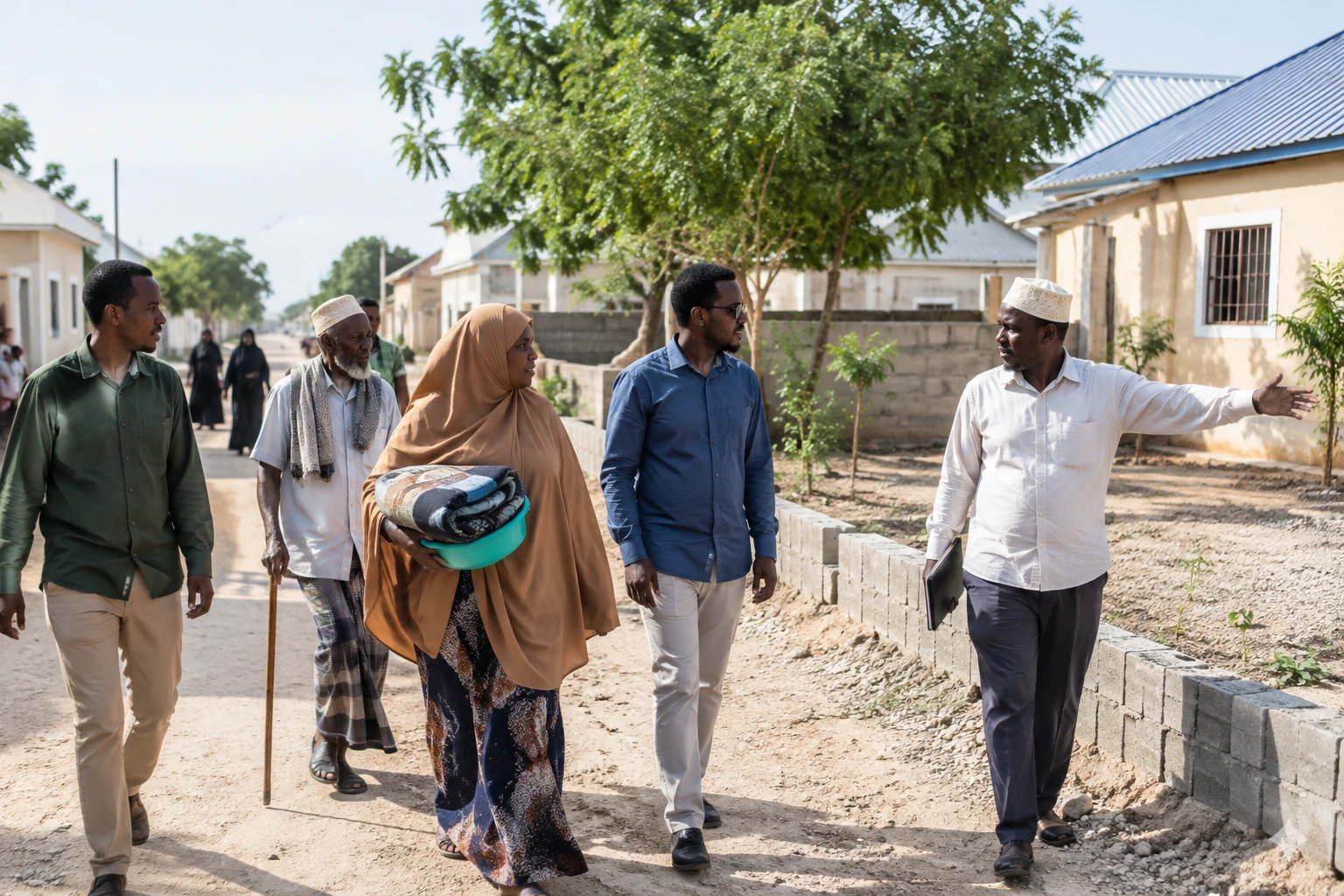
Leaving a camp does not always mean finding a safe place. In Kismayo, in southern Somalia, families displaced by drought or fighting are also forced to leave when landowners reclaim the plots occupied by their shelters. Eviction then adds a new exile to journeys already marked by repeated displacement.
In Kismayo, land rights remain fragile
The port city of Kismayo is Jubaland’s main urban centre, in a federal state in southern Somalia. It attracts families from rural areas, particularly when harvests fail or insecurity makes it impossible to remain in their villages. This growth is increasing pressure on housing and land, especially on the outskirts.
The land issue is not new. A World Bank analysis of urbanisation in Somalia describes competition in Kismayo between the needs of new arrivals, property investment and landowners’ claims. In the city, access to secure land also depends on local power dynamics and the ability to have rights recognised.
The phenomenon extends beyond Jubaland. Somalia has several million people displaced within its borders. The United Nations’ 2026 humanitarian plan estimated that 3.3 million people were internally displaced following movements linked to climate shocks and conflict in 2025. It also said that evictions and land disputes put nearly 200,000 people at high risk. These national estimates should not be confused with a count specific to Kismayo.
Pressure is also intense in Mogadishu, where many displacement sites are concentrated. An analysis by the European Union Agency for Asylum says that the federal capital accounted for more than 80% of evictions recorded in the country during the first eight months of 2025. The figure illustrates the scale of the urban problem without obscuring the distinct circumstances of other cities.
Leaving within days, with no guaranteed solution
At Mariano, a site in Kismayo, 64-year-old Abukar Ali Ousman had to leave his shelter at the beginning of the month mentioned in the report. He says he has already fled four times. After leaving, he lost the small house he had built from branches and cloth. He now depends on people who take him in.
Fitah Mahmud Abdi describes an eviction carried out with three days’ notice. He had already left his village because of drought and fighting. According to his account, his family could take only a few clothes and utensils. These individual accounts shed light on the concrete consequences of evictions, but are not enough on their own to establish the legal circumstances of each departure.
The Jubaland Commission for Refugees and Internally Displaced Persons estimates that Kismayo is home to nearly 200 camps. This figure, provided by the regional administration, gives an indication of the scale of the network of sites, but the available information specifies neither the counting method nor the exact date of the inventory.
The same official says the authorities have set aside a new site about 18 kilometres north of the city. The programme provides, he says, a 600-square-metre plot accompanied by a title deed for each resettled family. As of the date of the report, about 1,000 people were said to have benefited from this solution. The commissioner nevertheless points to a lack of resources to mark out the plots, transport families and provide shelters.
A plot is not enough to rebuild a life
Allocating land can reduce the risk of another eviction. But secure land tenure alone does not guarantee access to water, school, healthcare or income. Moving families away from the centre can also make it harder for them to reach markets and the informal activities on which many depend. Transport costs and journey times weigh particularly heavily on older people, women on their own and families with children.
Relocation must therefore be assessed on more than the number of plots distributed. It is necessary to check that titles are effectively recognised, services are available and families can maintain their livelihoods. A recent assessment by the Norwegian Refugee Council compares housing, land and property rights arrangements in several Somali cities, including Kismayo and Mogadishu.
The figure of more than 4,300 people evicted between 2025 and 2026, cited in the report as coming from the Norwegian Refugee Council, could not be confirmed here by a second independent source covering Kismayo or Jubaland specifically. It must therefore remain attributed to the organisation and cannot be presented as a verified total for Somalia as a whole.
A local, regional and continental issue
The response depends first on the authorities in Jubaland and Somalia’s federal institutions, which must clarify land responsibilities and regulate evictions. It also involves humanitarian organisations, often called on to provide shelters and services, even though durable solutions require urban planning and sustained resources.
At regional level, IGAD — the Intergovernmental Authority on Development, an East African cooperation organisation — monitors displacement and climate shocks that cross borders. Population movements in Somalia are part of a region where drought, floods and insecurity can prompt families to move to another region or country. However, the immediate issue in Kismayo remains legal and secure access to land.
The next decisive measure will be the authorities’ ability to turn the relocation announcement into viable neighbourhoods and prevent evictions before they trigger further displacement. For families, the difference is measured in more than square metres: it also lies in being able to stay, work and access services without fear of having to leave again.