Algeria
 Egypt
 Libya
 Morocco
 Sudan
 Tunisia
 Benin
 Burkina Faso
 Cabo Verde
 Côte d'Ivoire
 Ghana
 Guinea
 Guinea-Bissau
 Liberia
 Mali
 Mauritania
 Niger
 Nigeria
 Senegal
 Sierra Leone
 The Gambia
 Togo
 Cameroon
 Central African Republic
 Chad
 DR Congo
 Equatorial Guinea
 Gabon
 Republic of the Congo
 São Tomé and Príncipe
 Burundi
 Comoros
 Djibouti
 Eritrea
 Ethiopia
 Kenya
 Madagascar
 Malawi
 Mauritius
 Mozambique
 Rwanda
 Seychelles
 South Sudan
 Tanzania
 Uganda
 Angola
 Botswana
 Eswatini
 Lesotho
 Namibia
 South Africa
 Zambia
 Zimbabwe
In Kismayo, the distance to a treatment centre can determine whether a child survives. In rural southern Somalia, a lack of services, fighting and difficult roads turn malnutrition into a medical emergency — at a time when forecast rains could further complicate access to aid.
Needs concentrated far from treatment centres
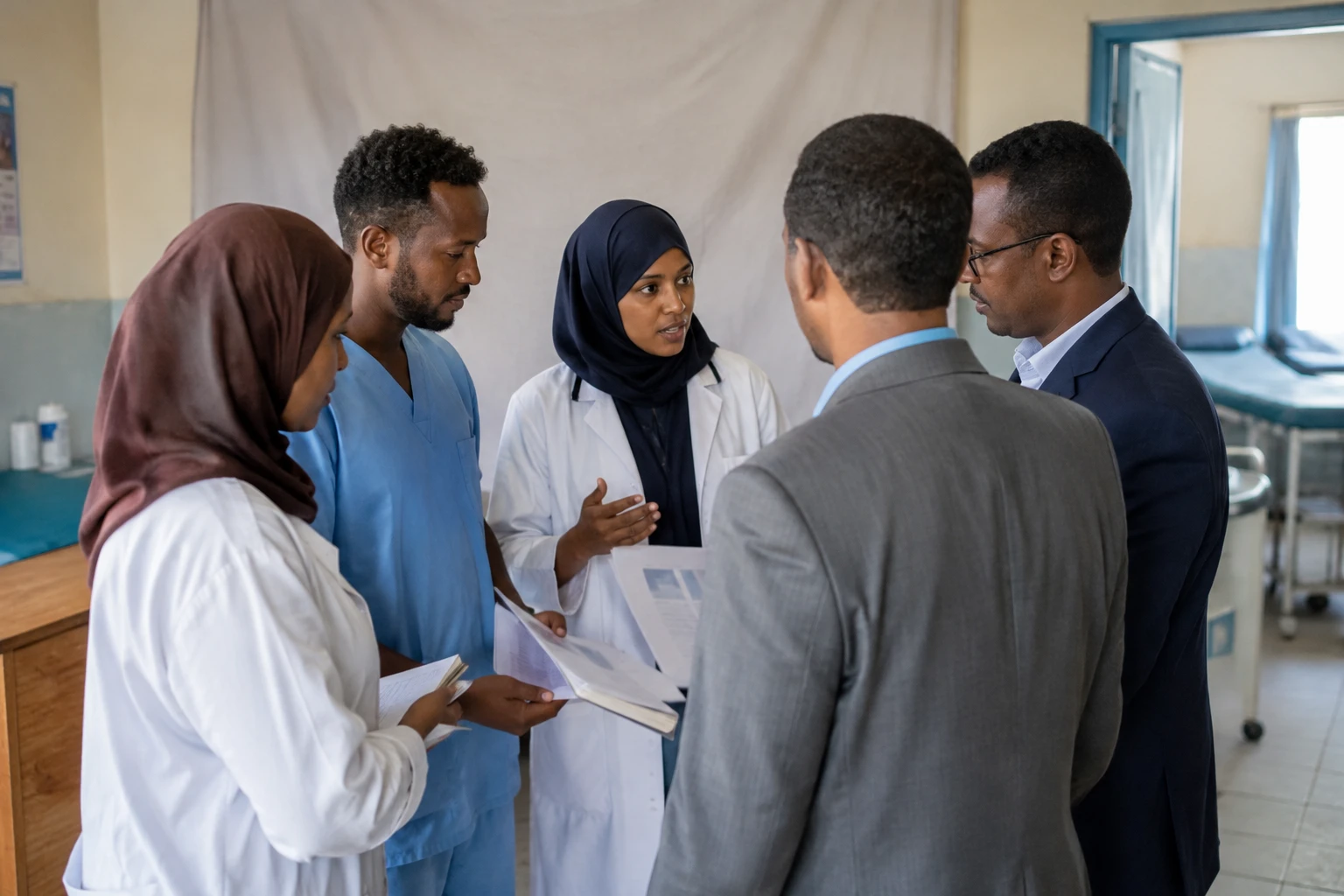
At the stabilisation centre in Kismayo General Hospital, children with acute malnutrition are treated for complications such as dehydration or pneumonia. Supported by the International Committee of the Red Cross, the unit admits cases requiring immediate care. Doctor Abdulkarim Khayie explains that, without treatment, some patients’ condition can deteriorate rapidly.
The problem extends beyond the hospital walls. An analysis published in September by the Integrated Food Security Phase Classification (IPC), an international system for assessing hunger and malnutrition, estimates that 62% of the acute malnutrition burden is in rural areas. Families there face health services that are far away or absent, scarce transport and journeys made dangerous by insecurity.
A mother interviewed in Kismayo says she walked for several days with her sick daughter. She says Al-Shabaab fighters, the al-Qaeda-affiliated armed group, barred her from leaving her village to seek treatment. Her account describes an obstruction reported by this family; on its own, it does not establish that the same restrictions apply everywhere.
High projections, but not a famine tally
For the period from October to December 2026, the IPC forecasts that 5.4 million people in Somalia will face Crisis-level food insecurity or worse. Of these, 1.5 million could face Emergency levels or worse. These categories describe the severity of difficulties in accessing food; they do not mean that all these people are experiencing famine.
The same report estimates that 1.92 million children under five will need treatment for acute malnutrition between July 2026 and June 2027. Of these, 433,000 could suffer from its severe form. These figures are projections of treatment needs, not a count of deaths or of children already hospitalised. The FAO and the United Nations published these estimates on 23 September, based on the IPC analysis.
Another pressure is looming with the Deyr rainy season, from October to December. Forecasts cited by humanitarian agencies warn of a risk of heavy rain and El Niño-related flooding. Floods can damage crops and pasture, displace families and cut road links. In Kismayo, a port city in Jubaland, an influx of displaced people could also increase pressure on hospitals and nutrition facilities.
Conflict, displacement and humanitarian access
The crisis cannot be explained by a single factor. Recurrent droughts, erratic rainfall, rising needs and conflict are undermining livelihoods. In Jubaland, military operations against Al-Shabaab add to displacement and insecurity. The UN says that, in several regions of Somalia, clashes and movement restrictions are complicating the delivery of food, medicines and health teams.
The impact varies depending on location and income. Rural households depend more heavily on crops and livestock; a poor season or a flood directly threatens their food and income. Displaced families in cities may be closer to services, but often face high rents, food prices and healthcare needs. Informal workers, without regular income, have little room to manoeuvre when markets or roads are disrupted.
Somalia’s 2026 humanitarian plan aims to target 2.4 million people out of the 4.8 million considered to need assistance. The plan requests $852 million. This selection reflects funding and implementation constraints, not an end to the needs of other households. Data published in September by the humanitarian financial tracking system indicated that about a third of the required funds had been mobilised by the end of the previous month; the level changes as contributions come in.
A Somali and regional challenge
Somalia is a member of the Intergovernmental Authority on Development (IGAD), a regional organisation in the Horn of Africa. Droughts, floods and displacement cross borders, so risk preparedness and the sharing of agricultural information also concern neighbouring countries. But the response must remain tailored to local realities, particularly those of rural communities and displaced people in the south of the country.
At national level, the immediate challenge is to maintain nutrition care and deliver food and supplies before flooding makes some roads impassable. The United Nations and the federal government are also calling for stronger screening and health, water and sanitation services. For families in Kismayo and remote communities, the gap between an early warning and aid that is actually accessible is measured in travel time, available medicines and the ability to leave a village safely.