Algeria
 Egypt
 Libya
 Morocco
 Sudan
 Tunisia
 Benin
 Burkina Faso
 Cabo Verde
 Côte d'Ivoire
 Ghana
 Guinea
 Guinea-Bissau
 Liberia
 Mali
 Mauritania
 Niger
 Nigeria
 Senegal
 Sierra Leone
 The Gambia
 Togo
 Cameroon
 Central African Republic
 Chad
 DR Congo
 Equatorial Guinea
 Gabon
 Republic of the Congo
 São Tomé and Príncipe
 Burundi
 Comoros
 Djibouti
 Eritrea
 Ethiopia
 Kenya
 Madagascar
 Malawi
 Mauritius
 Mozambique
 Rwanda
 Seychelles
 South Sudan
 Tanzania
 Uganda
 Angola
 Botswana
 Eswatini
 Lesotho
 Namibia
 South Africa
 Zambia
 Zimbabwe
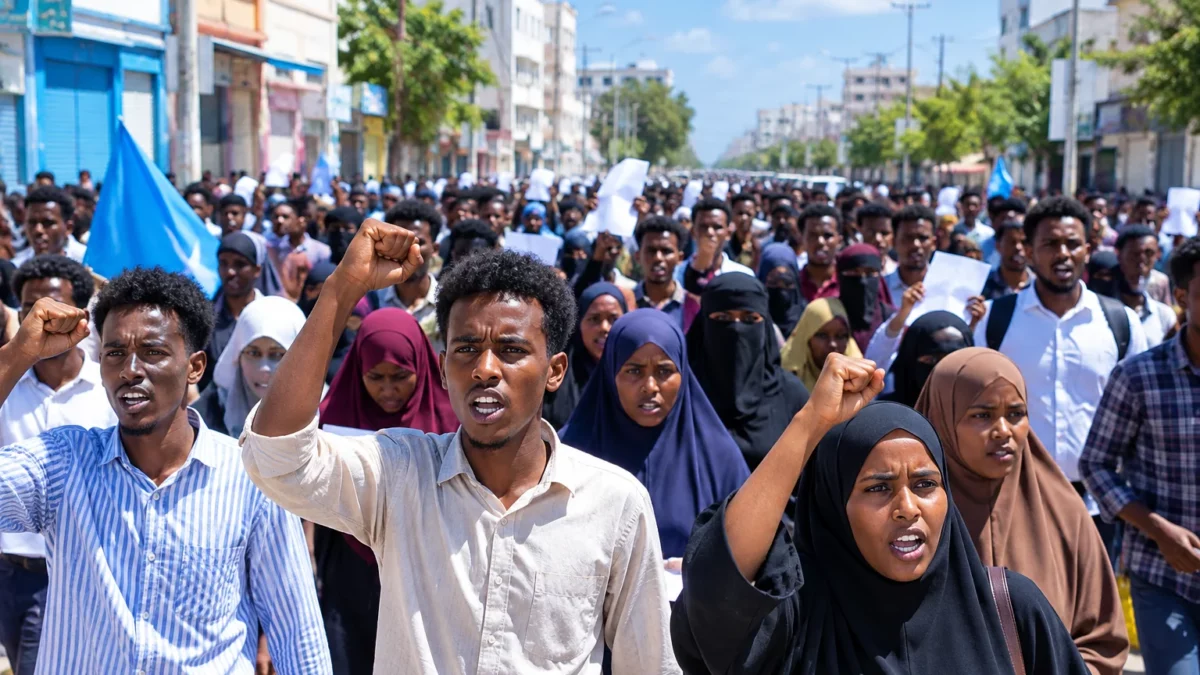
In Mogadishu, the break with Abu Dhabi is not simply a matter between two diplomatic services. It highlights a central question for Somalia: who decides on partnerships concluded on its territory, in a federal country where regional authorities also maintain their own external relations?
A federation under strain
Somalia is a federal state. The government based in the capital, Mogadishu, therefore shares responsibilities with the member states of the federation. This arrangement remains a major political issue: the respective powers of the federal executive and regional authorities are regularly contested.
The dispute with the United Arab Emirates is part of this power struggle. Abu Dhabi maintains links with Somaliland, Puntland and Jubbaland. Mogadishu believes that some agreements concluded with these territories affect national sovereignty. The regional authorities, for their part, dispute the federal government’s power to cancel them unilaterally.
The crisis took on a new dimension in January 2026. Somalia’s Council of Ministers had then cancelled agreements concluded with the UAE, particularly in the port, security and military sectors. The decision further widened the rift between the federal centre and several regional administrations.
Expulsion and mobilisation in Mogadishu
On Thursday 19 November, the Somali government ordered the UAE ambassador to leave the country within 72 hours. It also recalled its own ambassador to the UAE for consultations. Information Minister Abdifatah Kasim Mohamud announced the decision after a Council of Ministers meeting chaired by Prime Minister Hamza Abdi Barre. The order and its deadline were also reported by Somali news agency SONNA and Reuters.
The authorities accuse Abu Dhabi of failing to respect Somali sovereignty and of supporting, they say, armed forces outside federal control. These are the government’s allegations. In themselves, they do not constitute independent proof of the claims made.
That same day, hundreds of people demonstrated in Mogadishu in support of the decision. Participants presented their mobilisation as backing for national unity and stability. Statements by protesters cited in available reports reflect their personal views; they do not make it possible to gauge the opinion of the Somali population as a whole.
The UAE response was critical. Anwar Gargash, diplomatic adviser to the UAE president, accused President Hassan Sheikh Mohamud of putting his personal interests ahead of those of the country. The statement, published on X, reflects Abu Dhabi’s position in a crisis in which the two governments offer opposing interpretations of the sovereignty issues at stake.
Consequences beyond diplomatic circles
The confrontation also concerns tangible economic and security interests. The disputed agreements cover ports, public institutions and defence cooperation. Their termination could affect investment, trade and support arrangements for local forces. The effects will not be the same for the federal authorities, regional administrations, businesses and residents of the territories concerned.
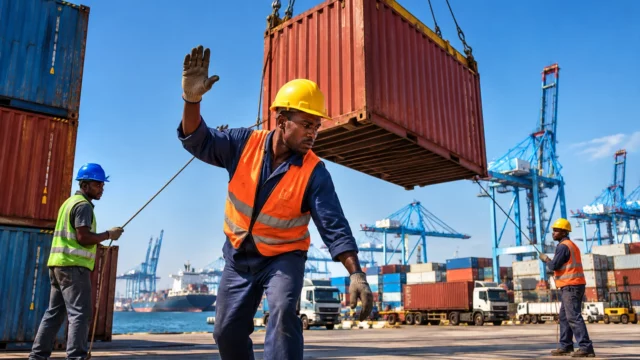
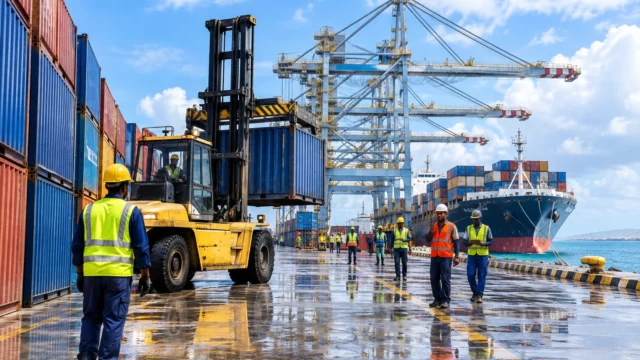
Ports occupy a strategic position in the Horn of Africa, where maritime routes and regional trade are important to national economies. But their management is not simply a matter of diplomatic rivalry: it also depends on the agreements in force, the powers recognised at the different levels of government, and the ability of the parties to maintain services and activity.
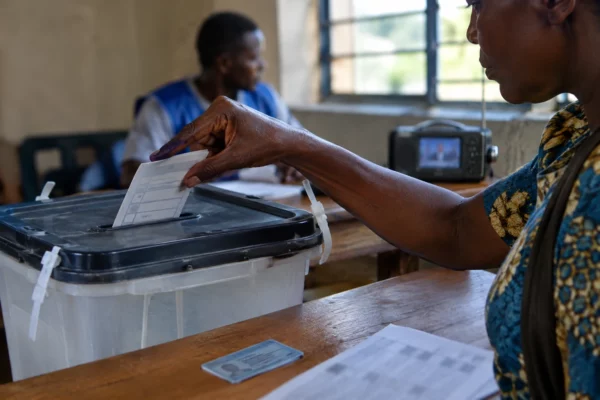
The dispute comes as Somalia’s political scene is going through a difficult period. The government and its opponents are at odds over the electoral process and the length of terms in office. According to reports carried by the Associated Press, the Supreme Court ruled in November that the president’s term had expired and called for elections to be held within 90 days. The ruling is politically contested and forms part of a wider debate over the electoral timetable and framework.
Another mechanism for dialogue has just disappeared: the United Nations Transitional Assistance Mission in Somalia closed on 31 October 2026, following a transfer of responsibilities. The political mission helped facilitate exchanges between Somali actors. Its departure does not mean that all mediation is impossible, but no successor has been accepted by all parties, according to the Associated Press.
Regional role and next steps
The crisis is of direct interest to the Intergovernmental Authority on Development, or IGAD, an East African regional organisation of which Somalia is a member. Tensions between Mogadishu and regional authorities could complicate discussions on security, trade and cooperation in the Horn of Africa. They also underline how an international agreement can become a domestic issue when federal powers remain contested.
Several questions remain open in the short term: will the ambassador leave the country within the stipulated deadline? Will the two governments maintain diplomatic channels? Will the federal and regional authorities find common ground on the agreements in question? The electoral timetable and the Supreme Court ruling could also influence the balance of power.
The Mogadishu demonstration gives visibility to the support expressed by some citizens for the government’s decision. But the outcome of the crisis will depend above all on the diplomatic steps taken next and on the ability of Somali institutions to clarify the rules of the federation. For residents, the stakes are also very tangible: preventing political rivalry from further undermining services, security and relations between the country’s different constituent parts.
For cross-checking, consult reports by the Associated Press on the decision and the demonstration, Hiiraan Online on the expulsion order and Somali news agency SONNA on the bilateral dispute. The report by Reuters on the diplomatic measure provides independent corroboration. The timetable for the UN mission’s closure is set out in the United Nations Secretary-General’s report.