Algeria
 Egypt
 Libya
 Morocco
 Sudan
 Tunisia
 Benin
 Burkina Faso
 Cabo Verde
 Côte d'Ivoire
 Ghana
 Guinea
 Guinea-Bissau
 Liberia
 Mali
 Mauritania
 Niger
 Nigeria
 Senegal
 The Gambia
 Togo
 Cameroon
 Central African Republic
 Chad
 DR Congo
 Equatorial Guinea
 Gabon
 Republic of the Congo
 São Tomé and Príncipe
 Burundi
 Comoros
 Djibouti
 Eritrea
 Ethiopia
 Kenya
 Madagascar
 Malawi
 Mauritius
 Mozambique
 Rwanda
 Seychelles
 Somalia
 South Sudan
 Tanzania
 Uganda
 Angola
 Botswana
 Eswatini
 Lesotho
 Namibia
 South Africa
 Zambia
 Zimbabwe
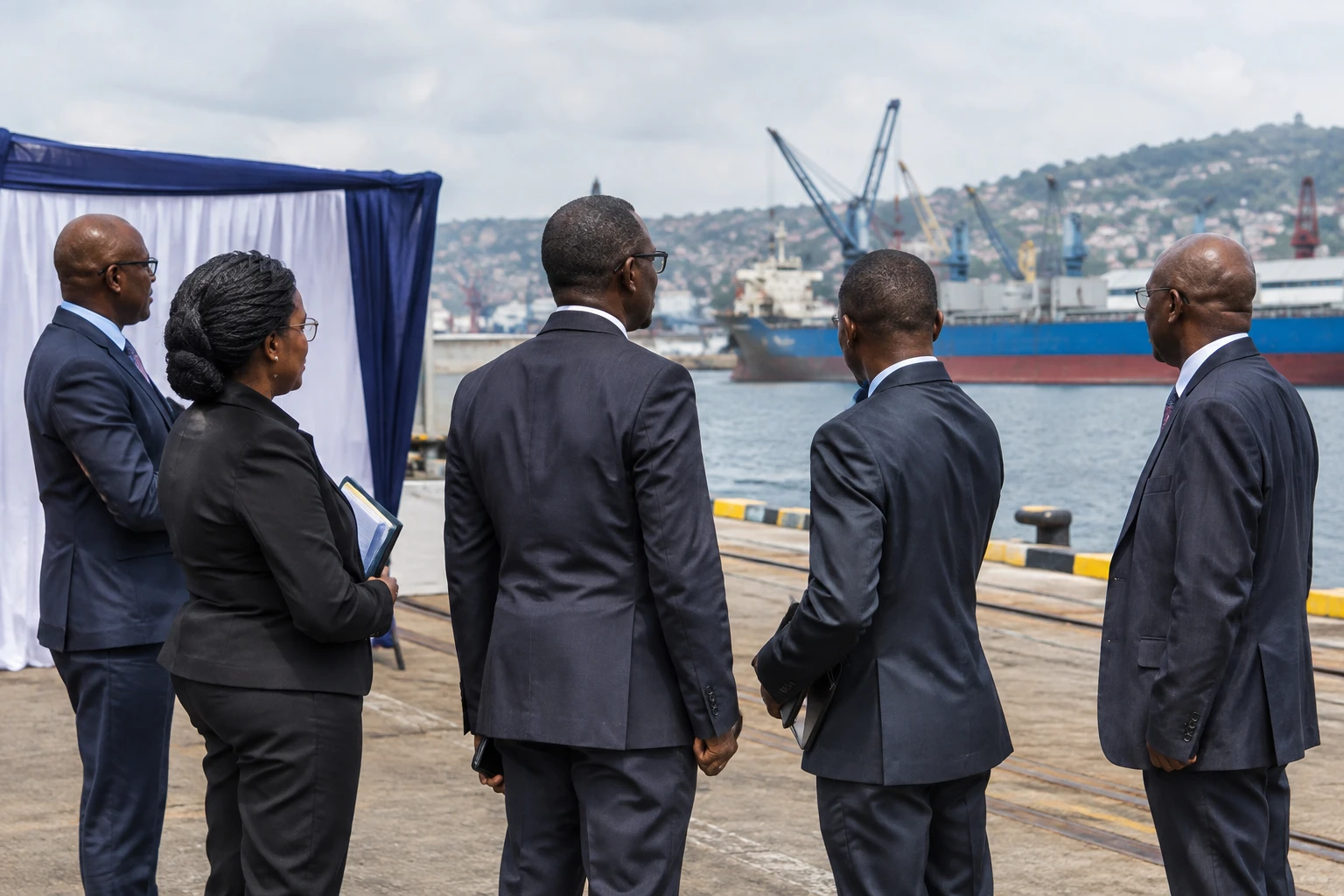
For a Sierra Leonean company shipping ore or importing rice, maritime transport costs weigh on the entire trading chain. Setting up a national shipowner could open a new door. It does not, however, guarantee lower rates or local benefits.
Shipping company launched in Freetown, with majority partner
President Julius Maada Bio officially launched the Sierra Leone Ocean Shipping Company (SLOSCo) on 19 October 2026 at Queen Elizabeth II Quay in the capital, Freetown. The company is a joint venture between the Sierra Leone National Shipping Agency and China’s Zhejiang Xiehai group. The public agency’s announced stake is 30%, compared with 70% for its partner. These details have been reported by several Sierra Leonean and regional media outlets.
The project envisages a fleet of 50 vessels, including 30 in an initial phase. But the official launch does not mean that these vessels are already in service. The public information consulted does not specify either the deployment timetable or the planned trade routes. The company will therefore have to turn an industrial announcement into regular operations.
The initiative is part of a broader ambition: to play a role in transporting goods, and not only in producing or importing them. In his speech, Julius Maada Bio presented the company as a way to increase the country’s participation in transporting its foreign trade.
Ships alone are not enough to control costs
Ports and shipowners perform different functions. A port receives ships and handles cargo. A shipowner organises maritime transport, chooses routes and sells cargo capacity. SLOSCo therefore aims to extend Sierra Leone’s presence beyond port infrastructure.
To succeed, the company will need to secure regular cargo, negotiate access to ports and logistics services, maintain its vessels and compete with established operators. Major international operators have extensive networks. Their size enables them to serve many routes and pool some of their costs. A new company will have to show that it can offer a reliable and commercially viable service.
The benefits will also depend on how responsibilities are divided within the joint venture. With 30% of the capital, the public agency is a minority shareholder. This allocation alone does not establish who will decide on investments or how revenues will be distributed. The terms of governance and obligations on skills transfer will be crucial to assessing the share of value retained in the country.
The issue directly affects workers and businesses. Jobs on board, seafarer training, commercial management and maintenance services could create local opportunities. However, with no publicly announced recruitment timetable or training programme, their scale remains to be established. Exporters, meanwhile, will benefit from any potential gains only if the company serves their products, ports and markets on competitive terms.
A national ambition in a regional market
Sierra Leone operates in a West African region where trade depends on maritime and land networks that extend beyond national borders. ECOWAS, the Economic Community of West African States, aims to facilitate the integration of its member states’ markets. But ships alone cannot reduce border delays, transit costs or logistical difficulties within countries.
In its report on African integration, published on 28 August 2026, the World Bank estimates that trade between sub-Saharan African countries accounts for about one-fifth of their total exports. It also notes that regional trade includes more diversified and manufactured goods than exports to the rest of the world. The report highlights the role of transport services and reducing trade frictions. The World Bank sets out these regional integration issues.
For SLOSCo, this raises a strategic question: will it mainly serve Sierra Leonean imports and exports, or will it also seek to connect several West African markets? Regional operations could broaden its customer base, but would require reliable routes, robust trade agreements and co-ordination with neighbouring ports.
The test: moving from announcement to local capacity
The company’s launch follows parliamentary ratification of the joint venture agreement, reported in August by national media. The next step will therefore be less symbolic: making public the financing, timetable, first routes and operating rules. These details will make it possible to distinguish the announced fleet from the capacity actually available.
The benefits beyond Freetown will also need to be monitored. Businesses based in the regions, producers and inland transport operators will depend on access to ports and the company’s services. If cargo is concentrated in a few sectors or land transport costs remain high, the benefits risk being distributed unevenly.
SLOSCo thus confronts Sierra Leone with a challenge that goes beyond ship ownership: developing skills, services and commercial links capable of retaining more value. Its regional significance will be measured by its ability to transport goods regularly, integrate local businesses and become part of denser West African trade.