Algeria
 Egypt
 Libya
 Morocco
 Sudan
 Tunisia
 Benin
 Burkina Faso
 Cabo Verde
 Côte d'Ivoire
 Ghana
 Guinea
 Guinea-Bissau
 Liberia
 Mali
 Mauritania
 Niger
 Nigeria
 Senegal
 The Gambia
 Togo
 Cameroon
 Central African Republic
 Chad
 DR Congo
 Equatorial Guinea
 Gabon
 Republic of the Congo
 São Tomé and Príncipe
 Burundi
 Comoros
 Djibouti
 Eritrea
 Ethiopia
 Kenya
 Madagascar
 Malawi
 Mauritius
 Mozambique
 Rwanda
 Seychelles
 Somalia
 South Sudan
 Tanzania
 Uganda
 Angola
 Botswana
 Eswatini
 Lesotho
 Namibia
 South Africa
 Zambia
 Zimbabwe
When connectivity becomes a public service issue
In Freetown, the question is no longer just how to connect more people to the digital world. It is also how to prevent a cyber incident from disrupting a hospital, an examination hall, an electricity network or a security communication. In Sierra Leone, digital transformation is advancing, but it is also expanding the attack surface of essential services.
The issue now goes beyond technology alone. It affects the continuity of the state, trust in public services and the ability of government departments to operate without interruption. Against this backdrop, the country is strengthening its digital defences with support from international partners, while being part of a broader West African trend.
Four sectors at the heart of the new framework
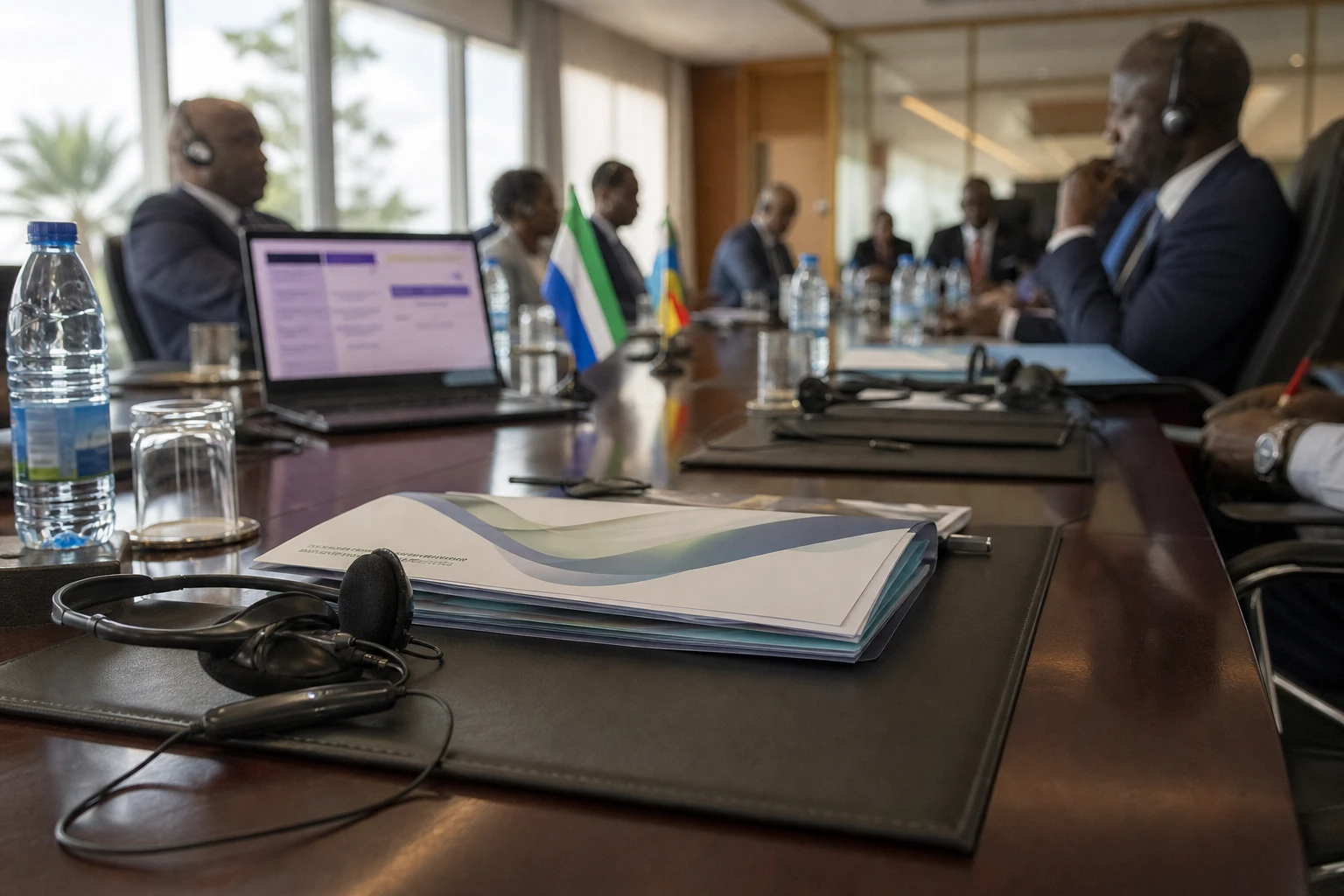
On Wednesday 26 August 2026, the National Cybersecurity Coordination Centre, the NC3, and Sierra Leone’s Ministry of Communications, Technology and Innovation presented draft sectoral plans to protect critical digital infrastructure in energy, health, education and defence. Stakeholder validation took place at NatCA Tower in South Ridge, in Freetown’s IMATT area.
The plans are intended to define, sector by sector, essential services, risks, vulnerabilities, minimum cybersecurity thresholds and lines of responsibility. The framework extends an initial phase carried out in 2025, which had already covered information and communications technology, public administration, finance and transport.
The government links this work to the Cyber Security and Crime Act of 2021, which establishes a national framework for responding to threats and protecting sensitive digital infrastructure. The World Bank-financed Sierra Leone Digital Transformation Project is supporting this effort, notably through the operationalisation of critical infrastructure protection, clarification of designation criteria, and the strengthening of the NC3 and the N-CIRT, the national incident response team.
Very real chains of dependence
The value of this approach lies in a simple reality: critical sectors do not operate in isolation. Without electricity, hospitals grind to a halt. Without connectivity, digital examination platforms cannot function. Without secure systems, defence communications and certain administrative functions become vulnerable. Sierra Leone’s plan starts from this interdependence, which is often underestimated in public policy.
For citizens, the stakes are immediate. The aim is to preserve access to healthcare, the reliability of examinations, continuity of energy distribution and data security. For the state, the challenge is different: it must harmonise standards, train operators and establish clear governance between national oversight and the day-to-day management of systems.
This approach reflects a regional trend. In October 2024, ECOWAS ministers responsible for telecommunications, ICT and digital affairs adopted the 2024-2029 regional digital strategy, as well as a directive on confidence-building measures in West Africa’s cyberspace. Sierra Leone is therefore part of a collective movement in which cybersecurity is becoming a matter of digital sovereignty and economic stability.
A national response in a region under pressure
The timing is significant. In August 2026, INTERPOL said artificial intelligence was involved in 55% of reported cybercrimes in Africa, amid the growing industrialisation and cross-border reach of criminal networks, which are becoming harder to counter. The organisation also highlighted the weakness of legal and operational preparedness in several countries across the continent.
In other words, Sierra Leone is not protecting itself against an abstract threat. It is preparing for attacks capable of disrupting concrete services, exploiting supply chains and spreading from one country to another. This is also why the country is prioritising sectoral plans: they make it possible to address risk where it materialises—in networks, procedures and day-to-day responsibilities.
Across West Africa, this development matters beyond Freetown. ECOWAS is already urging its members to strengthen cyber coordination, protect critical infrastructure and align legal frameworks. Sierra Leone is therefore making progress in an area that brings together security, development and regional integration. The next step will be the formal designation of the sectors concerned and the implementation on the ground of the promised security baselines.