Algeria
 Egypt
 Libya
 Morocco
 Sudan
 Tunisia
 Benin
 Burkina Faso
 Cabo Verde
 Côte d'Ivoire
 Ghana
 Guinea
 Guinea-Bissau
 Liberia
 Mali
 Mauritania
 Niger
 Nigeria
 Senegal
 The Gambia
 Togo
 Cameroon
 Central African Republic
 Chad
 DR Congo
 Equatorial Guinea
 Gabon
 Republic of the Congo
 São Tomé and Príncipe
 Burundi
 Comoros
 Djibouti
 Eritrea
 Ethiopia
 Kenya
 Madagascar
 Malawi
 Mauritius
 Mozambique
 Rwanda
 Seychelles
 Somalia
 South Sudan
 Tanzania
 Uganda
 Angola
 Botswana
 Eswatini
 Lesotho
 Namibia
 South Africa
 Zambia
 Zimbabwe
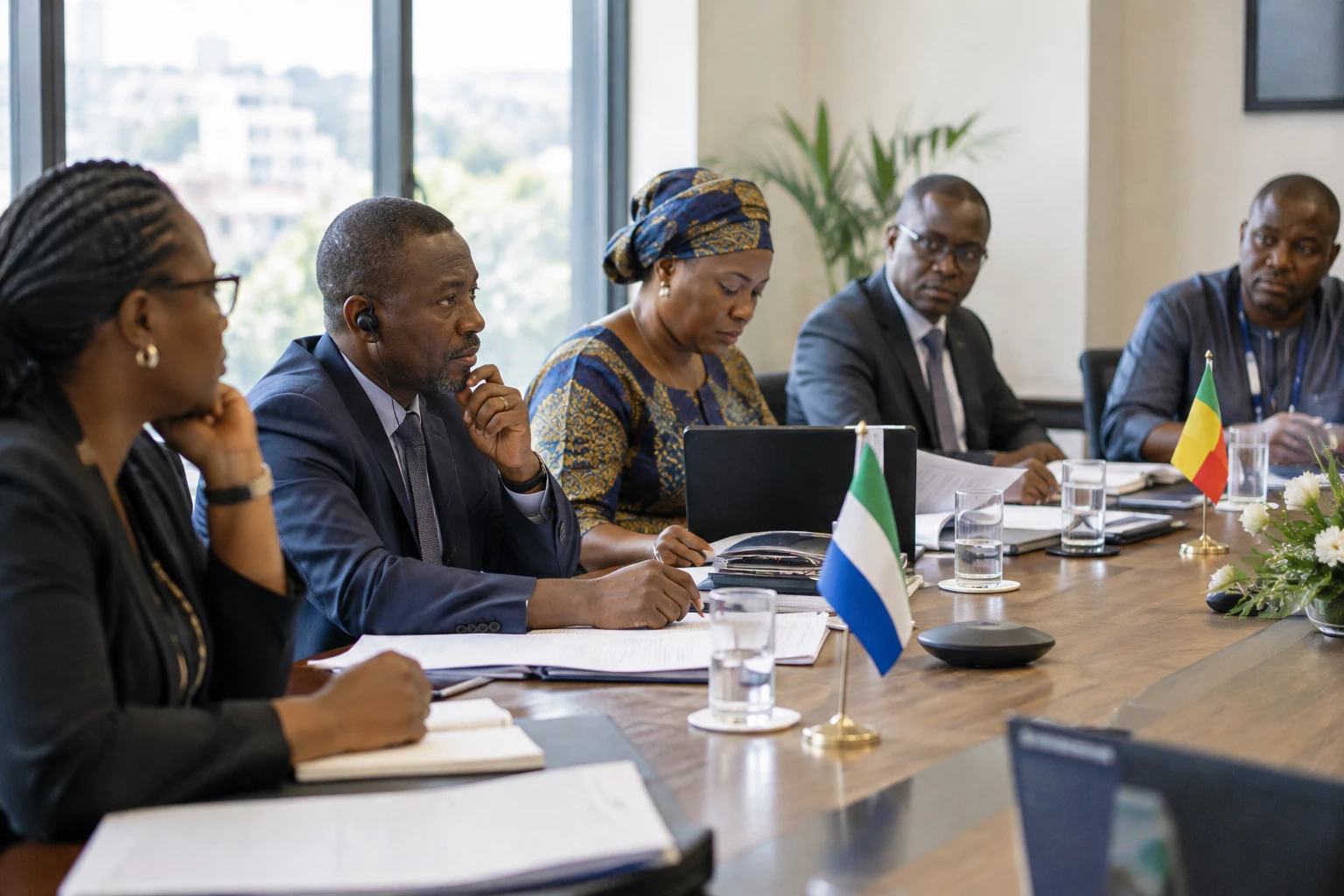
In Sierra Leone, the question goes beyond counting votes: who sets the rules of the electoral game, and by what procedure? On 7 October 2026, the Supreme Court began examining challenges relating to the process for adopting a constitutional reform that affects, among other things, the threshold for winning the presidency.
A presidential election at the heart of the debate
The current Constitution requires a candidate to secure at least 55% of valid votes to be elected in the first round. If no candidate does so, the two leading candidates face each other in a run-off. The contested text proposes lowering the threshold to 50% plus one vote, alongside a requirement for votes to be distributed geographically.
The proposed change is not universally supported. Its proponents say a lower threshold could avoid a run-off and make it easier to form a government after the election. Opponents argue that the current bar encourages parties to forge alliances and limits the risk of a candidate being elected without sufficiently broad support in a politically diverse country.
But the hearing opened in Freetown is primarily about parliamentary procedure. The disagreement concerns how to interpret the constitutional rules governing votes on amendments. The Speaker of Parliament considered that a simple majority could apply at certain stages. Opposition MPs, meanwhile, argue that a two-thirds majority was required. The Court must clarify the matter; no ruling on the substance had been announced at the start of the hearing. Sierra Leonean media reported the opening of proceedings on 7 October.
Political trust remains fragile
The case comes amid tensions that followed the general election of 24 June 2023. The opposition All People’s Congress (APC) challenged the electoral process and boycotted the institutions. In October that year, the government and the APC signed an agreement for national unity, following mediation by ECOWAS, the regional organisation of West African states.
The agreement provided, among other things, for multiparty work on electoral systems and the institutions responsible for administering them. It aimed to break the political deadlock and prevent a repeat of the disputes of 2023. ECOWAS presented the commitment as a framework for dialogue and reform.
The current legal challenge therefore revives a central question: how can electoral rules be changed without deepening distrust between the government and the opposition? The Court’s decision could establish an authoritative interpretation of the steps Parliament must follow. It will not, however, replace political dialogue on the substance of the reforms.
Rules that affect parties and voters
The 55% threshold requires a candidate to secure well over an absolute majority before being elected in the first round. It can therefore encourage parties to seek support beyond their core base. By contrast, a threshold of 50% plus one vote could make a direct election more attainable for the leading party, but reduce the need to build a coalition before the election.
The effects would also depend on the geographical requirement adopted in the final version. According to local reports on the debate, the proposal refers to a minimum number of votes in several districts. The details and legal scope of this clause remain to be examined alongside the full text and the Court’s conclusions; it should not be confused with a rule already in force.
The reform covers other issues, including the eligibility of citizens with dual nationality and the retention of proportional representation for parliamentary elections. Under this electoral system, seats are allocated to parties according to their share of the vote, under rules set by law. Sierra Leone’s Electoral Commission says the district block representation system was used in the 2023 elections. The Electoral Commission explains how this system works.
For national parties, these choices influence candidate selection, campaigning and alliance strategies. For voters, they determine how votes translate into seats and what share minority parties can secure. The constitutional debate therefore has practical consequences, even if its most visible aspects are being played out among MPs and lawyers in Freetown.
Judicial ruling is the next step
The Supreme Court is being asked to address several challenges relating to the text and its adoption. Reports published by media in the country cite objections concerning the regularity of the procedures and the role of parliamentary authorities. The hearing on 7 October also covered documents filed by the state and the way the cases should be conducted. These procedural issues do not prejudge the outcome of the dispute.
At regional level, the issue is linked to ECOWAS efforts to support implementation of the national unity agreement and the reforms agreed after the 2023 elections. The organisation has monitored implementation of the recommendations arising from the tripartite process. It has brought together stakeholders responsible for monitoring these commitments.
What happens next will depend on the Court’s decision and how its conclusions are handled politically. For Sierra Leoneans, the test is not only about the figure of 55% or 50% plus one vote. It is also about whether institutions can apply rules understood and accepted by the main actors ahead of the next electoral milestones.