Algeria
 Egypt
 Libya
 Morocco
 Sudan
 Tunisia
 Benin
 Burkina Faso
 Cabo Verde
 Côte d'Ivoire
 Ghana
 Guinea
 Guinea-Bissau
 Liberia
 Mali
 Mauritania
 Niger
 Nigeria
 Senegal
 Sierra Leone
 The Gambia
 Togo
 Cameroon
 Central African Republic
 Chad
 DR Congo
 Equatorial Guinea
 Gabon
 Republic of the Congo
 São Tomé and Príncipe
 Burundi
 Comoros
 Djibouti
 Eritrea
 Ethiopia
 Kenya
 Madagascar
 Malawi
 Mauritius
 Mozambique
 Rwanda
 Somalia
 South Sudan
 Tanzania
 Uganda
 Angola
 Botswana
 Eswatini
 Lesotho
 Namibia
 South Africa
 Zambia
 Zimbabwe
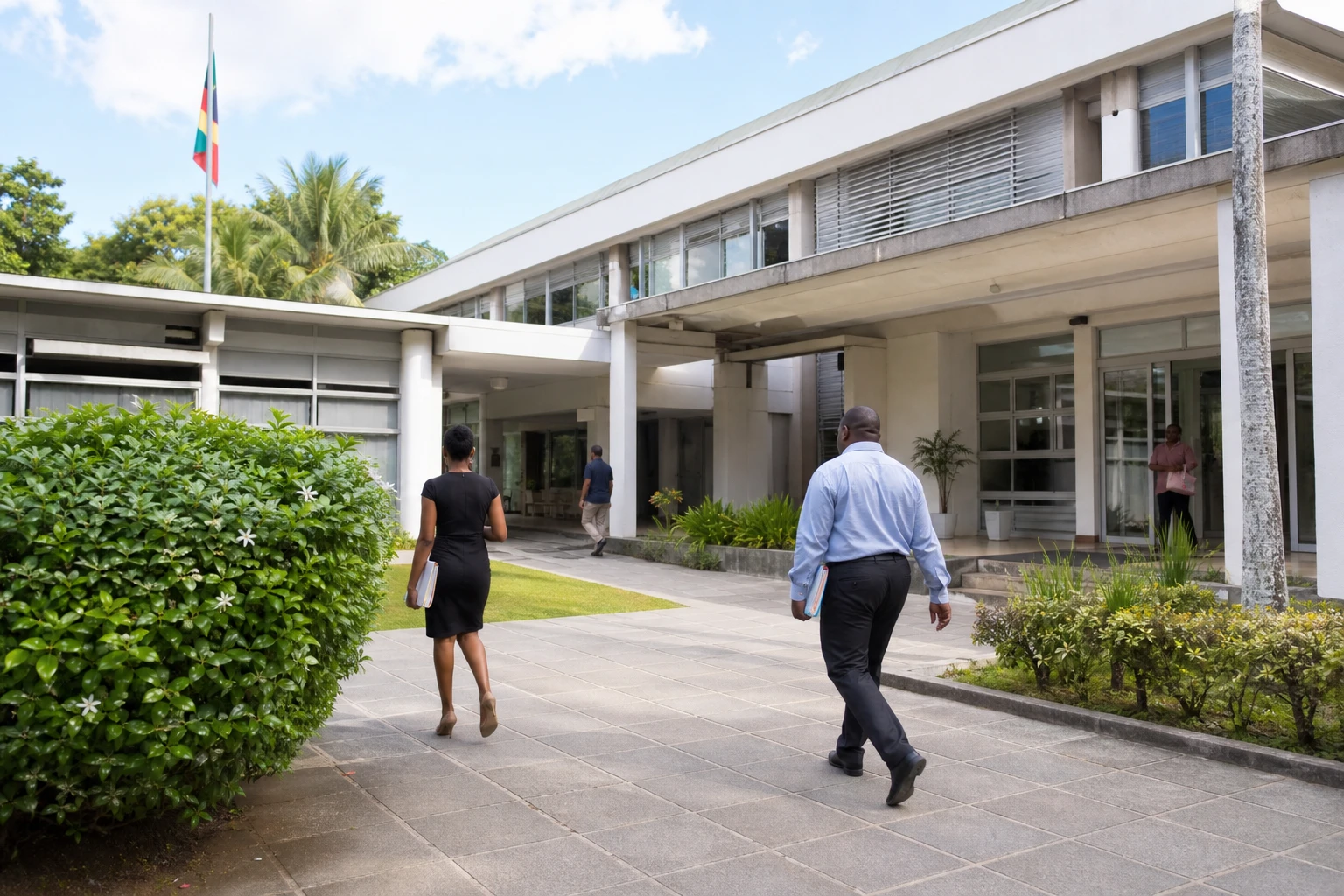
In the Seychelles, tourism sets the pace for the national economy. After a very strong 2025, the slowdown expected in 2026 is a reminder of the vulnerability of a model heavily exposed to air links, international markets and geopolitical shocks.
The International Monetary Fund forecasts real growth of 1 % this year, compared with 5.8 % in 2025. This preliminary estimate was announced after a post-financing assessment mission in Victoria from 21 to 30 September 2026.
Seychelles economy slows after historic rebound
The Seychelles experienced a sharp acceleration in 2025. Growth benefited from a 13 % rise in tourist arrivals, according to the World Bank. Visitor numbers exceeded their 2019 level, before the Covid-19 pandemic.
The IMF now believes this momentum will not continue at the same pace. The drop in arrivals at the start of 2026 directly affected accommodation, restaurants, transport and visitor-related activities. In an archipelago where imports and tourism services play a central role, the shock quickly spreads to the rest of the economy.
The Fund attributes the decline mainly to the consequences of the conflict in the Middle East. Disruptions to air links affected international travel, particularly between March and June. This period covers an important part of the Seychelles’ tourist season.
National data nevertheless point to a gradual improvement. The Seychelles News Agency, citing National Bureau of Statistics figures, reported that arrivals in the first seven months of 2026 remained 11.4 % below the same period in 2025. July, however, marked the first monthly recovery.
The trend continued in August. The Seychelles welcomed 34 987 visitors that month, 14.1 % more than in August 2025, according to figures reported by the national press. The rebound is not yet enough to make up for first-half losses, but it strengthens the prospect of a gradual recovery in the second half of the year.
Inflation contained, but pressure on state-owned firms
The slowdown in activity has not been accompanied by a sharp rise in prices. Annual inflation stood at 0.9 % in August, according to the IMF. This moderation is due in part to the limited pass-through to consumers of higher international commodity prices.
However, this result partly reflects the role played by state-owned enterprises. Some have absorbed part of the increase in costs through subsidy mechanisms. This strategy has limited the immediate impact on households, but weakened the balance sheets of these firms.
The IMF notes that this situation has also reduced dividends paid into the state budget. The problem therefore extends beyond prices alone. It affects public revenue, fiscal room for manoeuvre and the ability of the companies concerned to finance investment.
The effect on households is mixed. Stable prices protect purchasing power in the short term. But a tourism slowdown can reduce incomes in hotels, restaurants, transport and small businesses. Self-employed workers and informal businesses may be exposed more quickly than employees in protected sectors.
Foreign reserves remain solid
The external sector has remained broadly stable despite the tourism shock. Foreign exchange reserves cover about four months of imports, according to the IMF mission’s findings. The Seychelles rupee has also remained relatively stable against the US dollar.
This provides an important buffer for the economy. The Seychelles relies heavily on overseas purchases for food, energy, equipment and some consumer goods. Adequate reserves make it possible to finance these imports and limit pressure on the currency.
External stability does not mean there are no risks. A prolonged fall in tourism revenue could reduce foreign currency inflows. This would weigh on the external accounts and the resources available to finance imports, especially if energy or transport prices rise.
After the IMF programme, a new phase for Victoria
The mission comes after the completion in 2026 of a 26-month programme backed by the IMF. It combined the Extended Credit Facility, which supports macroeconomic reforms, and the Resilience and Sustainability Facility, which focuses in particular on climate issues.
The programme aimed to strengthen public revenue, improve debt management, preserve financial stability and increase resilience to climate change. The challenge for the Seychelles authorities is now to maintain these gains without stifling investment or weakening productive sectors.
The debate also concerns the quality of tourism growth. A study considered by the authorities recommends prioritising visitors who make a greater economic contribution, diversifying the offer and improving skills in the sector. This approach aims to increase tourism revenue without mechanically driving up arrival numbers.
The issue is strategic for an island nation. Tourism growth depends on air capacity, the environment, access to water, waste management and the availability of labour. It should therefore be assessed not only by its revenue, but also by its social and environmental costs.
A signal watched across the Indian Ocean
The Seychelles’ experience is of interest to East Africa and the Indian Ocean as a whole. Island economies share a high exposure to external shocks, particularly in tourism, maritime transport, energy and food. They must also contend with the effects of climate change on infrastructure and coastlines.
For the Seychelles, the priority in the coming months will be to see whether the recovery observed in July and August continues. Arrival numbers, air connectivity, revenue per visitor and the financial strength of state-owned enterprises will be the main indicators to watch.
The IMF’s executive board is due to consider the Seychelles’ post-financing assessment in December 2026. This step will clarify the Fund’s view of Victoria’s economic trajectory and the reforms needed to turn the 2025 tourism rebound into steadier growth.