
 Algeria
 Egypt
 Libya
 Morocco
 Sudan
 Tunisia
 Benin
 Burkina Faso
 Cabo Verde
 Côte d'Ivoire
 Ghana
 Guinea
 Guinea-Bissau
 Liberia
 Mali
 Mauritania
 Niger
 Nigeria
 Sierra Leone
 The Gambia
 Togo
 Cameroon
 Central African Republic
 Chad
 DR Congo
 Equatorial Guinea
 Gabon
 Republic of the Congo
 São Tomé and Príncipe
 Burundi
 Comoros
 Djibouti
 Eritrea
 Ethiopia
 Kenya
 Madagascar
 Malawi
 Mauritius
 Mozambique
 Rwanda
 Seychelles
 Somalia
 South Sudan
 Tanzania
 Uganda
 Angola
 Botswana
 Eswatini
 Lesotho
 Namibia
 South Africa
 Zambia
 Zimbabwe
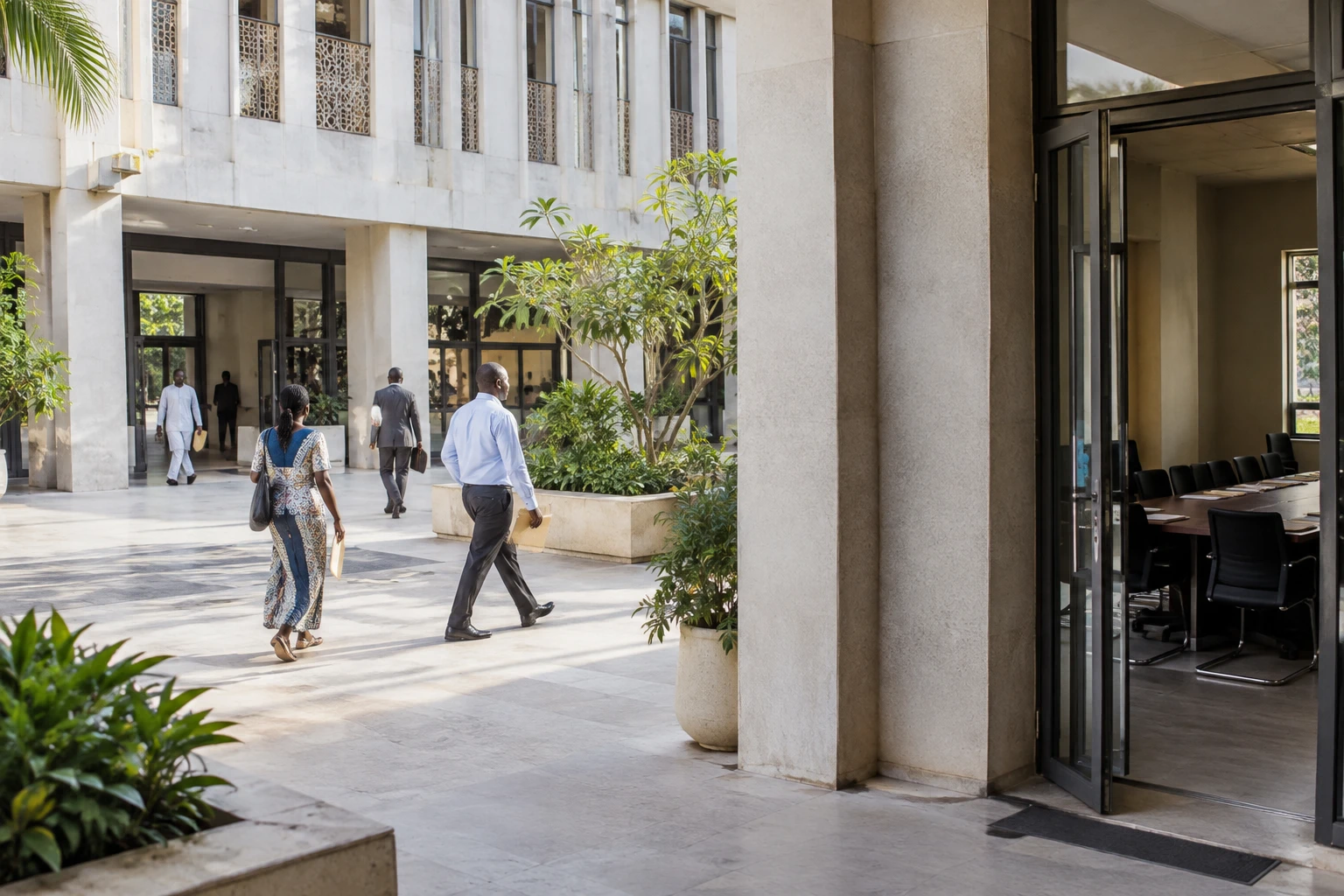
In Dakar, the debate over the supplementary finance bill goes beyond the accounting lines. It concerns the parliamentary majority’s ability to scrutinise budget choices and the room for manoeuvre of a state facing falling revenues and rising expenditure.
A contested bill ahead of its debate in plenary
The National Assembly’s finance committee rejected the 2026 supplementary finance bill (LFR) on Friday 23 October. The bill adjusts the budget during the year when revenue or spending forecasts change. It is expected to be debated in plenary on Tuesday 27 October, after several postponements.
Prime Minister Ahmadou Al Aminou Lô on Sunday urged MPs to submit specific amendments and proposed continuing the dialogue. He also said the government could use its “institutional tools” if the disagreement persisted. The Senegalese Press Agency reports that the executive had proposed technical discussions after the general policy statement on 8 September, then revived the initiative on 15 October.
Pastef, which has 130 of the 165 seats according to information provided on the parliamentary debate, says its reservations concern the transparency of the document and the allocation of some funds. MPs from the party are seeking explanations and corrections. They argue that projects have disappeared from the text submitted to the vote. This remains a political dispute: the government, for its part, says investments are being rescheduled rather than scrapped.
Budget decisions with tangible effects
The disagreement comes amid severe financial constraints. The prime minister cited an expected 340 billion CFA francs fall in revenue and a 540 billion increase in expenditure. According to the government, the additional spending responds in particular to the needs of the energy sector and to increased resources for defence and security.
The government’s version of the bill provides for energy subsidies to rise from 250 billion to 790.3 billion CFA francs. The stated aim is to limit the pass-through of international prices to the rates paid by households and businesses. At the same time, investment appropriations would fall from 2,803.9 billion to 2,248.9 billion. The finance ministry describes this 555 billion reduction as the postponement until 2027 of projects considered insufficiently mature or impossible to complete on time.
These decisions do not have the same consequences for everyone. Maintaining subsidies can cushion rising transport and energy costs, which weigh on households and small businesses. Delayed investment, in turn, can hold up construction projects and the payments associated with them to businesses. Senegalese people in the regions and economic actors awaiting infrastructure are therefore affected just as much as users of subsidised services.
The government also points to the payment of domestic arrears, estimated at 300 billion CFA francs in budget documents. Settling them would be important for businesses that have supplied goods or services to the state. But Parliament wants to understand how the funds are allocated and which commitments will actually be honoured. The central issue is therefore as much about cash flow as about the clarity of public choices.
An institutional standoff under regional constraints
The government is calling for amendments, while Pastef is demanding answers and changes first. If the majority group maintains its opposition, the bill’s passage becomes uncertain. The executive has raised the possibility of using Article 86, paragraph 6, of the Constitution, which governs the government’s commitment of its responsibility on a bill. This route would, however, expose the executive to a motion of no confidence. No decision to take this course has been announced at this stage.
The debate is also playing out within a distinctive political relationship: Pastef, the party in power since the 2024 change of government, holds a majority in the Assembly, while the government is asking its own MPs to support its budget. The public disagreement between the executive and its majority is thus putting the institutions’ dialogue and scrutiny mechanisms to the test, making the vote anything but a formality.
The issue also has a regional dimension. Senegal belongs to ECOWAS, the economic community bringing together several West African countries, and shares a common currency, the CFA franc, with WAEMU member states. Budget stability and investor confidence matter in this integrated area, but they do not replace the national debate on spending, revenues and social priorities.
In September, the Senegalese Press Agency reported that Dakar and the International Monetary Fund had reached a three-year technical agreement worth 2.2 billion dollars. The LFR bill includes adjustments that the authorities link to their financial commitments and the task of putting budget data in order. The technical agreement does not in itself mean that all funding has already been disbursed: its timetable depends on the agreed steps.
Tuesday’s expected vote will show whether discussions can lead to changes accepted by the majority or whether the deadlock will shift towards an institutional confrontation. Beyond Dakar, the issue is being watched in a region where governments are seeking to fund public services while keeping their debt under control. For Senegalese people, the outcome will be measured above all by the execution of announced spending: energy support, settlement of arrears and the timetable for postponed investments.



