Algeria
 Egypt
 Libya
 Morocco
 Sudan
 Tunisia
 Benin
 Burkina Faso
 Cabo Verde
 Côte d'Ivoire
 Ghana
 Guinea
 Guinea-Bissau
 Liberia
 Mali
 Mauritania
 Niger
 Nigeria
 Senegal
 Sierra Leone
 The Gambia
 Togo
 Cameroon
 Central African Republic
 Chad
 DR Congo
 Equatorial Guinea
 Gabon
 Republic of the Congo
 São Tomé and Príncipe
 Burundi
 Comoros
 Djibouti
 Eritrea
 Ethiopia
 Kenya
 Madagascar
 Malawi
 Mauritius
 Mozambique
 Rwanda
 Seychelles
 Somalia
 South Sudan
 Tanzania
 Uganda
 Angola
 Botswana
 Eswatini
 Lesotho
 Namibia
 Zambia
 Zimbabwe
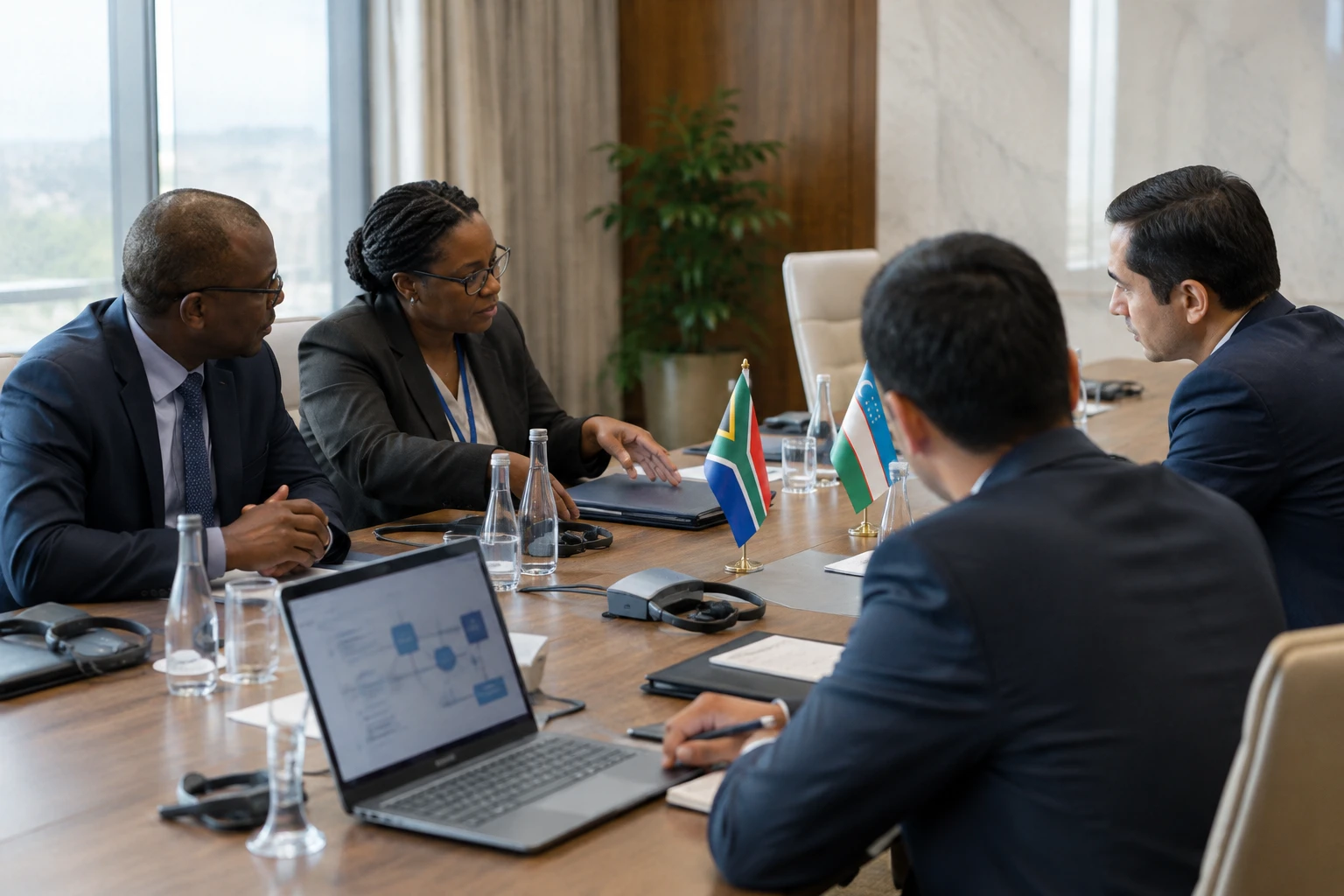
Industrial cooperation between South Africa and Uzbekistan could expand from gas to coal. For Sasol, the South African energy and chemicals group, the goal is to sell its expertise abroad while exploring new industries. But the discussions announced in Tashkent remain preliminary: no contract or investment has been made public.
Industrial dialogue already under way
On 21 October 2026, Feruza Khamidova, Uzbekistan’s first deputy minister of mining and geology, met Lawrence Jacobs, Sasol’s vice-president for the Middle East and Central Asia. Uzbekistan’s ministry said the discussions covered the use of the group’s technologies to process raw materials, as well as the possibility of joint projects in the coal sector. The meeting was reported by Uzbek authorities; no independent confirmation or announcement of a definitive agreement has been found.
The discussions follow an official meeting in Tashkent on 15 March 2026. Uzbekistan’s minister of investment, industry and trade, Laziz Kudratov, had received Sarushen Pillay, Sasol’s executive vice-president. The two sides discussed the possibility of the South African group taking part in the Coal-to-Olefins, or CTO, project. This would involve converting coal into olefins, compounds used notably as raw materials in the plastics and chemicals industries.
The wording matters: the authorities reported avenues for cooperation, not an investment decision. A project of this scale would still require technical and commercial choices, as well as decisions on financing, supplies and markets. The publicly available information specifies neither a timetable nor the proposed production capacity.
Gas already converted into fuels
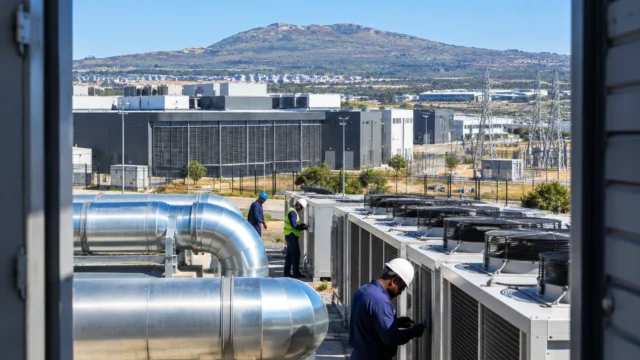
Sasol already has an industrial precedent in the country. The Uzbekistan GTL complex converts natural gas into liquid fuels using the Slurry Phase Distillate process developed by the South African company. The gas is converted into synthesis gas, then processed to produce synthetic diesel, kerosene and naphtha, among other products. Uzbekistan’s state agency responsible for investment promotion describes the technology and says the site is in the Qashqadaryo region.
This experience provides a concrete basis for the discussions, but does not guarantee they will come to fruition. Gas-to-liquids, or GTL, refers to the conversion of gas into liquid products. The proposed CTO project would be a different route: producing chemicals from coal. The processes are distinct, but both aim to turn local resources into higher-value industrial products rather than selling them only in raw form.
For Tashkent, this strategy could support local chemicals production and increase the use of domestic resources. For Sasol, it could open up licensing or partnership opportunities beyond its historic market. However, profitability would depend on equipment and operating costs, access to coal and demand from end-user industries. No public details are yet available to assess these factors.
South African group between heavy industry and new sectors
Based in Johannesburg, Sasol has an industrial history closely tied to coal. In South Africa, its Secunda facilities developed the conversion of this resource into fuels and chemicals. The company is now seeking to diversify its activities, but this does not mean an immediate abandonment of fossil-fuel processes. Its projects abroad and new low-carbon initiatives are advancing in parallel.
In September 2026, Sasol announced its first commercial sustainable aviation fuel contract with operator White Desert, for flights between Cape Town and Antarctica. The fuel is to be produced at Natref in South Africa from biological feedstocks, including used oils. The agreement marks a path distinct from coal, but does not in itself demonstrate that this production can replace conventional fuels on a large scale.
In another initiative, in August Sasol commissioned China’s Envision to carry out a design study for a renewable hydrogen system at Sasolburg. The study is to assess the integration of renewable energy, battery storage and electrolysers. Depending on its findings and future investment decisions, hydrogen could supply the production of e-methanol and, potentially, sustainable aviation fuel. This is still a study, not a facility announced as operational.
Different issues for the two countries
For South Africa, the international expansion of its technologies could preserve industrial expertise and generate revenue from engineering or licensing. But Sasol’s coal legacy remains a central issue in the country’s energy transition. New activities involving hydrogen or sustainable fuels must therefore be judged by their actual implementation, not just by announcements.
In Uzbekistan, the potential benefits would lie in local processing and the creation of industrial value chains. They would, however, depend on tangible outcomes: jobs, skills transfer, public revenues and access to finished products. The environmental impact, water and energy consumption, and emissions associated with coal processing would also be decisive. The information made public so far does not answer these questions.
The regional context differs for each country. South Africa belongs to the Southern African Development Community, SADC, while Uzbekistan is in Central Asia. This is therefore not a project backed by an African regional economic organisation. Its pan-African significance lies instead in the ability of a company from the continent to export technologies, negotiate partnerships and diversify its markets.
The next step to watch is whether these discussions turn into verifiable decisions: a feasibility study, a technology agreement, financing or a construction timetable. Until any of these steps is announced, the coal-to-olefins project remains a possibility under consideration, not a confirmed new industrial site. The contrast between this fossil-fuel prospect and South African investment in sustainable fuels sums up the choice facing Sasol: to capitalise on its historic expertise while demonstrating that its new sectors can achieve measurable scale.