Algeria
 Egypt
 Libya
 Morocco
 Sudan
 Tunisia
 Benin
 Burkina Faso
 Cabo Verde
 Côte d'Ivoire
 Ghana
 Guinea
 Guinea-Bissau
 Liberia
 Mali
 Mauritania
 Niger
 Nigeria
 Senegal
 Sierra Leone
 The Gambia
 Togo
 Cameroon
 Central African Republic
 Chad
 DR Congo
 Equatorial Guinea
 Gabon
 Republic of the Congo
 Burundi
 Comoros
 Djibouti
 Eritrea
 Ethiopia
 Kenya
 Madagascar
 Malawi
 Mauritius
 Mozambique
 Rwanda
 Seychelles
 Somalia
 South Sudan
 Tanzania
 Uganda
 Angola
 Botswana
 Eswatini
 Lesotho
 Namibia
 South Africa
 Zambia
 Zimbabwe
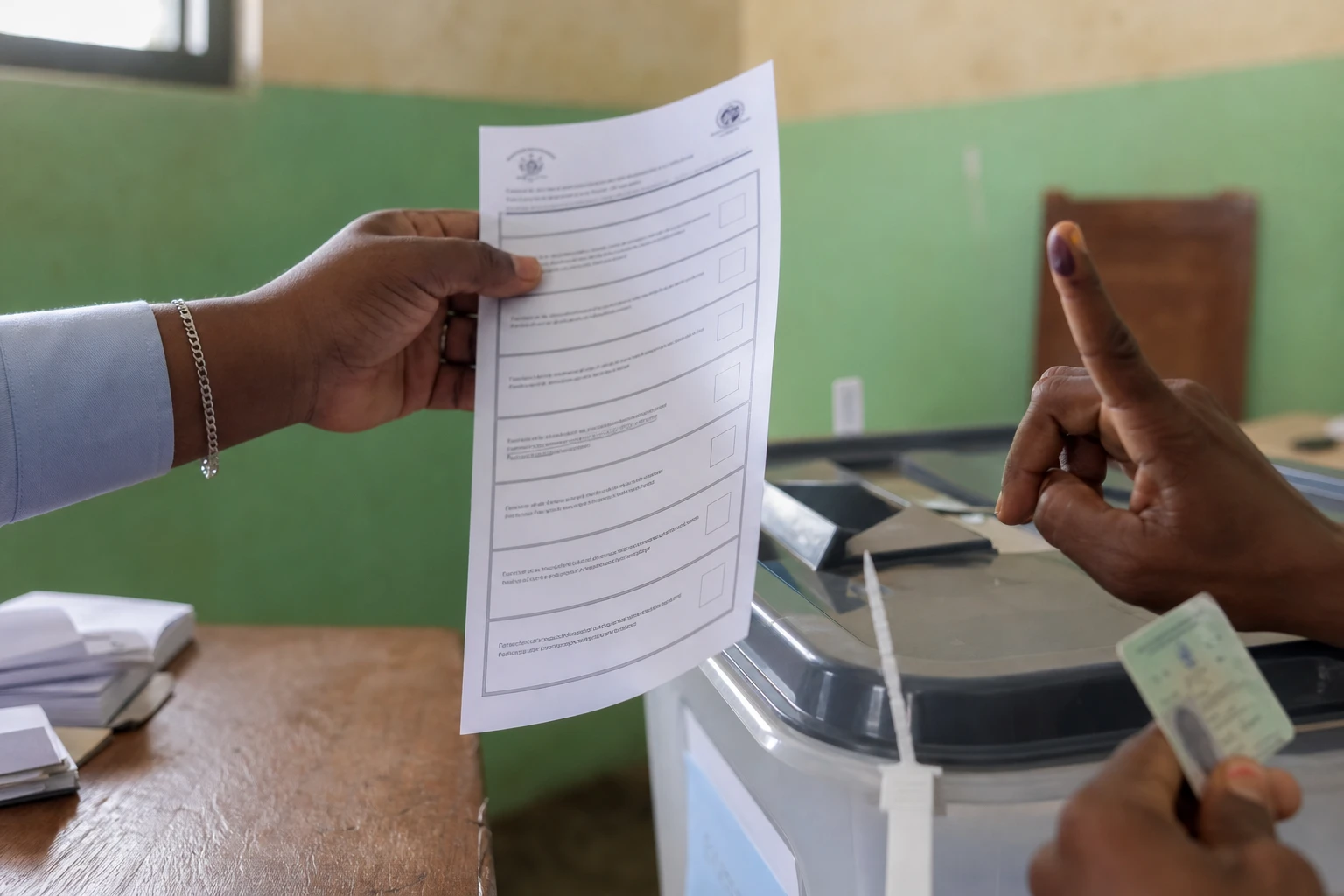
In São Tomé, re-election confirms a distinctive political balance
In São Tomé, a presidential vote often says more than the name of the winner. It also measures the strength of a system in which the head of state embodies unity but does not govern alone. The 19 July 2026 vote confirmed this logic: Carlos Vila Nova was re-elected in the first round, in a country where the presidency remains a guarantor of institutional stability rather than a centre of day-to-day decision-making.
In this archipelago in the Gulf of Guinea, the stakes go beyond a simple change of power. The campaign took place against the backdrop of an electoral calendar already set for the other institutions, with legislative elections scheduled for 27 September 2026. This sequence is a reminder that, in São Tomé and Príncipe’s political system, real executive power rests primarily with the majority in the National Assembly and the prime minister it appoints.
The election results and their institutional significance
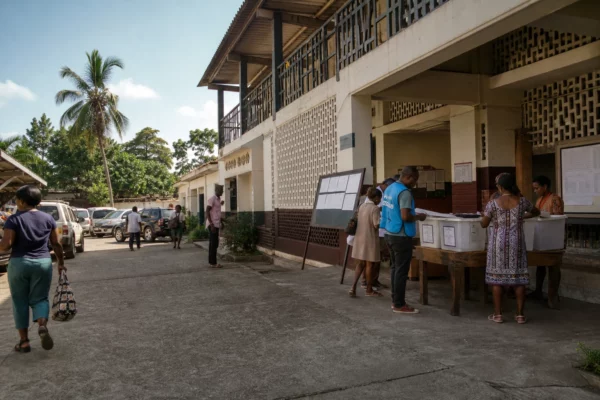
According to preliminary results published on 20 July by the National Electoral Commission, Carlos Vila Nova won 55.94% of the vote, ahead of MP Nito Viegas d’Abreu, who received 41.42%. The commission’s president, Jeudiger Nascimento, said the results were valid and that no irregularities had been detected. The victory was therefore secured without a second round, with the 50% threshold comfortably surpassed.
Turnout deserves as much attention as the winner’s score. Abstention reached 58.81%, a high level for an election that did not appear to generate significant institutional tensions. In a country of about 200,000 people, this figure indicates less a democratic rupture than a loosening relationship between part of the electorate and a presidential election whose role is limited. The São Toméan president is head of state, guarantor of the regular functioning of institutions and supreme commander of the armed forces, but the day-to-day levers of public policy remain in the hands of the government and the National Assembly.
The result also has domestic political significance. Nito d’Abreu was not a conventional outright opposition candidate: he came from the same political camp as the outgoing president, while former prime minister Patrice Trovoada had backed this challenger. This play of alliances reveals a fragmented political landscape, where loyalties can shift quickly around issues of governance, nomination and access to a parliamentary majority.
What this vote means for São Toméans
For the population, Carlos Vila Nova’s re-election does not herald a sharp change in public policy. Rather, it offers institutional continuity ahead of September’s legislative elections, a decisive period for forming the government. In a country whose economy still depends heavily on imports, energy costs and a small administrative apparatus, political stability matters above all because it determines how predictable public decisions will be. Campaign debates focused on energy, territorial organisation and the state’s ability to honour its commitments.
For political leaders, the vote reshapes the balance of power in more subtle ways. Carlos Vila Nova became president in 2021 with the support of ADI, the centre-right party. In 2026, he was re-elected in a more fluid context, following tensions with the leadership of that same camp and a political period marked by Patrice Trovoada’s departure from the post of prime minister. This development confirms a reality in São Tomé and Príncipe: parliament remains the centre of political power, and the presidency can exert influence only by relying on lasting compromises.
The case of São Tomé and Príncipe also illustrates a point often underestimated in Central Africa: the strength of a democracy is measured not only by a candidate’s score, but by institutions’ ability to absorb rivalries without an open crisis. The country’s recent past shows that this stability cannot be taken for granted. In November 2022, the authorities said they had thwarted an attempted coup, an episode that highlighted the potential fragility of a small island state exposed to political shocks.
Regional significance beyond the archipelago
Across Africa, São Tomé and Príncipe’s election matters beyond its borders because it adds an example of a peaceful electoral transition in the Gulf of Guinea. In a region where several states are still facing military transitions, electoral disputes or tensions between the presidency and parliament, São Tomé and Príncipe continues to offer an image of regular political competition. It is not a perfect model, but it is a useful counter-example.
The next event to watch is clear: the legislative, regional and local elections on 27 September 2026. That is where the real balance of power between the presidential palace, the government and the parties will be decided. If the new assembly confirms a clear majority, institutional cohabitation will remain smooth. If, on the other hand, the vote reshuffles the cards, the country could enter a period of tougher negotiations, without that calling its democratic foundations into question. In an African region where institutional balances are often fragile, São Tomé’s small-scale politics therefore carries more weight than it might seem.