Algeria
 Egypt
 Libya
 Morocco
 Sudan
 Tunisia
 Benin
 Cabo Verde
 Côte d'Ivoire
 Ghana
 Guinea
 Guinea-Bissau
 Liberia
 Mali
 Mauritania
 Niger
 Nigeria
 Senegal
 Sierra Leone
 The Gambia
 Togo
 Cameroon
 Central African Republic
 Chad
 DR Congo
 Equatorial Guinea
 Gabon
 Republic of the Congo
 São Tomé and Príncipe
 Burundi
 Comoros
 Djibouti
 Eritrea
 Ethiopia
 Kenya
 Madagascar
 Malawi
 Mauritius
 Mozambique
 Rwanda
 Seychelles
 Somalia
 South Sudan
 Tanzania
 Uganda
 Angola
 Botswana
 Eswatini
 Lesotho
 Namibia
 South Africa
 Zambia
 Zimbabwe
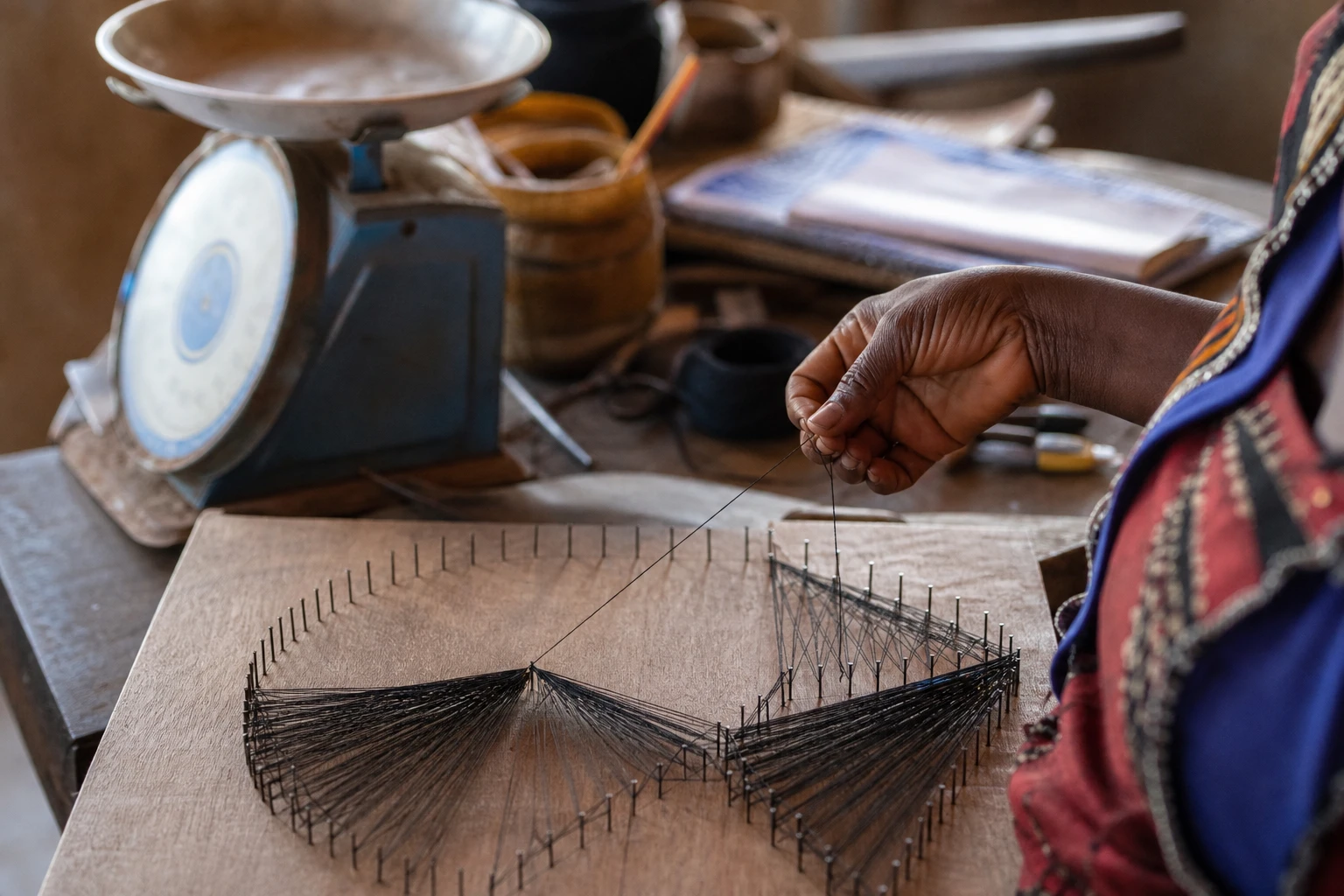
A quiet art attracting attention in Ouagadougou
In Ouagadougou’s workshops, some creations take shape out of step with the noise of the world. They emerge from thread, nails, patience and a precise touch. This is the case with string art, also known as thread art, which is gradually finding its place in Burkina Faso’s creative scene.
This practice is as much about aesthetics as it is about method. It requires time, concentration and a steady hand. It also appeals because it turns a simple material into an image that is clear from a distance, then surprising up close. In a country where crafts and visual arts hold a prominent place, this contemporary form naturally sits alongside established skills, from textiles to decorative objects.
Burkina Faso has a broader cultural ecosystem than is often thought. The Ouagadougou International Arts and Crafts Fair, SIAO, remains one of the sector’s major events, designed as a space for sales, visibility and the exchange of ideas among creators. The Burkinabè authorities also see it as a way to create jobs for young people and transform the crafts sector economically. SIAO reflects this ambition, as do public schemes supporting young people’s entry into employment.
In this environment, self-taught artists are opening up new paths. They do not always come from art schools, but often combine technical training, amateur practice and commercial flair. This mix is nurturing a generation of Burkinabè creators who can work on commissions, exhibitions or for brands, while developing their own style.
Samira Simporé: a path between technical expertise, creativity and independence
Samira Simporé is part of this generation. A civil engineer specialising in building and public works, she discovered thread art on social media before making it a regular pursuit. In less than two years, she has put together a small catalogue of works and begun earning an income from them. Her story shows that in Burkina Faso, creativity can also become a form of economic initiative without losing its roots in passion.
Her work is based on a simple principle: stretching threads between nails to bring an image into view. The result lies somewhere between drawing, mosaic and optical illusion. Samira also sees personal benefits in the practice. For her, it is calming, reduces stress and demands mental discipline. This therapeutic aspect is often mentioned by artists who work with their hands. It matters as much as the visual effect.
The young Burkinabè artist has already tried several formats. She creates portraits, designs inspired by local culture and depictions of wildlife. She also takes on commissions, including a company logo. This shift between personal expression and bespoke work says much about the economic realities of the visual arts in Burkina Faso: to survive, creators often have to balance inspiration with the market.
With around ten works to her name, Samira is among those bringing visibility to an art form that is still new in the country. That word matters. String art is not only new; it is still little known to the Burkinabè public. This novelty means practitioners have to persuade people before they can sell. They must explain the technique, show the result, reassure buyers about the support’s durability and demonstrate the value of the time invested.
The main challenge is therefore not just artistic. It is also about distribution. At exhibitions, creators working in this medium can remain in the minority alongside more established visual artists. This makes it harder to gain visibility, attract buyers and access professional networks. For a young artist, this lack of recognition can hold back a move upmarket, even as demand exists for personalised decorative pieces.
A practice connected to older African skills
String art did not emerge from a cultural vacuum. Promoters of art in Burkina Faso link it to older techniques, particularly weaving and knitting, in which thread already shapes an image or an object. This interpretation matters because it avoids presenting the technique as a simple import from elsewhere. Instead, it connects it to ways of making already found in African societies, then modernised with nails, rigid supports and contemporary graphic compositions.
This lineage gives the practice meaning. It shows that artistic innovation does not always mean inventing something from scratch. It can also revive familiar techniques, move them into new contexts and adapt them to different uses. That is precisely what string art does: it turns the logic of thread into a visual language. In doing so, it opens up new possibilities for decoration, portraiture, signage and brand identity.
Economically, the technique has another advantage. It uses accessible materials, but above all it gives value to working time. In a context where young people in Burkina Faso are seeking activities compatible with varied paths spanning study, employment and entrepreneurship, this kind of creative work can offer a route to success. The Burkinabè ministry responsible for youth regularly announces internship and employment programmes, underscoring the central importance of youth employment.
Burkina Faso’s cultural sector also helps absorb some of these skills. It brings together a range of people: visual artists, craftspeople, photographers, performers, fashion designers and decorators. In this landscape, the overlap between art and entrepreneurship has become commonplace. This is especially true for young women and men who want to create without waiting for a conventional organisation to open its doors. String art fits squarely into this approach.
Building a profile beyond Ouagadougou
For Samira Simporé, the challenge in the months ahead is clear: to raise awareness of the practice, organise exhibitions and expand training. The aim is not just to win customers. It is also to build a small community of practitioners able to pass on the technique, explore different uses for it and establish it firmly in Burkina Faso’s cultural landscape.
This ambition reaches beyond her individual case. It says something about urban Africa today: young, versatile creators trained outside traditional art circuits are building businesses at the intersection of culture, digital technology and the service economy. In Burkina Faso, this trend is all the more interesting because the country has long used its arts scene as a marker of regional influence, from contemporary creation to major crafts gatherings in Ouagadougou.
The next step will be recognition. If exhibitions, private commissions and training follow, string art could move from being a curiosity to becoming a sustainable niche. In a country where art and crafts are already seen as sectors that create value, that shift would be more than a passing fad. It would confirm that a new generation of Burkinabè can invent, produce and sell using its own references, without breaking with its heritage.