Algeria
 Egypt
 Libya
 Morocco
 Sudan
 Tunisia
 Benin
 Cabo Verde
 Côte d'Ivoire
 Ghana
 Guinea
 Guinea-Bissau
 Liberia
 Mali
 Mauritania
 Niger
 Nigeria
 Senegal
 Sierra Leone
 The Gambia
 Togo
 Cameroon
 Central African Republic
 Chad
 DR Congo
 Equatorial Guinea
 Gabon
 Republic of the Congo
 São Tomé and Príncipe
 Burundi
 Comoros
 Djibouti
 Eritrea
 Ethiopia
 Kenya
 Madagascar
 Malawi
 Mauritius
 Mozambique
 Rwanda
 Seychelles
 Somalia
 South Sudan
 Tanzania
 Uganda
 Angola
 Botswana
 Eswatini
 Lesotho
 Namibia
 South Africa
 Zambia
 Zimbabwe
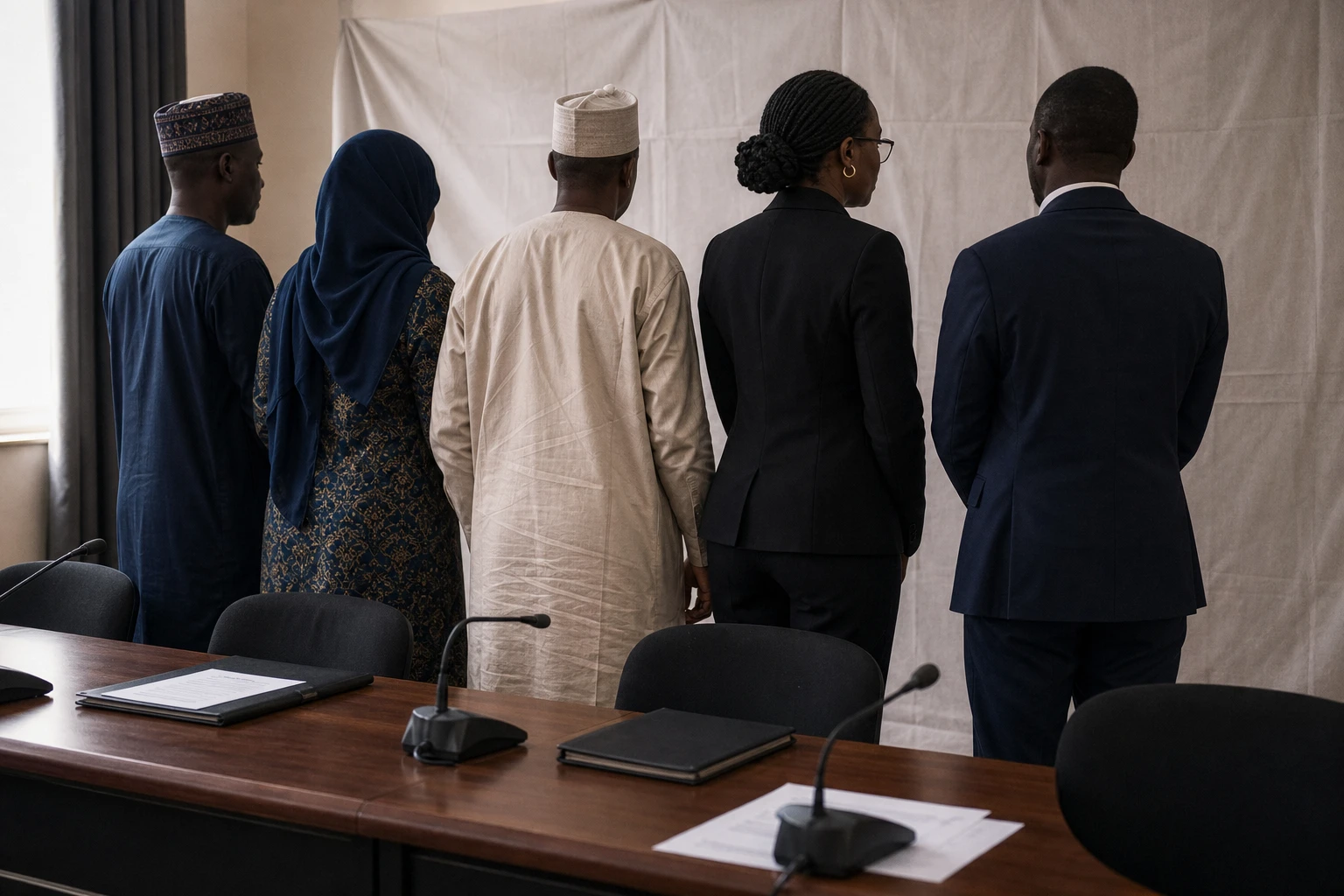
When international justice becomes a test of sovereignty
In N’Djamena, Bamako and Ouagadougou, the question is no longer merely a legal one. It concerns the place states want to occupy in the international order, at a time when war, political repression and allegations of abuses weigh heavily on the Sahel region. Withdrawal from the International Criminal Court is therefore not a symbolic gesture. It is a political signal addressed to capitals, but also to victims, judges and armed forces.
The debate also has a regional dimension. Chad is part of Central Africa, while Mali, Burkina Faso and Niger have formed the Alliance of Sahel States, an alliance established after their breaks with ECOWAS, the Economic Community of West African States. In this context, each decision to withdraw weighs on the very idea of credible African justice, capable of responding to serious crimes without depending on an external balance of power.
What was decided, and what the texts say
Chad announced on 27 July 2026 its intention to leave the Rome Statute, the treaty that established the ICC. A few weeks earlier, Burkina Faso, Mali and Niger had already begun the same process. The law is clear: under Article 127 of the Rome Statute, withdrawal takes effect only one year after notification to the treaty’s depositary. In other words, these departures are not immediate. They unfold over a period that still leaves room for diplomacy.
Chadian authorities say they want to strengthen African justice mechanisms and denounce a court they consider too focused on the continent. This line of argument is not new. The same case was made by Sahelian governments when they announced their departure from the ICC in 2025 and then formalised their notifications in 2026. But the ICC’s institutional interpretation highlights an important qualification: withdrawal erases neither obligations already incurred nor acts committed during membership.
The fault lines behind the sovereignty rhetoric
The heart of the disagreement is political. Supporters of withdrawal describe the ICC as a selective jurisdiction, too focused on countries in the Global South. This criticism resonates in many African societies, where international justice is often seen as slow, remote or asymmetric. But opponents point out that the court does not put peoples on trial. It prosecutes individuals suspected of war crimes, crimes against humanity or genocide. The debate is therefore not about Africa as a whole. It concerns the safeguards available to civilians exposed to abuses by their own authorities.
In Chad’s case, the argument for “leaving in the name of sovereignty” also faces realities on the ground. The country hosts refugees from Sudan, particularly from Darfur, and serves as a base for international humanitarian operations in the east of the country. The ICC remains involved in the Darfur case and conducts outreach activities among affected populations on Chadian territory. For some local actors, abandoning the court while the eastern border remains under strain looks less like regaining control than weakening the tools available to put pressure on those responsible for impunity.
Domestic criticism is also fuelled by specific national memories. In Chad, voices recall the violence of 20 October 2022 in N’Djamena, when the crackdown on demonstrations left dozens dead, according to several tolls published at the time. In Mali, Burkina Faso and Niger, the issue is broader still: it concerns abuses attributed to armed forces and armed groups, as well as crackdowns on opponents since successive coups between 2020 and 2023. Withdrawal from the ICC does not change these realities. It only changes where responsibility may, or may not, be pursued.
Beyond Paris, a precedent that could spread
The Paris conference, held on 11 August, crystallised this turning point. Political figures and civil society actors from Chad and the Alliance of Sahel States set out opposing positions on withdrawal. Such a meeting matters because it shows that the issue is not being decided only in foreign ministries. It is also being contested in African and diaspora public spheres, where the legitimacy of institutions is shaped.
The external factor is real. Washington stepped up pressure on the ICC in 2026, and several media outlets reported that this approach may have encouraged some African governments to accelerate their departure. Chad, for its part, has also called on the African Union to consider stronger continental judicial mechanisms. This sequence matters for the whole continent because it revives a long-standing question: how can international justice be built to be seen as legitimate, without reproducing the political hierarchies its critics accuse it of upholding?
What to watch now is simple and concrete: the impact of notifications over the coming months, the African Union’s stance, and the ability of the states concerned to offer something beyond withdrawal in principle. Ultimately, the real question is not whether the ICC is imperfect. It is. The question is who will still protect victims when states withdraw from the jurisdiction that remained available to them.