Algeria
 Egypt
 Libya
 Morocco
 Sudan
 Tunisia
 Benin
 Cabo Verde
 Côte d'Ivoire
 Ghana
 Guinea
 Guinea-Bissau
 Liberia
 Mali
 Mauritania
 Niger
 Nigeria
 Senegal
 Sierra Leone
 The Gambia
 Togo
 Cameroon
 Central African Republic
 Chad
 DR Congo
 Equatorial Guinea
 Gabon
 Republic of the Congo
 São Tomé and Príncipe
 Burundi
 Comoros
 Djibouti
 Eritrea
 Ethiopia
 Kenya
 Madagascar
 Malawi
 Mauritius
 Mozambique
 Rwanda
 Seychelles
 Somalia
 South Sudan
 Tanzania
 Uganda
 Angola
 Botswana
 Eswatini
 Lesotho
 Namibia
 South Africa
 Zambia
 Zimbabwe
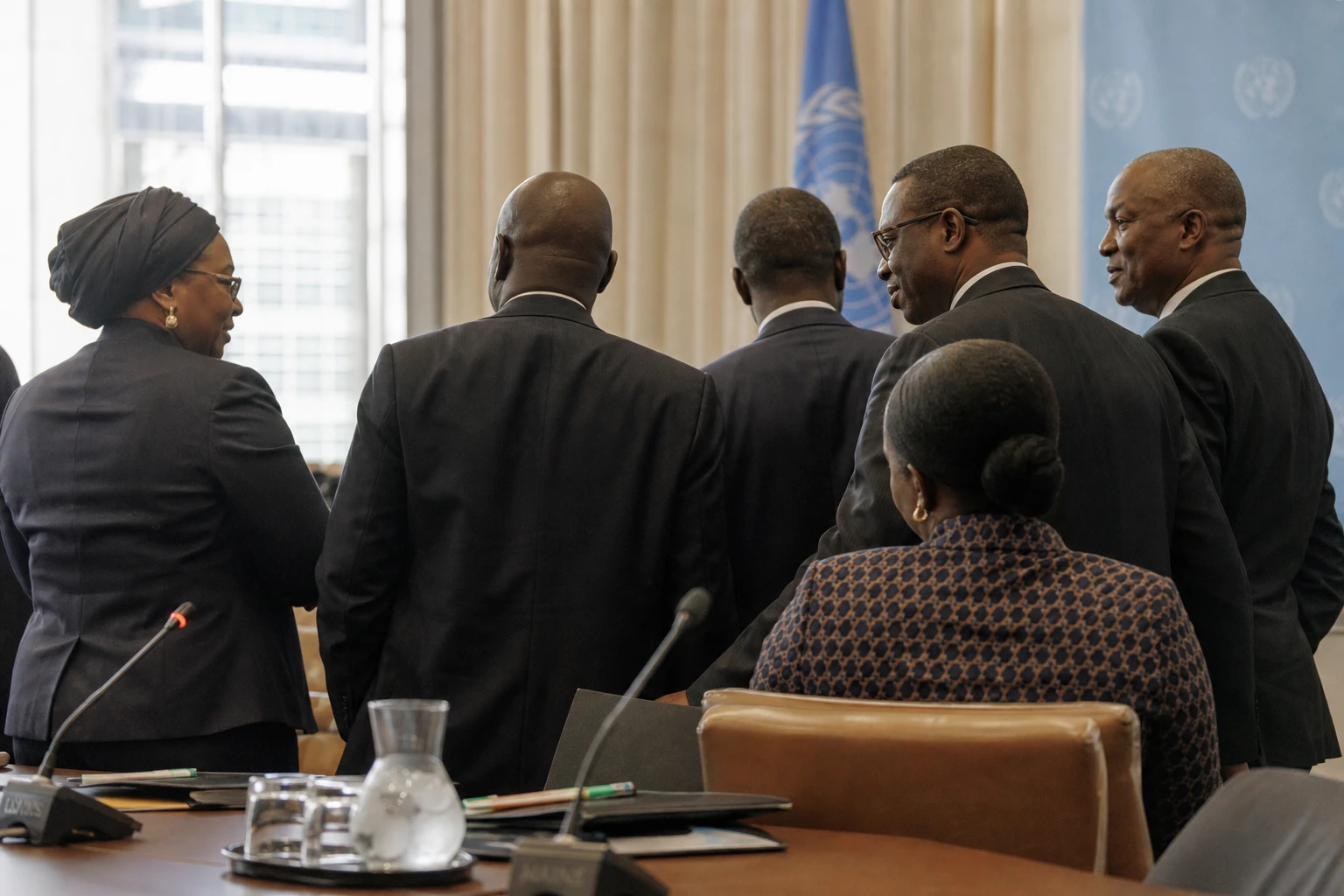
In New York, the Sahel is also seeking to shape the narrative
In the corridors of the United Nations, words count almost as much as votes. For Burkina Faso, Mali and Niger, the challenge is not simply to maintain a diplomatic presence during the UN’s high-level week. It is also to put forward, alongside other capitals, their own interpretation of their joint project: the Confederation of Sahel States, formed through their political and security rapprochement.
This comes as the UN General Assembly opened its 81st session on 8 September 2026 in New York, with the general debate running from 22 to 26 September and then on 28 September. The New York platform remains one of the few places where African states can hold numerous meetings in a short time, with heads of delegation, ministers and ambassadors all present in the same city.
A diplomatic push designed to speak with one voice
On Sunday 20 September, the foreign ministers of Burkina Faso, Mali and Niger held a preparatory meeting in New York with their representatives in Washington and at the UN. The stated aim was simple: align messages, check the schedule of meetings and prepare a side event devoted to the Confederation. Burkina Faso’s authorities presented this coordination as a way to “review the overall programme” and align the talking points for the different interventions.
This initiative is not taking place in isolation. The Confederation of Sahel States has been taking shape since the break with ECOWAS, the Economic Community of West African States, from which the three countries have distanced themselves amid mounting political and security tensions. On its institutional website, Niger’s authorities describe the AES as a union founded on sovereignty, defence, diplomacy and development. In other words, this is no longer simply about co-operation, but about a political framework that the three capitals want to make visible on the international stage.
The New York schedule also offers opportunities for bilateral meetings. The agenda announced by the Sahelian delegations includes talks with Russian Foreign Minister Sergei Lavrov, as well as their counterparts from Germany, Switzerland and Italy. In African diplomacy, this kind of gathering makes it possible to address several audiences at once: strategic allies, technical partners, potential donors and members of the Global South.
The core message: security, sovereignty and control of the narrative
Burkina Faso’s minister Karamoko Jean Marie Traoré summed up the purpose of the presence in New York with a phrase that says much about the battle under way: correcting the “narratives” about the confederation. Behind this expression lies a clear criticism of the outside view of the Sahel, often reduced to insecurity, institutional ruptures or crises alone. The three capitals, by contrast, want to put forward their own vocabulary: sovereignty, internal reorganisation, regional co-operation and diplomatic continuity.
This battle over language is not trivial. At a multilateral conference, whoever tells the story often sets the terms of the debate. The AES authorities are therefore seeking to prevent others from speaking on their behalf, whether former partner powers, rival regional institutions or major powers that view the Sahel primarily through the lens of security. This strategy is also a way to regain control of the image of the military-led transitions in Burkina Faso, Mali and Niger, three countries whose de facto authorities are now promoting a shared international agenda.
On the ground, the stakes are twofold. For leaders, New York is a chance to consolidate a nascent diplomatic architecture and test the strength of alliances. For the population, however, the practical questions remain: the movement of people, border security, supplies, jobs, and the ability of states to keep administrations—often under pressure—functioning. This is where the AES wants to be judged, rather than on slogans.
Russia, Europe and the balance of a Sahel in transition
The international dimension of the issue extends far beyond the UN. In July 2026, Russia and Niger had already sent a strong political signal in Niamey, signing a memorandum of co-operation on civilian nuclear energy and related technologies. Russian authorities presented the document as a framework for deepening a structured relationship with Niger, particularly in energy and training. The episode shows that AES countries are expanding partnerships beyond the traditional West African sphere.
At the same time, the Sahelian delegations are not closing the door to European partners. The announcement of talks with Germany, Switzerland and Italy confirms a pragmatic approach: broaden the range of interlocutors while retaining political control of the message. This is a method found in several African capitals undergoing diplomatic realignment: diversify without dissolving into others’ orbit.
The regional context makes this caution necessary. ECOWAS remains a central actor in West Africa, but the AES is now seeking to establish its own institutional pace. Recent meetings on cross-border co-operation, mobility and humanitarian action show that integration is also being shaped by highly practical issues, not just grand declarations of sovereignty. Border governors, local administrations and mobile populations are directly affected by these choices.
What New York could change for the Sahel confederation
In the short term, the UN gives the AES a global platform to set out its priorities before the general debate enters its most visible phase. In the medium term, the exercise will show whether the Confederation can speak with one voice, beyond national borders and security emergencies. The test will be political as well as diplomatic: gaining visibility without limiting itself to contesting external narratives.
For the continent, the issue matters for a simple reason. The Sahel has become one of the most closely watched laboratories of Africa’s institutional realignment. What is at stake touches on sovereignty, alliances, the role of regional organisations and the ability of states to negotiate directly with external powers. The AES’s next meetings, announced consultations with foreign partners and discussions within the UN will show whether the Confederation remains a political symbol or begins to produce lasting mechanisms.