Algeria
 Egypt
 Libya
 Morocco
 Sudan
 Tunisia
 Benin
 Burkina Faso
 Cabo Verde
 Côte d'Ivoire
 Ghana
 Guinea
 Guinea-Bissau
 Liberia
 Mali
 Mauritania
 Niger
 Nigeria
 Senegal
 Sierra Leone
 The Gambia
 Togo
 Cameroon
 Central African Republic
 Chad
 DR Congo
 Equatorial Guinea
 Gabon
 Republic of the Congo
 São Tomé and Príncipe
 Burundi
 Comoros
 Djibouti
 Eritrea
 Ethiopia
 Kenya
 Madagascar
 Malawi
 Mauritius
 Mozambique
 Seychelles
 Somalia
 South Sudan
 Tanzania
 Uganda
 Angola
 Botswana
 Eswatini
 Lesotho
 Namibia
 South Africa
 Zambia
 Zimbabwe
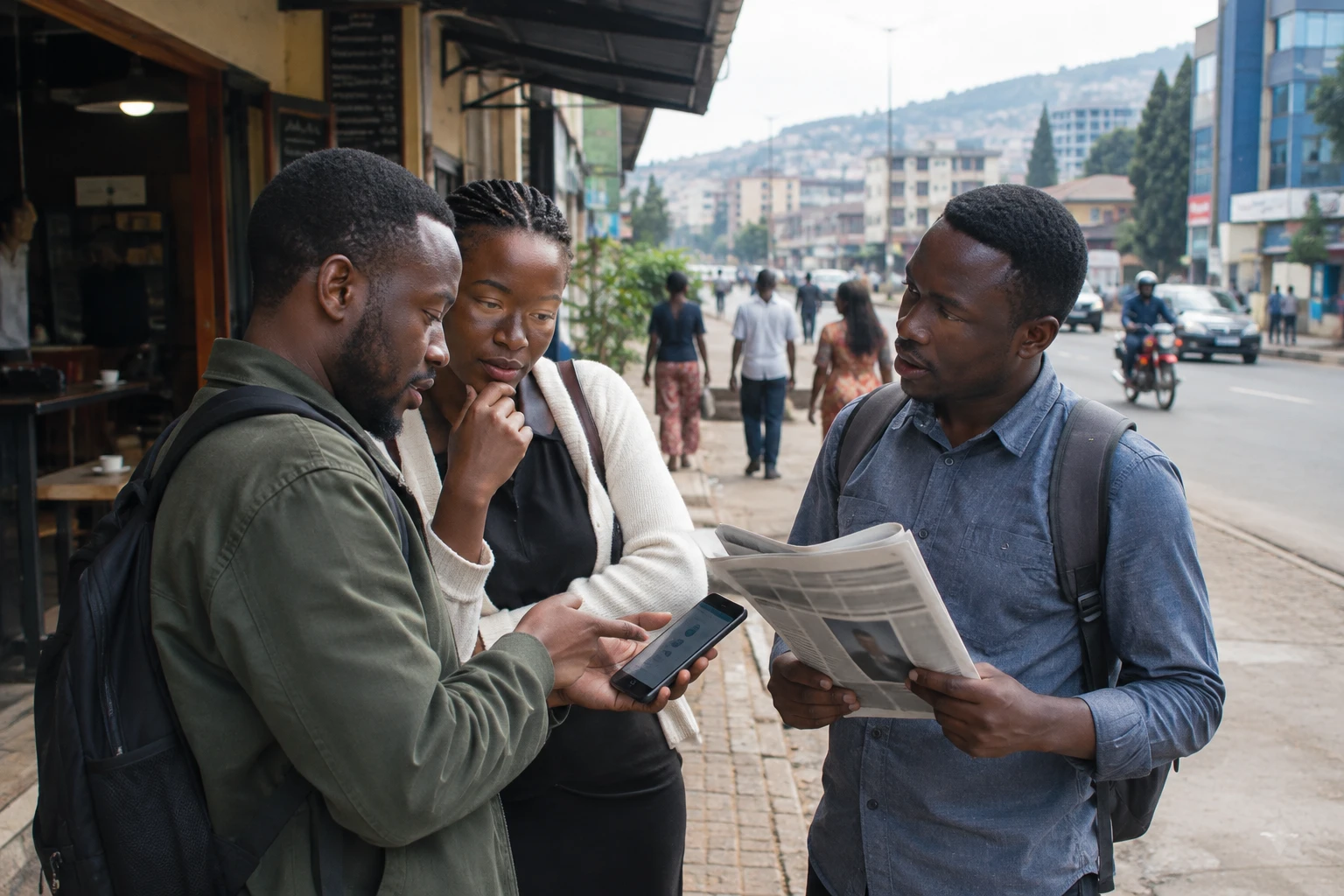
Can financial sanctions shift the dynamics of a conflict that has resisted ceasefires and mediation? For Rwanda, the US decision now targets the defence ministry and a financial institution. For people in the east of the Democratic Republic of the Congo (DRC), the priority remains security and a return to stable civilian life.
A regional crisis, several peace processes
The conflict in eastern DRC pits Congolese forces against the M23, an armed movement that has taken control of territory in the provinces of North Kivu and South Kivu. Kinshasa and United Nations experts accuse Kigali of supporting the group. The Rwandan government denies providing military support and points to its security concerns, particularly the threat posed by the Democratic Forces for the Liberation of Rwanda (FDLR), an armed group active in the DRC.
The crisis is playing out between two neighbouring countries, but its effects reach beyond their borders. Rwanda and the DRC belong to the East African Community (EAC), a regional organisation that aims, among other things, to strengthen economic and political co-operation. The African Union is also supporting mediation efforts, while Qatar is facilitating talks between Kinshasa and the M23. These initiatives add to the Washington process between the two states.
The Washington accords, signed on 4 December 2025 by Presidents Paul Kagame and Félix Tshisekedi, set out commitments on security and co-operation. They have not, however, brought the fighting to an end. In March 2026, Washington had already sanctioned the Rwandan army and four of its senior officials. The new measure extends the pressure to other institutions.
Two Rwandan institutions targeted
On 28 October 2026, the US Treasury Department announced sanctions against Rwanda’s defence ministry and Zigama Credit and Savings Society. Washington describes the Rwandan financial institution as having facilitated support for the M23 and its political wing, the Congo River Alliance.
According to the US Treasury, Zigama is alleged to have facilitated payments linked to the purchase of military equipment, the travel of military personnel and transactions associated with the M23. Washington also says that funds may have moved between the institution, entities linked to the movement and mineral networks. These are the reasons given by US authorities; they do not, in themselves, amount to an independent finding on each alleged transaction.
US sanctions can, among other things, block the relevant assets within US jurisdiction and restrict transactions with US persons or companies. Their practical reach therefore depends on the targeted entities’ financial and commercial links to the relevant networks. They do not directly alter the military balance on the ground.
Washington links its decision to what it says is the failure to honour commitments made under the peace accords. The Treasury is calling on Kigali to end its alleged support for the M23 and withdraw its forces from eastern Congo. In March, Kigali described the US sanctions against the army and officers as “unilateral sanctions” and said its security concerns were not being taken into account. As of 30 October, no specific Rwandan response to this new round of sanctions had been established in the information consulted.
Diplomatic pressure and economic consequences
For the DRC authorities, the US decision increases pressure on Kigali. The Congolese government welcomed it on 29 October, according to the Congolese Press Agency. For Rwanda, it also raises questions of reputation and financial relations: a US designation may prompt partners to review their ties with the institutions targeted, even when their transactions do not pass directly through the United States.
The consequences are not evenly distributed. Political and military officials face direct diplomatic pressure. Banks, suppliers and companies doing business with the targeted entities must assess compliance risks. Households are not automatically affected by the measures, but financial disruption or greater caution among partners could have indirect effects on economic activity.
In eastern DRC, people continue to face fighting, displacement and uncertainty over access to services and livelihoods. Sanctions are no substitute for the protection of civilians or ceasefire mechanisms. Their effectiveness will depend on how they are implemented, how the parties concerned respond and how they are linked to negotiations. It is also important to distinguish allegations against institutions or armed forces from individual responsibility, which must be established on the basis of verifiable evidence.
The African Union’s role remains critical
The US decision comes as both governments accuse each other of failing to honour their commitments. A United Nations Security Council report highlights the continuing mistrust between Kigali and Kinshasa. The African Union, with Togo as its designated mediator, is seeking in parallel to support a regional political path. These efforts underline that the crisis cannot be resolved through a single diplomatic channel.
The next step will be less about announcing new measures than verifying commitments: the withdrawal or presence of forces, the neutralisation of armed groups and monitoring of the ceasefire. Co-ordination between the Washington discussions, the Doha talks and African mediation will also matter. For Rwanda, the DRC and their EAC neighbours, the central challenge remains turning signed texts into observable changes on the ground, without diplomatic pressure closing off room for negotiation.