Algeria
 Egypt
 Libya
 Morocco
 Sudan
 Tunisia
 Burkina Faso
 Cabo Verde
 Côte d'Ivoire
 Ghana
 Guinea
 Guinea-Bissau
 Liberia
 Mali
 Mauritania
 Niger
 Nigeria
 Senegal
 Sierra Leone
 The Gambia
 Togo
 Cameroon
 Central African Republic
 Chad
 DR Congo
 Equatorial Guinea
 Gabon
 Republic of the Congo
 São Tomé and Príncipe
 Burundi
 Comoros
 Djibouti
 Eritrea
 Ethiopia
 Kenya
 Madagascar
 Malawi
 Mauritius
 Mozambique
 Rwanda
 Seychelles
 Somalia
 South Sudan
 Tanzania
 Uganda
 Angola
 Botswana
 Eswatini
 Lesotho
 Namibia
 South Africa
 Zambia
 Zimbabwe
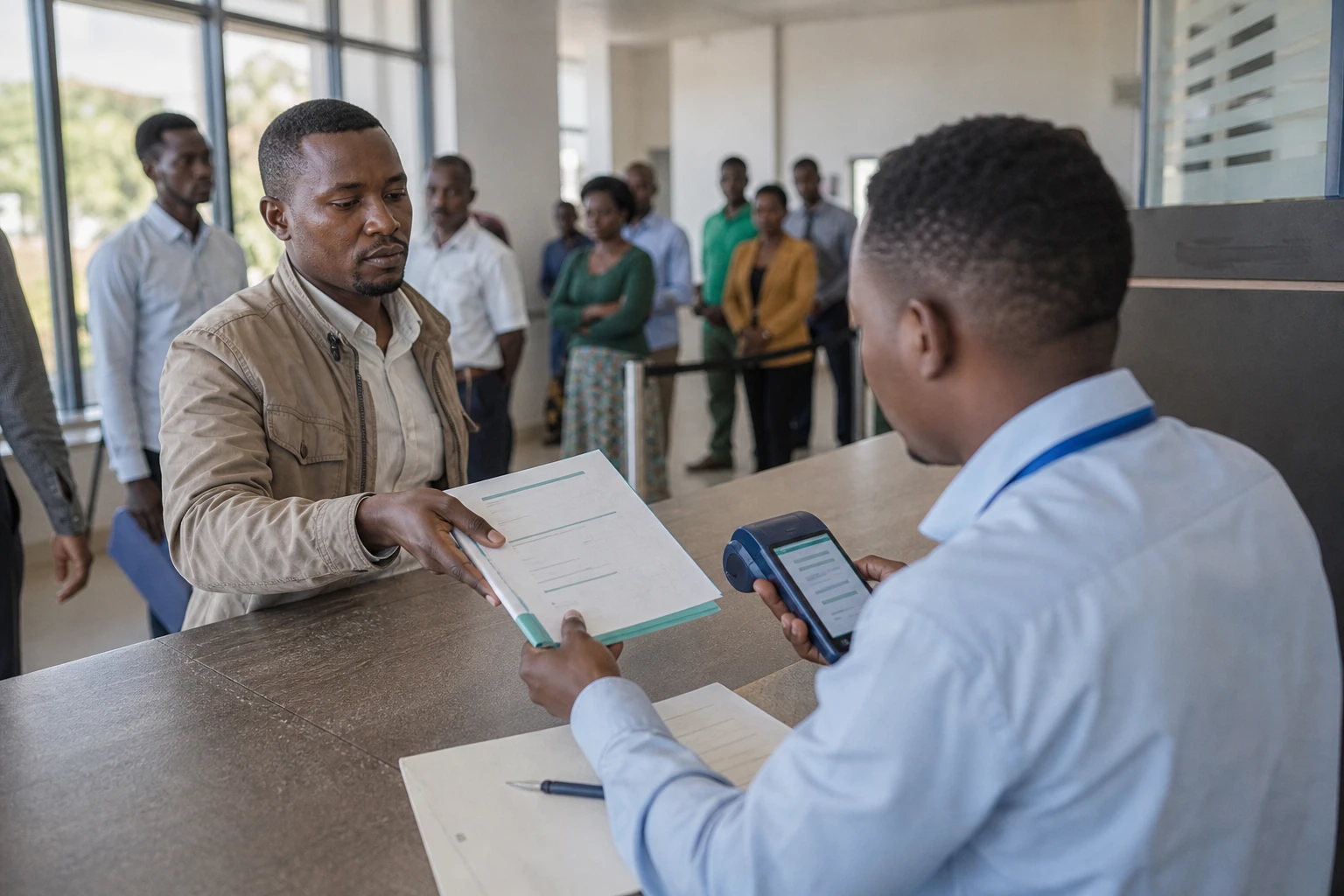
In sub-Saharan Africa, where credit is becoming more expensive and debt pressures are mounting, the quality of institutions is a tangible advantage. It affects a state’s ability to mobilise revenue, protect households and maintain investor confidence.
The ranking published on 30 September 2026 by the World Bank under the CPIA — the Country Policy and Institutional Assessment — places Rwanda first among the 40 sub-Saharan African countries eligible for financing from the International Development Association (IDA), the arm serving the world’s poorest countries.
A tool that measures policies actually implemented
The CPIA does not reward government announcements. It examines measures actually implemented during the year under review. The results of the 2026 edition therefore cover policies implemented in 2025.
The assessment is based on 16 criteria. These include monetary stability, budget management, debt, financial regulation, social protection, property rights, the quality of public administration and the fight against corruption.
The criteria are grouped into four equally weighted clusters: economic management, structural policies, social inclusion and equity, and public sector management and institutions. Each indicator is scored from 1 to 6. The higher the score, the stronger the policies and institutions are judged to be.
The average score for the sub-Saharan African countries covered reached 3.1 in 2025, matching the average for all IDA borrowers. The World Bank thus points to regional improvement, although significant differences between countries remain.
Rwanda maintains a clear lead
Rwanda scores 4.2 overall. The East African country stands out particularly in social inclusion and equity, with 4.5 points, and in structural policies, with 4.3.
Its score for economic management is 4. Public sector management and institutions receive 3.9. This result is lower than those for the other components, but remains well above the regional average.
This performance extends a trend already seen in previous editions. The World Bank’s Rwanda country brief confirms an overall score of 4.2 for 2025 and a score of 4.5 in the social inclusion and equity cluster.
The ranking is not, however, a comprehensive assessment of development. It does not directly measure living standards, political freedom or citizen satisfaction. It assesses the quality of the public policy framework against a specific institutional set of criteria.
West Africa secures several top places
Côte d’Ivoire ranks second, with 4 points. The West African economy records its strongest results in economic management and in social inclusion and equity policies.
Benin and Cabo Verde share third place, with 3.9 points. Kenya and Togo follow, each with 3.8. Mauritania scores 3.7, ahead of Tanzania, which receives 3.6.
Burkina Faso, Ghana, Senegal and Uganda round out the top ten, each with 3.5 points. The presence of several West African countries shows that the strongest results are not concentrated in a single subregion.
Guinea scores 3.4. Cameroon, Ethiopia, The Gambia, Lesotho, Madagascar, Nigeria and Zambia each score 3.3. The Democratic Republic of the Congo, with 3.2, ranks ahead of Mali, which also scores 3.2.
Progress, but also setbacks
Thirteen countries improved their scores compared with the previous edition. Ten others recorded a decline. The trend is therefore uneven and does not point to a general improvement in public policies.
The momentum appears more favourable among countries already near the top of the rankings. Declines are concentrated further down the table. This distribution may reflect differences in administrative capacity, as well as gaps in access to finance, political stability and the ability to absorb external shocks.
Economic management remains the region’s strongest area. Progress includes controlling inflation, managing budgets and monitoring debt. These advances address a constraint that has become central for governments: preserving public spending while limiting the cost of financing.
Structural policies remain stable, with a regional average of 3.2. They concern, among other things, the functioning of the financial sector, the business environment, trade and property rights.
Social inclusion has benefited from progress in human development and the expansion of some social protection schemes. However, these programmes remain vulnerable to budget trade-offs. In many countries, both urban households and workers in the informal economy feel the direct effects of rising prices and shrinking public finances.
Governance remains the main challenge
The weakest area is public sector management and institutions. Shortcomings affect property rights, rules-based governance, accountability and transparency.
This weakness has very tangible effects. It can slow access to public services, complicate business activity and undermine confidence in how national resources are used. It also weighs on local authorities, which are often tasked with implementing social policies with limited resources.
The contrast between the highest-ranked countries and those facing serious weaknesses also highlights the limits of a regional average. Rwanda, Côte d’Ivoire and Benin have followed different institutional paths. Their administrative models, political systems and economic constraints are not interchangeable.
A signal for donors and African governments
The CPIA is used, among other things, to inform the allocation of IDA resources. The results can therefore have financial implications, even though a score alone cannot sum up a country’s situation.
For African governments, the challenge goes beyond the rankings. It is to turn administrative reforms into visible services, better-mobilised revenue and more accessible protections. For citizens, institutional quality only matters when it makes government action more predictable.
The next update to the scores will show whether the progress made in 2025 can withstand debt pressures, declining aid and market volatility. It will also indicate whether the highest-ranked countries can strengthen their institutions rather than simply maintain their lead.