Algeria
 Egypt
 Libya
 Morocco
 Sudan
 Tunisia
 Benin
 Burkina Faso
 Cabo Verde
 Côte d'Ivoire
 Ghana
 Guinea
 Guinea-Bissau
 Liberia
 Mali
 Mauritania
 Niger
 Nigeria
 Senegal
 Sierra Leone
 The Gambia
 Togo
 Cameroon
 Central African Republic
 Chad
 DR Congo
 Equatorial Guinea
 Gabon
 Republic of the Congo
 São Tomé and Príncipe
 Burundi
 Comoros
 Djibouti
 Eritrea
 Ethiopia
 Kenya
 Madagascar
 Malawi
 Mauritius
 Mozambique
 Rwanda
 Seychelles
 Somalia
 Tanzania
 Uganda
 Angola
 Botswana
 Eswatini
 Lesotho
 Namibia
 South Africa
 Zambia
 Zimbabwe
In Rumbek, regaining control of the streets is not enough to restore security. After gunfire and residents forced to flee, the challenge is also to prevent reprisals and protect civilians. The violence comes as South Sudan prepares for national elections scheduled for December.
Deadly attack, toll still provisional
At dawn on Friday 9 October, armed men entered Rumbek, the capital of Lakes State in the centre of the country. Clashes broke out with armed residents. According to witnesses cited by South Sudanese and international media, the attackers briefly took control of parts of the city before reinforcements arrived.
The interim government reported about 71 deaths, including four soldiers. The figure is based on preliminary security reports: the Information Ministry said the exact toll had not yet been confirmed. It should therefore be treated as an official estimate, not a definitive count. South Sudanese outlet Radio Tamazuj reports that the toll is provisional, while the Associated Press, as carried by Al Jazeera, says the number of victims has not been independently verified.
The authorities announced that their forces had regained control of Rumbek and called on communities to remain calm. The United Nations Mission in South Sudan (UNMISS) deployed a rapid reaction unit, made up of Nepalese peacekeepers, to help prevent further clashes and protect the hospital and humanitarian sites. The UN described the situation as calm but tense. The UN Secretary-General’s spokesperson’s briefing confirms the deployment.
Local tensions amid the spread of weapons
The first accounts available describe a confrontation between armed young men from rival Dinka clan groups. The precise circumstances, immediate trigger and chain of responsibility remain to be established. A South Sudanese researcher cited in the initial account points to long-standing tensions, but the information available does not allow the details to be independently verified. It would therefore be premature to reduce the episode to a single cause.
In several parts of the country, local conflicts can escalate when community disputes combine with the spread of weapons and weak security mechanisms. They directly affect residents: sudden displacement, disrupted access to healthcare and risks to humanitarian workers. Markets and travel can also be affected, even when fighting lasts only a few hours.
The presence of national forces enabled the city to be retaken, according to the government. But restoring order will also depend on protecting neighbourhoods, allowing families to return and conducting credible investigations. Civil disarmament, called for by civil society actors, presents a practical challenge: it requires security guarantees and impartial enforcement, otherwise one community could feel more exposed than another.
National transition under pressure
The Rumbek crisis comes at a delicate political moment. On 22 September 2026, President Salva Kiir dissolved the transitional government and installed an interim administration ahead of the election announced for 22 December. The transitional government stemmed from the 2018 Revitalised Peace Agreement, concluded to end the civil war and establish power-sharing.
This reshuffle does not in itself resolve the challenges of preparing for elections. The vote scheduled for December would be the first since independence was declared in 2011, and whether it goes ahead depends on political, institutional and security conditions. South Sudan’s public broadcaster confirmed the dissolution of the government on 22 September. The announced election date, 22 December, is also reported by Radio Tamazuj.
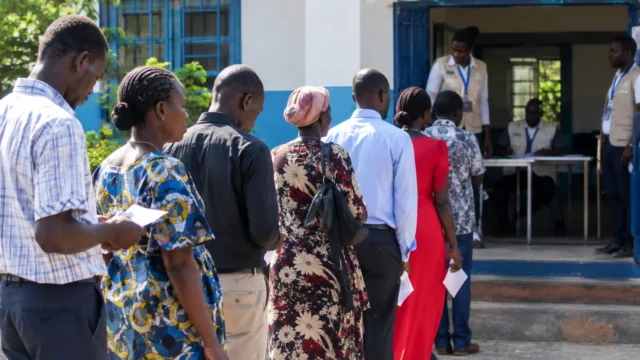
The violence in Rumbek alone does not show that elections will be impossible. It does, however, highlight a basic requirement: residents must be able to travel, meet and take part in political life without fearing weapons. In urban centres, this means securing public spaces and essential services. In rural areas, it also requires mechanisms capable of containing tensions before they spread to towns.
A test for institutions and the region
South Sudan is a member of the Intergovernmental Authority on Development (IGAD), an East African regional organisation that supports the peace process. IGAD has called for inclusive and transparent elections in December. It and the African Union will therefore closely monitor the authorities’ ability to protect civilians and maintain a credible political framework. IGAD’s communiqué refers to the South Sudanese election scheduled for December 2026.
In the short term, the facts to watch are the final toll, the findings of investigations and a lasting return to calm in Rumbek. Nationally, the question is whether the interim administration can provide security without marginalising the parties to the peace agreement. For South Sudanese people, the credibility of the vote will also be tested in these towns and communities, far from the decisions taken in Juba alone.