
 Algeria
 Egypt
 Libya
 Morocco
 Sudan
 Tunisia
 Burkina Faso
 Cabo Verde
 Côte d'Ivoire
 Ghana
 Guinea
 Guinea-Bissau
 Liberia
 Mali
 Mauritania
 Niger
 Nigeria
 Senegal
 Sierra Leone
 The Gambia
 Togo
 Cameroon
 Central African Republic
 Chad
 DR Congo
 Equatorial Guinea
 Gabon
 Republic of the Congo
 São Tomé and Príncipe
 Burundi
 Comoros
 Djibouti
 Eritrea
 Ethiopia
 Kenya
 Madagascar
 Malawi
 Mauritius
 Mozambique
 Rwanda
 Seychelles
 Somalia
 South Sudan
 Tanzania
 Uganda
 Angola
 Botswana
 Eswatini
 Lesotho
 Namibia
 South Africa
 Zambia
 Zimbabwe
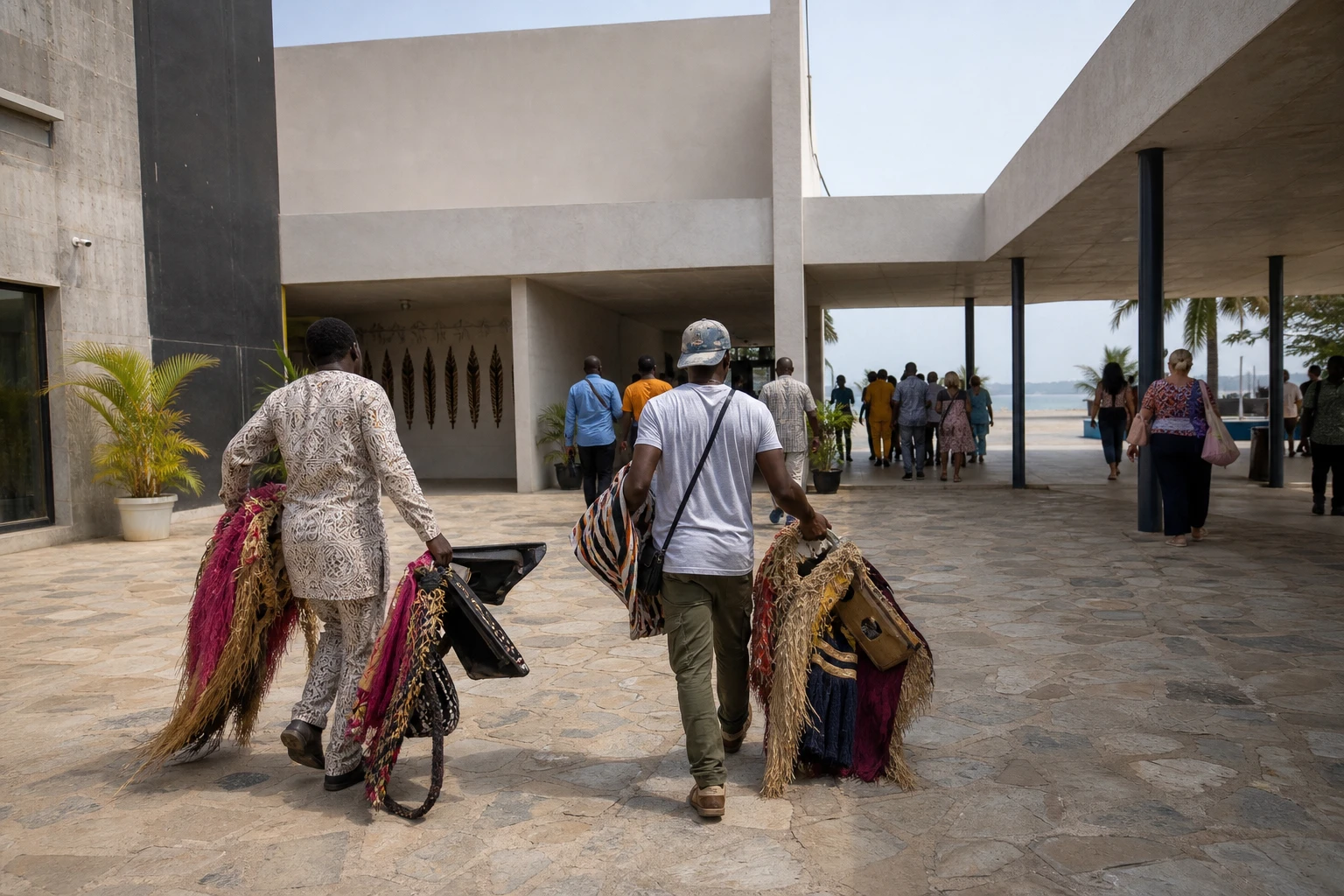
Porto-Novo turns a rite into a cultural showcase
In Porto-Novo, culture is no longer just a way to display heritage. It is also becoming a tool for positioning, attracting visitors and shaping the image of Benin’s political capital. The Mask Festival, held for its third edition on 25 and 26 July 2026, is part of this strategy. It showcases living heritage, but above all seeks to give it wider reach, beyond the circle of initiates and Beninese visitors alone.
The issue goes beyond providing entertainment for a weekend. For several years, Cotonou and Porto-Novo have been part of a public strategy that makes tourism, heritage and creative industries economic drivers. In June 2025, the Beninese government adopted a 2025-2029 strategic plan for tourism, culture and the arts. It aims to create a better-structured destination, more open to international visitors and more profitable for the local economy.
A 2026 edition designed to open up
This year, the Mask Festival has clearly set out its international ambitions. The idea is simple: to bring Beninese masks into dialogue with other traditions from Africa and beyond. The announced programme combined Benin’s major cultural groups, including the Zangbetos of the Goun, the Guèlèdè and the Bourians of the Agoudas, with outside guests. Dancers from the Chinese Cultural Centre in Cotonou and performers of the Zaouli mask from Côte d’Ivoire were among the highlights of the first day.
This choice is significant. Cultural exchange in West Africa has a long history, but it is rarely presented so clearly in a festival format. In Porto-Novo, the aim is to show that masks are not frozen objects. They remain forms of creation, memory and dialogue. The festival therefore seeks to connect local heritage, cultural cooperation and tourism appeal.
The centrepiece of the celebrations was expected to be on the lagoon boulevard, with a procession planned over about 350 metres, bringing together all the masks. This procession gives the festival obvious visual impact. It turns the city into an open-air stage and tradition into a public experience. In a capital often associated with its administrative role, the event is a reminder that Porto-Novo also has a strong heritage identity.
From heritage to the creative economy
The festival is not just a cultural event. It is part of a broader economic framework. Benin wants to increase tourism’s contribution to gross domestic product from 6% to 13.4% by 2030, according to government announcements reported and confirmed by several sources. The official target also remains 2 million visitors a year by 2030.
To achieve this, the state has increased investment in sites, museums and major cultural events. The Ministry of Tourism, Culture and the Arts’ 2025-2029 strategic plan estimates the cost at CFAF 797.174 billion over five years. The government has also pointed to broader efforts in tourism, culture and the arts, which are intended to support local employment and revenue across value chains such as accommodation, catering, transport and crafts.
In this context, the Mask Festival serves as a testing ground. The first edition, held in August 2024, attracted nearly 40,000 visitors, according to INStaD, the national statistics institute. This growth helped make the case for establishing the event as a regular fixture. The example of the Vodun Days in Ouidah has reinforced the view that a well-organised heritage event can generate tangible benefits, including for hotels and services. In 2025 and again in 2026, this other celebration of Vodun reached high attendance figures, with more than 435,000 participants in 2025 and even more the following year, according to official statements.
For Porto-Novo residents, the stakes are tangible. A major festival generates immediate activity in neighbourhoods, around transport, food services and sales. But it also raises a longer-term question: how can the crowds be made to last beyond two days of festivities? This is where the difference lies between a simple celebration and a lasting cultural policy. Benin’s capital is now seeking to turn its heritage into regular visitor numbers, and then into more stable income.
An impact beyond Benin
The Mask Festival also speaks to the region. Across West Africa, masks form a shared artistic language, with ritual, social and aesthetic uses that cross borders. The presence of Ivorian and Chinese guests in Porto-Novo shows that Benin wants to place its heritage within a wider network of cultural exchange. The country is thus aligning itself with a pan-African trend: making cultural capitals hubs of attraction, rather than merely administrative showcases.
This approach also has a political dimension. In a sub-region where ECOWAS continues to face tensions, military transitions and diplomatic realignments, states are seeking other forms of influence. Culture is one of them. In Porto-Novo, Benin is showing that it can make its mark on the West African stage in other ways: by showcasing its rites, welcoming foreign troupes and telling a national story rooted in historical continuity.
The next steps remain to be seen. The challenge is not just to make the third edition a success, but to build on it. If Porto-Novo proves it can host the event, if the economic benefits become sustained and if foreign visitors respond, the Mask Festival could become for Benin’s capital what the Vodun Days are already becoming for Ouidah: a recognised, anticipated and exportable event. That is where the project’s true international dimension will be determined.



