Algeria
 Egypt
 Libya
 Morocco
 Sudan
 Tunisia
 Benin
 Burkina Faso
 Cabo Verde
 Côte d'Ivoire
 Ghana
 Guinea
 Guinea-Bissau
 Liberia
 Mali
 Mauritania
 Niger
 Nigeria
 Senegal
 Sierra Leone
 The Gambia
 Togo
 Cameroon
 Central African Republic
 Chad
 DR Congo
 Equatorial Guinea
 Gabon
 Republic of the Congo
 São Tomé and Príncipe
 Burundi
 Comoros
 Djibouti
 Eritrea
 Kenya
 Madagascar
 Malawi
 Mauritius
 Mozambique
 Rwanda
 Seychelles
 Somalia
 South Sudan
 Tanzania
 Uganda
 Angola
 Botswana
 Eswatini
 Lesotho
 Namibia
 South Africa
 Zambia
 Zimbabwe
Violence that goes beyond religious conflict
In south-eastern Ethiopia, villages are emptying, churches are burning and families are seeking refuge that the land can no longer always provide. In Oromia, fear is visible not only in the places of worship under attack. It is also reflected in forced displacement, lost harvests and the fragility of coexistence, tested by local violence with a strong political dimension.
The region lies at the heart of a country where religion remains tied to the history of power. Ethiopia is the political capital of the African Union, and Addis Ababa remains the centre of gravity for federal decision-making. In Oromia, the country’s largest region, community tensions overlap with conflicts over access to land, rural security and political representation. This combination makes the situation harder to stabilise than a simple sectarian clash.
What the verified facts show
The first documented attacks in 2026 took place on 26 February in eastern Shirka district and Robe district, in the Arsi zone, according to the Ethiopian Human Rights Commission. The institution says it verified through several channels that attacks attributed to the Oromo Liberation Army, better known as the OLA or “OLF-Shene”, caused deaths, injuries, abductions and displacement.
Religious and humanitarian sources later reported a second wave of attacks in late February, with around 20 to 30 deaths among the Orthodox community and Muslim civilians, including a guard, showing that the targets were not exclusively defined by religion. The NGO Open Doors reported that 20 Orthodox Christians and one Muslim guard were killed on 26 February, while figures reported later put the total at at least 27 dead in two separate attacks.
The Ethiopian Human Rights Commission also confirmed that an attack on 31 May and 1 June 2026 in Aseko woreda, also in the Arsi zone, killed Christian and Muslim civilians, destroyed property and displaced residents. The government, meanwhile, named the OLA-Shene as responsible for the attacks in public statements in June.
Why Oromia remains a flashpoint
The problem lies in the overlap of several fault lines. First, land. Then demographics. Finally, identity. In several rural areas of Oromia, religious and ethnic affiliation are conflated in local perceptions, even when the families concerned have lived on these lands for generations. Orthodox worshippers can therefore be seen as Amharas, and thus as members of a group associated in some political narratives with the former centralised order.
The Ethiopian Orthodox Tewahedo Church occupies a distinctive place in the country’s history. It has accompanied the formation of the Ethiopian state for centuries and remains a major marker of collective memory. Public media regularly point out that its celebrations, from Genna to Timket, still shape the country’s religious and cultural life. But this historical centrality also fuels political tensions, especially in regions where some Oromo nationalists still see the religious institution as the heir to an earlier domination.
Federal authorities, however, present the violence as a threat to public order and the electoral process. In early June, the Prime Minister’s Office linked the Arsi attacks to a broader attempt at destabilisation, while the Ministry of Peace described them as extremist provocation involving the destruction of homes and public facilities. This account emphasises insecurity and armed groups. It does not close the case, but it shows the angle chosen by Addis Ababa.
What this means for residents and beyond
For rural communities, the immediate consequences are tangible: leaving cultivated land, losing harvests, interrupting children’s schooling and relying on emergency aid or religious solidarity. For regional authorities, the cost is also political. Every attack fuels distrust in local security and strengthens the perception that the state cannot protect civilians in outlying areas.
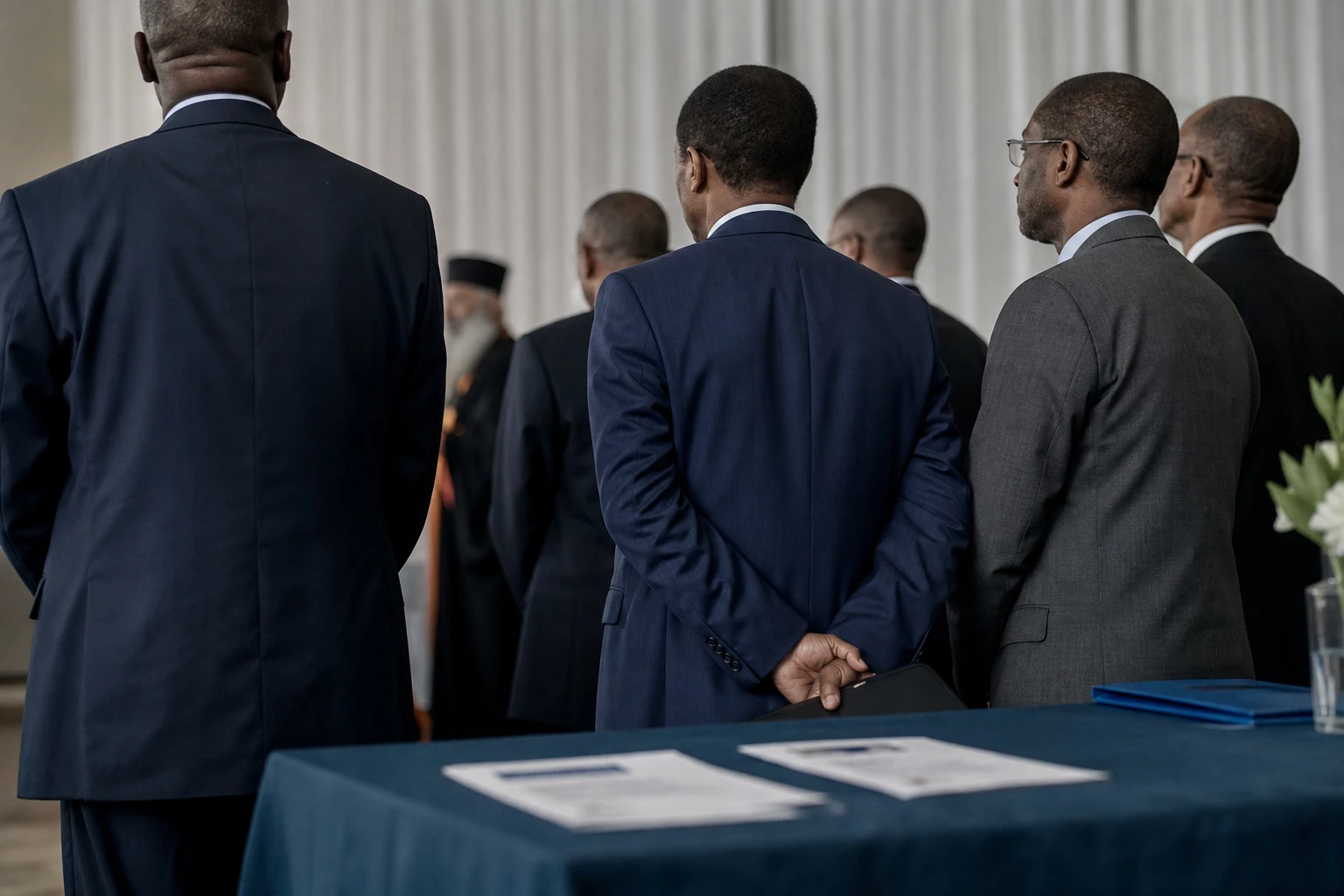
The response of religious institutions illustrates this fragility. Patriarch Abune Mathias denounced a chain of violence and called for those responsible to be brought to justice. Local Muslim voices also condemned the attacks, underlining that the victims cannot be reduced to a single religious divide. This nuance matters: it prevents the issue from being turned into a simplistic religious duel.
At national level, the case also exposes the still delicate relationship between the federal state and religious institutions in a country where the political reform launched in 2018 has not healed every divide. The attempt to create a breakaway synod in 2023 left lasting scars on relations between the government and the Orthodox Church. In 2026, as the country held its seventh national election, security in Oromia therefore remains a test of the executive’s credibility.
The continental implications are clear. When local violence becomes entangled with religious and ethnic identities, it weakens conflict-prevention mechanisms across the Horn of Africa. For the African Union, headquartered in Addis Ababa, and regional actors concerned about Ethiopia’s stability, the issue extends beyond the Arsi zone. It raises questions about states’ ability to protect civilians, document crimes and prevent land disputes from becoming lasting identity crises.