Algeria
 Egypt
 Libya
 Morocco
 Sudan
 Tunisia
 Benin
 Burkina Faso
 Cabo Verde
 Côte d'Ivoire
 Ghana
 Guinea
 Guinea-Bissau
 Liberia
 Mali
 Mauritania
 Niger
 Nigeria
 Senegal
 Sierra Leone
 The Gambia
 Togo
 Cameroon
 Central African Republic
 Chad
 DR Congo
 Equatorial Guinea
 Gabon
 São Tomé and Príncipe
 Burundi
 Comoros
 Djibouti
 Eritrea
 Ethiopia
 Kenya
 Madagascar
 Malawi
 Mauritius
 Mozambique
 Rwanda
 Seychelles
 Somalia
 South Sudan
 Tanzania
 Uganda
 Angola
 Botswana
 Eswatini
 Lesotho
 Namibia
 South Africa
 Zambia
 Zimbabwe
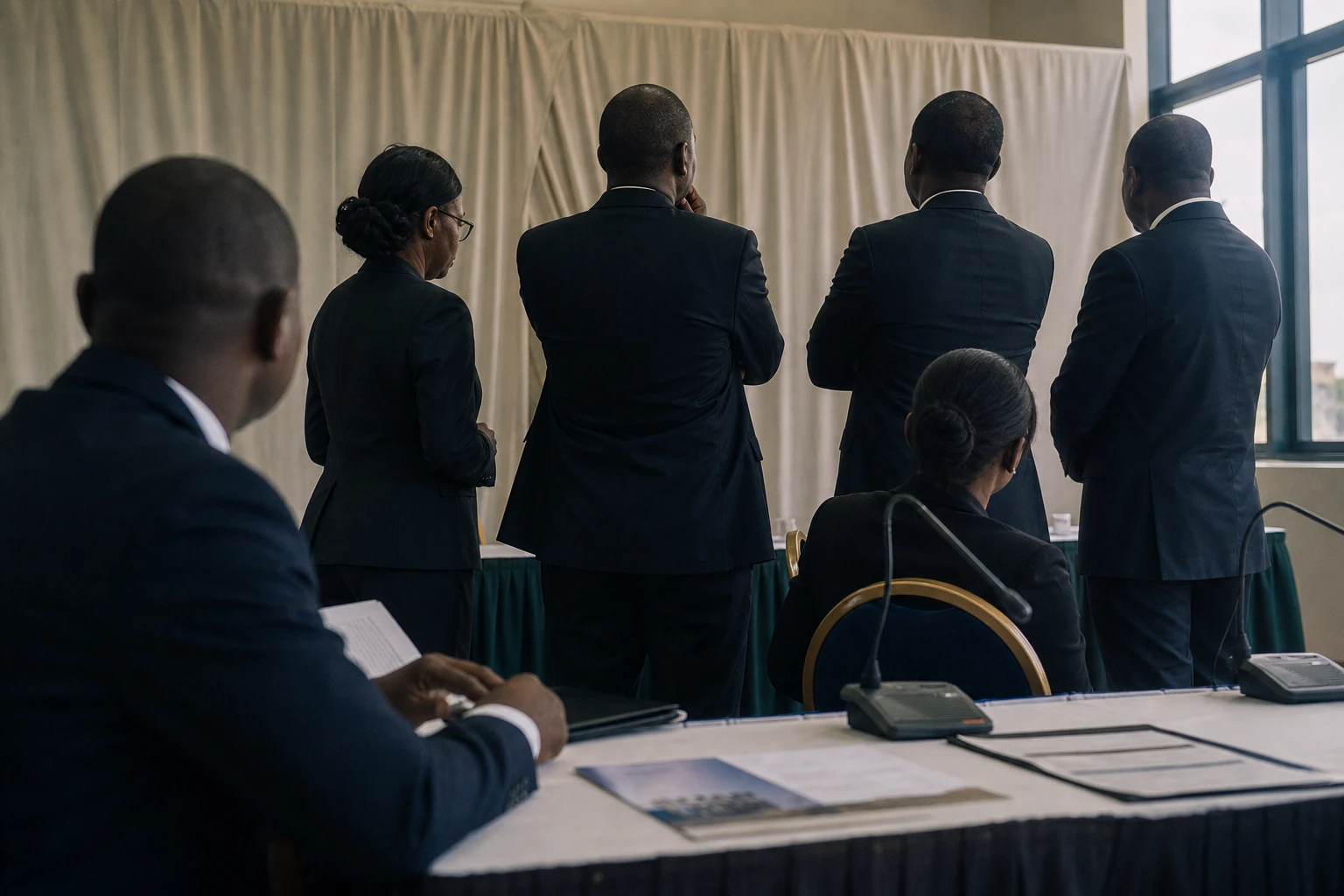
When protecting a park also becomes a question of rights
In the heart of Congo, conservation is not just about wildlife and forests. It is also measured by how rangers, Indigenous communities and the state communicate, monitor one another and provide protection. In Odzala-Kokoua National Park, that equation has become fraught following allegations of abuse involving eco-guards.
Prince Harry’s departure from the board of African Parks has brought the case back into the spotlight. This is not simply a public figure stepping down. It is a signal about the governance of an organisation that manages several protected areas in Africa, including a strategically important site in the Republic of the Congo.
Odzala-Kokoua, an emblematic park at the heart of the Congo Basin
Odzala-Kokoua is not just another park. Located in Cuvette-Ouest, it is part of the Odzala-Kokoua forest massif, which was inscribed on the UNESCO World Heritage List in 2023. The site forms part of one of the continent’s ecological pillars: the Congo Basin, the world’s second-largest tropical forest after the Amazon.
The park is managed under a partnership between the Congolese state and African Parks, an organisation based in Johannesburg. This co-management model has become common in Central Africa, where states seek to protect vast areas with limited resources. But it comes with a strong requirement: conservation must respect the rights of local residents, particularly Indigenous peoples such as the Baka.
At the regional level, the issue extends beyond Congo. It concerns CEMAC, the Congo Basin Climate Commission and, more broadly, the African debate over conservation models. The question is no longer simply how to protect a park. It is also who makes decisions, who monitors them and who is held accountable when abuses are reported.
What the NGO acknowledged, and what triggered the crisis
The sequence began in 2023, when allegations of abuse involving eco-guards near Odzala-Kokoua were brought to African Parks’ attention. In January 2024, testimony published in the press alleged serious abuses, including killings, rape and acts of torture reported by Baka residents.
In response to the allegations, African Parks commissioned Omnia Strategy LLP to conduct an independent investigation. In May 2025, the organisation acknowledged that human rights violations had occurred in some cases. The public report said it had examined 21 incidents linked to allegations of serious physical and sexual violence, homicide, arbitrary arrests and ill-treatment amounting to torture.
The detailed findings were not published. This is significant. In a case this sensitive, a lack of transparency fuels doubts, especially among the communities concerned. African Parks said it regretted the suffering caused and stated that it wanted to strengthen its governance and oversight mechanisms.
On 19 August 2026, the organisation announced a refresh of its board, presented as a “governance refresh”. Prince Harry ended his tenure after ten years associated with the NGO. His spokesperson emphasised that he remained committed to conservation in Africa. But the context shows that his departure comes as the group’s reputation remains under scrutiny.
What this means for local communities and the Congolese state
In practice, this case affects first and foremost the people living around the park. For Indigenous and local communities, the issues are tangible: access to land, freedom of movement, security, avenues for redress in cases of abuse, and a role in decision-making. When environmental monitoring shifts to coercive methods, conservation loses its legitimacy.
For the Congolese state, the issue is just as important. The park is covered by an official partnership. This means political responsibility cannot be entirely outsourced to a conservation operator. Brazzaville remains accountable for the legal framework, the protection of citizens and the oversight of partners operating on its territory.
For African Parks, the stakes are twofold. On the one hand, the organisation claims a central role in safeguarding African ecosystems. On the other, it must show that conservation funded and managed on a large scale can respect human rights without ambiguity. Otherwise, its model will be challenged, even where its ecological results are praised.
For urban residents of Brazzaville and economic stakeholders linked to the forestry, conservation and tourism sectors, the issue is strategic. An internationally recognised park attracts attention, funding and partners. But a scandal handled poorly can also damage the country’s image and complicate future co-operation.
A test for African conservation, far beyond Congo
The Odzala-Kokoua case resonates across Central Africa because it sums up a dilemma that has become structural: how to protect forests, elephants or gorillas without reproducing power imbalances imposed on the people living around protected areas. The Congo Basin is a major ecological region, but it is also a human, social and political space.
The coming months will show whether the governance changes announced in Johannesburg are enough to close the crisis or whether broader demands for transparency will prevail. The key will be African Parks’ ability to publish credible safeguards, strengthen complaints mechanisms and genuinely involve the communities concerned.
In Brazzaville and other regional capitals, this case will serve as a test. It will show whether conservation in Africa can move forward with local people, or only alongside them.