Algeria
 Egypt
 Libya
 Morocco
 Sudan
 Tunisia
 Benin
 Burkina Faso
 Cabo Verde
 Côte d'Ivoire
 Ghana
 Guinea
 Guinea-Bissau
 Liberia
 Mali
 Niger
 Nigeria
 Senegal
 Sierra Leone
 The Gambia
 Togo
 Cameroon
 Central African Republic
 Chad
 DR Congo
 Equatorial Guinea
 Gabon
 Republic of the Congo
 São Tomé and Príncipe
 Burundi
 Comoros
 Djibouti
 Eritrea
 Ethiopia
 Kenya
 Madagascar
 Malawi
 Mauritius
 Mozambique
 Rwanda
 Seychelles
 Somalia
 South Sudan
 Tanzania
 Uganda
 Angola
 Botswana
 Eswatini
 Lesotho
 Namibia
 South Africa
 Zambia
 Zimbabwe
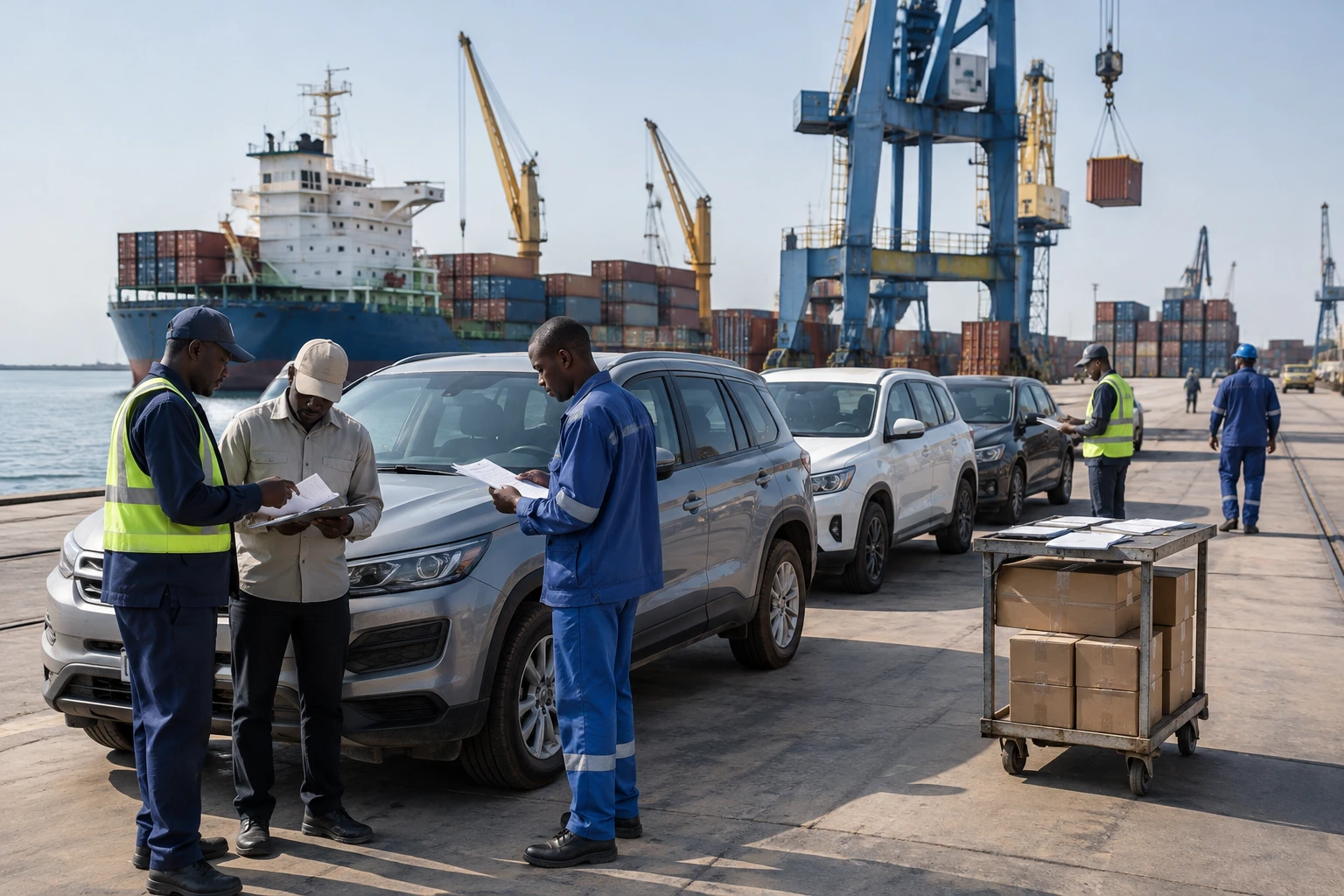
At the port of Nouakchott, four vehicles and a consignment of pills were intercepted before their planned transfer to a neighbouring country. The operation highlights an issue that goes beyond the seizure itself: how to monitor trade routes without shifting the risk to other crossing points?
An interception planned at Nouakchott port
Mauritanian police announced on Monday 5 October 2026 that they had seized 162,000 ecstasy pills and arrested three foreign nationals. The operation took place at the port of Nouakchott, the capital of Mauritania, according to reports published by several Mauritanian media outlets.
According to the National Police, intelligence indicated that three light vehicles were arriving and were then to be transported to an unspecified neighbouring country. Officers from the Central Office for Combating Narcotic Drugs and Psychotropic Substances placed the vehicles under surveillance. They also seized a fourth vehicle at the scene.
Police said the suspects, vehicles and seized products were handed over to the prosecutor’s office after the investigation. This procedure does not amount to a finding of guilt: those arrested remain presumed innocent unless a court establishes their responsibility. The authorities have not made public the destination country or provided details of the consignment’s suspected route.
The available information therefore describes a significant operation, but leaves several questions unanswered: who organised the transport, where were the pills produced, and what was the precise role of each person arrested? The judicial investigation will have to establish these details.
A crossroads between several regional areas
Mauritania’s position links the Atlantic coast, the Maghreb and the Sahel. Its main port and road network give the country a place in regional trade, both legal and clandestine. This geography is not, however, enough to prove that a particular route was used in this case: police have disclosed neither the origin nor the specific destination.
Mauritania left ECOWAS, the Economic Community of West African States, in 2000. It later signed an association agreement with the organisation and remains a member of the Arab Maghreb Union. These different frameworks make cooperation possible, but also highlight the importance of practical agreements between police forces, customs authorities and judicial officials in the countries concerned.
Drug trafficking in West Africa is not limited to a single substance or route. The United Nations Office on Drugs and Crime (UNODC) describes the region as a transit area for cocaine destined, among other places, for Europe. Its analysis of the Sahel also refers to markets and flows involving cannabis and opioids diverted from medical use. These regional trends do not, on their own, allow any conclusion that the consignment intercepted in Nouakchott was linked to these routes.
The seizure alone does not measure the local market
An interception of 162,000 pills indicates that a suspected network was able to mobilise vehicles and arrange passage through the port. It does not establish what proportion was to remain in Mauritania, or whether the country is becoming a consumer market. Police have described a consignment intended to cross the border, without saying that it was destined for local sale.
An expert quoted in the initial reports suggests that Mauritania could be both a transit area and an emerging domestic market. This assessment is not an official statistic. Verifying it would require regular data on seizures, investigations, treatment related to drug use and consumption trends, broken down by substance and region.
The consequences are not evenly distributed. In the capital, port inspections affect maritime flows and the economic activity that depends on them. Inland, the issues are more closely related to monitoring routes and cross-border cooperation. For residents, the public health question also calls for prevention and treatment measures alongside criminal prosecutions.
The next challenge: tracking routes beyond the port
The announced operation is an operational result. Its significance will depend on what follows in the investigation: identifying the organisers, verifying the destination, analysing the vehicles and exchanging information with the countries concerned. A single seizure can interrupt a shipment without disrupting an entire network.
At regional level, UNODC data underline that trafficking routes cross borders and connect distinct markets. Cooperation between Mauritania, its Sahelian neighbours and West African countries may therefore matter as much as checks at the port. The challenge will be to share intelligence and coordinate investigations, while publishing verifiable data on seizures and their judicial outcomes.
For now, the established facts remain limited: 162,000 pills seized, four vehicles impounded and three people handed over to the prosecutor’s office, according to police and Mauritanian media. The consignment’s final destination and the scale of the suspected network have not been made public.
Details of the seizure published by Info Plus Mauritania · UNODC background on drug routes in West Africa · Mauritania’s regional framework, as presented by the Presidency