Algeria
 Egypt
 Libya
 Morocco
 Sudan
 Tunisia
 Benin
 Burkina Faso
 Cabo Verde
 Côte d'Ivoire
 Ghana
 Guinea
 Guinea-Bissau
 Liberia
 Mali
 Mauritania
 Niger
 Senegal
 Sierra Leone
 The Gambia
 Togo
 Cameroon
 Central African Republic
 Chad
 DR Congo
 Equatorial Guinea
 Gabon
 Republic of the Congo
 São Tomé and Príncipe
 Burundi
 Comoros
 Djibouti
 Eritrea
 Ethiopia
 Kenya
 Madagascar
 Malawi
 Mauritius
 Mozambique
 Rwanda
 Seychelles
 Somalia
 South Sudan
 Tanzania
 Uganda
 Angola
 Botswana
 Eswatini
 Lesotho
 Namibia
 South Africa
 Zambia
 Zimbabwe
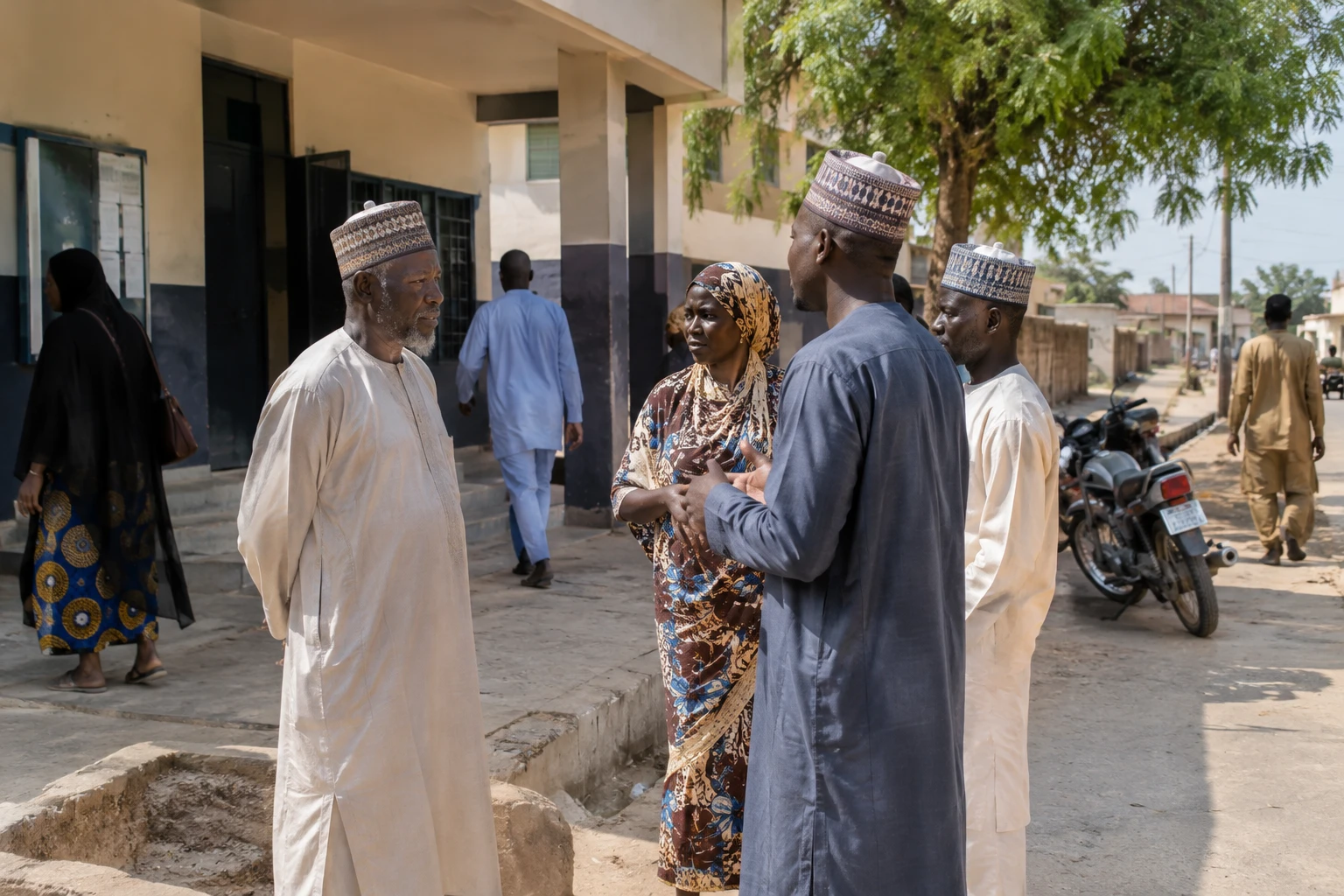
In Dutsin-Ma, Katsina State, a cleric known for his theological views and calls for coexistence was killed outside his home. His death raises two separate questions: who targeted him, and had the authorities properly assessed the threats reportedly made against him? So far, only the first part of the facts has been established; the motive remains to be confirmed.
A killing after reports of threats
Yahaya Ibrahim Masussuka was killed on Monday 26 October 2026 in Dutsin-Ma, in north-western Nigeria. According to the Katsina State police, two armed men who arrived by motorcycle opened fire outside his home. His friend Adamu Abubakar was also hit. The two men were taken to hospital, where they were pronounced dead, according to reports carried by the Nigerian press.
Police say they have opened an investigation and are searching for the attackers. President Bola Tinubu has asked the security forces to step up their search. At this stage, no authority has publicly confirmed who commissioned the killing or why Masussuka was targeted.
The following day, several Nigerian media outlets reported that Ansaru, an armed group distinct from Boko Haram, had claimed responsibility for the attack in an audio message. The claim has not been independently authenticated and has not been confirmed by the police. It should therefore remain attributed to the group, rather than being presented as a conclusion of the investigation. The claim reported by Premium Times refers in particular to the cleric’s positions in favour of coexistence among believers.
A religious debate that became a public matter
Masussuka was known for teachings centred on the Quran. He challenged the authority of certain hadiths, accounts attributed to the Prophet Muhammad that play an important role in interpreting Islamic tradition. His views drew criticism and, according to reports carried by the Nigerian press, threats.
The disagreement had already moved beyond the theological sphere. In November 2025, the Katsina government summoned the preacher following complaints about his teachings. The authorities also acknowledged receiving a complaint from Masussuka alleging that members of a religious movement had insulted and threatened him. The matter was referred to the emirate council, where the parties were to be heard.
This earlier episode sheds light on the climate in which the cleric operated, but does not prove a link to his murder. No published evidence has yet established that the theological disputes or threats reported in 2025 led to the attack. This distinction is essential: it avoids turning a troubling chronology into a proven motive. The report on the summons by the Katsina authorities details these complaints and the mediation undertaken.
The cleric also advocated dialogue between communities and opposed radicalisation. He received a “Peace Ambassador” award in 2025, according to several Nigerian media outlets. This aspect of his work should not, however, lead to the automatic attribution of the killing to an extremist group or a religious motive: the investigation must establish responsibility.
Katsina faces several forms of insecurity
The attack comes in a state facing threats that are not all the same. In north-western Nigeria, kidnappings for ransom and raids by armed groups particularly affect rural communities. This violence coexists with the jihadist insurgency, concentrated mainly in the north-east, and local tensions over access to land and resources. Reducing them to a single religious conflict would obscure the actors and issues involved.
An analysis by the European Union Agency for Asylum, based in part on incident data, describes Katsina as one of the states hardest hit by armed violence and attacks on civilians. It also highlights their tangible consequences: displacement, kidnappings and disruption to daily life. Residents of rural areas, pupils and people whose incomes depend on local markets or road travel do not face the same risks as officials based in urban centres. The EUAA assessment of security in Katsina State provides this context without establishing a direct link to Masussuka’s killing.
For the cleric’s family, the priority is now the investigation and protection against possible reprisals. For his followers and other preachers, the case also raises the question of the safety of people exposed by their public statements. A credible response requires the perpetrators to be identified, earlier threats to be checked and the judicial proceedings to be reported on, without naming a culprit before there is evidence.
An issue for Nigeria and the region
At national level, the case tests the authorities’ ability to protect citizens while preserving space for religious debate. Nigeria is a federation: the state police and federal services must coordinate their investigations, while traditional and religious institutions can help ease tensions without taking the place of the justice system.
The regional implications also concern ECOWAS, the Economic Community of West African States, which is seeking to strengthen co-operation among neighbouring countries in response to armed networks and cross-border movements. But Ansaru’s claim alone proves neither the scale of an operational network involved in this attack nor a cross-border link. The Nigerian investigation will have to clarify these points.
The next steps to watch are concrete: the release of verifiable police information, possible authentication of the message attributed to Ansaru, identification of the perpetrators and clarification of how the threats reported in 2025 were handled. Until these answers are forthcoming, Masussuka’s death remains a confirmed murder, but its motive and those who commissioned it remain unknown.