Algeria
 Egypt
 Libya
 Morocco
 Sudan
 Tunisia
 Benin
 Burkina Faso
 Cabo Verde
 Côte d'Ivoire
 Ghana
 Guinea
 Guinea-Bissau
 Liberia
 Mali
 Mauritania
 Niger
 Senegal
 Sierra Leone
 The Gambia
 Togo
 Cameroon
 Central African Republic
 Chad
 DR Congo
 Equatorial Guinea
 Gabon
 Republic of the Congo
 São Tomé and Príncipe
 Burundi
 Comoros
 Djibouti
 Eritrea
 Ethiopia
 Kenya
 Madagascar
 Malawi
 Mauritius
 Mozambique
 Rwanda
 Seychelles
 Somalia
 South Sudan
 Tanzania
 Uganda
 Angola
 Botswana
 Eswatini
 Lesotho
 Namibia
 South Africa
 Zambia
 Zimbabwe
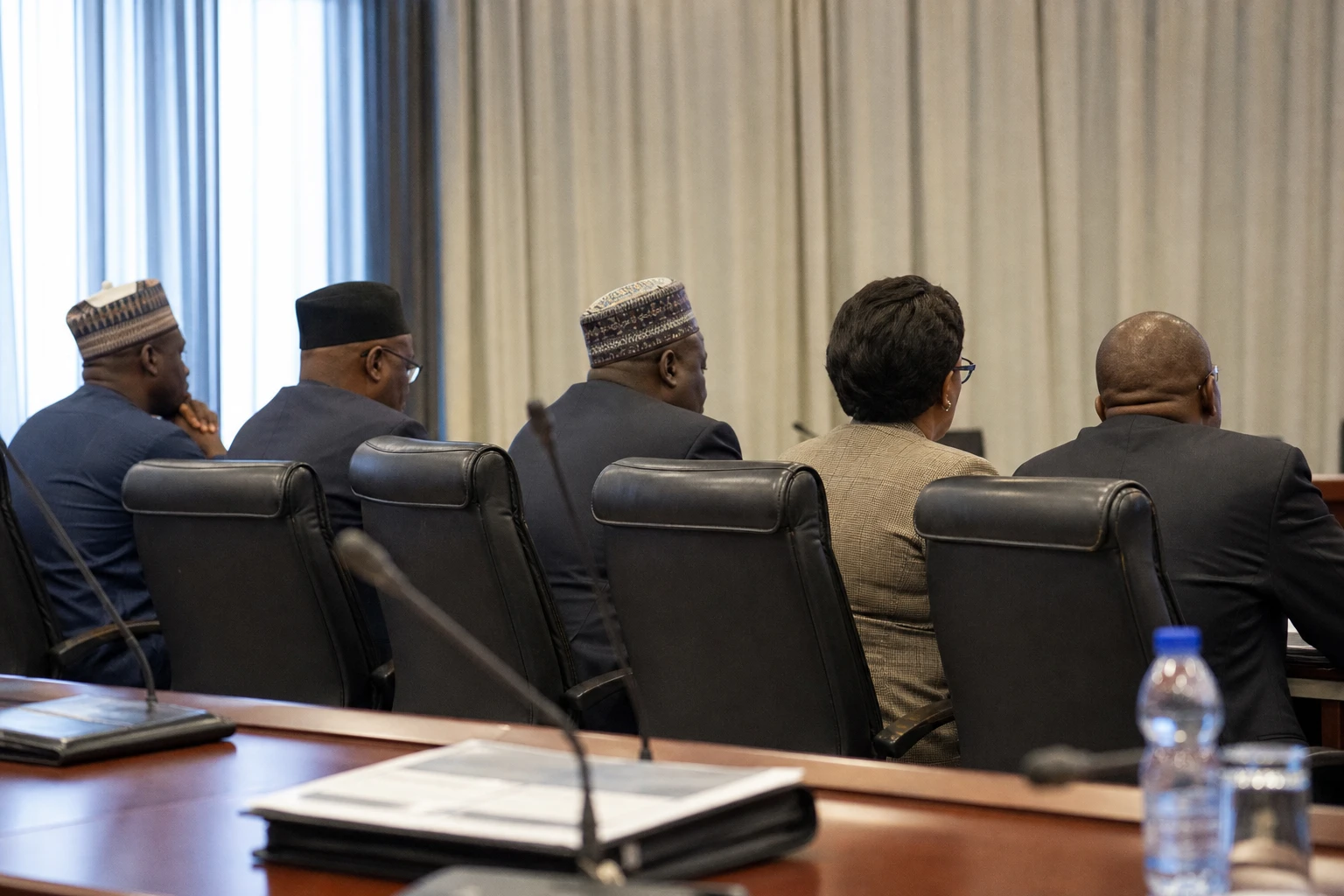
In north-west Nigeria, any journey can turn dangerous
Between two towns in north-central Zamfara, a simple road journey can turn into a hostage-taking. This is the daily risk facing families, traders and travellers in north-west Nigeria, where secondary roads often serve as hunting grounds for armed groups.
In Abuja, the federal authorities promise to restore order. On the ground, the most exposed states, such as Zamfara, live largely to the rhythm of patrols, ambushes and sweeps. The contrast is stark: in the capital, people talk about strategy; in villages and on intercity roads, the first concern is survival.
Swift intervention in Tsafe
On 8 August 2026, in the Magazu area of Tsafe Local Government Area, soldiers from Sector 2 of the Joint Task Force North West intercepted an armed group taking 33 abducted passengers to an unknown destination. According to a statement relayed by the military authorities, the troops opened fire, forced the kidnappers to abandon the victims, then secured the area before launching a pursuit in the surrounding woods. All 33 people were recovered alive, and no injuries were reported during the operation.
The army acted as part of Operation FANSAN YAMMA, the military deployment in the north-west to combat armed groups most commonly referred to in Nigerian public debate as “bandits”. In this region, the term refers to armed criminal networks involved in kidnappings for ransom, village raids, cattle rustling and, at times, more deadly attacks on civilians and security forces.
The authorities have not publicly attributed the attack to a specific group. This caution matters. In north-west Nigeria, reports of kidnappings often circulate before formal identifications are made, and figures vary between initial alerts, rescuers and official spokespeople. Here, the clearest established fact remains this: 33 passengers were freed in Tsafe after a clash between the attackers and deployed forces.
Zamfara, a testing ground for an entrenched crisis
Zamfara is not an isolated point on Nigeria’s security map. The state has become one of the epicentres of a kidnapping economy that undermines mobility, agriculture and local trade. In June 2026, the Associated Press reported that at least 32 people had been killed in separate attacks in the state during June alone. For its part, the Zamfara government says it actively supports the operations of the Joint Task Force North West and presents the military effort as a central pillar of its response to insecurity.
This instability does not affect everyone in the same way. Traders pay more to travel. Farmers make fewer trips to their fields. Transporters choose longer routes. In rural areas, the threat is immediate; in urban centres, it translates into higher prices, less well-stocked markets and more unpredictable movement of goods. FEWS NET estimates that conflict in the North-West has intensified since late 2024, worsening economic pressures and the risk of food insecurity in northern Nigeria.
Local power dynamics also help explain the difficulty of the issue. In several states in the region, armed groups retreat into forested areas or poorly controlled corridors, making surveillance more difficult. Security forces, meanwhile, have to cover vast territories, sometimes with resources spread thin and competing needs across the North-West, North-East and North-Central regions. This is not simply a tactical problem. It is a crisis of state presence, road access, intelligence and local governance.
What the episode says about Nigeria and West Africa
The release of the 33 passengers shows that a swift response can save lives. But it also underlines how the pattern keeps repeating. The same region sees kidnappings, village attacks, ambushes on security forces and forced displacement. In February 2026, the African Union condemned deadly attacks in Zamfara that had caused more than 50 deaths, according to its statement, a sign that the crisis goes beyond the national context and is fuelling continental concerns about the safety of civilian populations.
Across West Africa, the issue extends beyond Nigeria. ECOWAS continues its work on peace, security and cross-border cooperation, while the regional organisation emphasises early-warning mechanisms and coordination between states. In a region where armed groups move through porous spaces, local crises quickly become regional ones. Abuja therefore remains under pressure to combine military action, intelligence, cross-border cooperation and protection of trade routes.
For Nigerians, the immediate goal is simple: to be able to travel, farm, trade and go to school without fear of being captured on the road. For the federal government, the challenge is broader: to prove that offensive operations such as FANSAN YAMMA are not limited to isolated successes, but can durably reduce the scope for armed groups to operate. In a country already facing several security fronts, every rescue matters. Yet it is not enough to end a crisis rooted in rural divisions, local rivalries and the circulation of weapons across the entire North-West.