
 Algeria
 Egypt
 Libya
 Morocco
 Sudan
 Tunisia
 Benin
 Burkina Faso
 Cabo Verde
 Côte d'Ivoire
 Ghana
 Guinea
 Guinea-Bissau
 Liberia
 Mali
 Mauritania
 Niger
 Senegal
 Sierra Leone
 The Gambia
 Togo
 Cameroon
 Central African Republic
 Chad
 DR Congo
 Equatorial Guinea
 Gabon
 Republic of the Congo
 São Tomé and Príncipe
 Burundi
 Comoros
 Djibouti
 Eritrea
 Ethiopia
 Kenya
 Madagascar
 Malawi
 Mauritius
 Mozambique
 Rwanda
 Seychelles
 Somalia
 South Sudan
 Tanzania
 Uganda
 Angola
 Botswana
 Eswatini
 Lesotho
 Namibia
 South Africa
 Zambia
 Zimbabwe
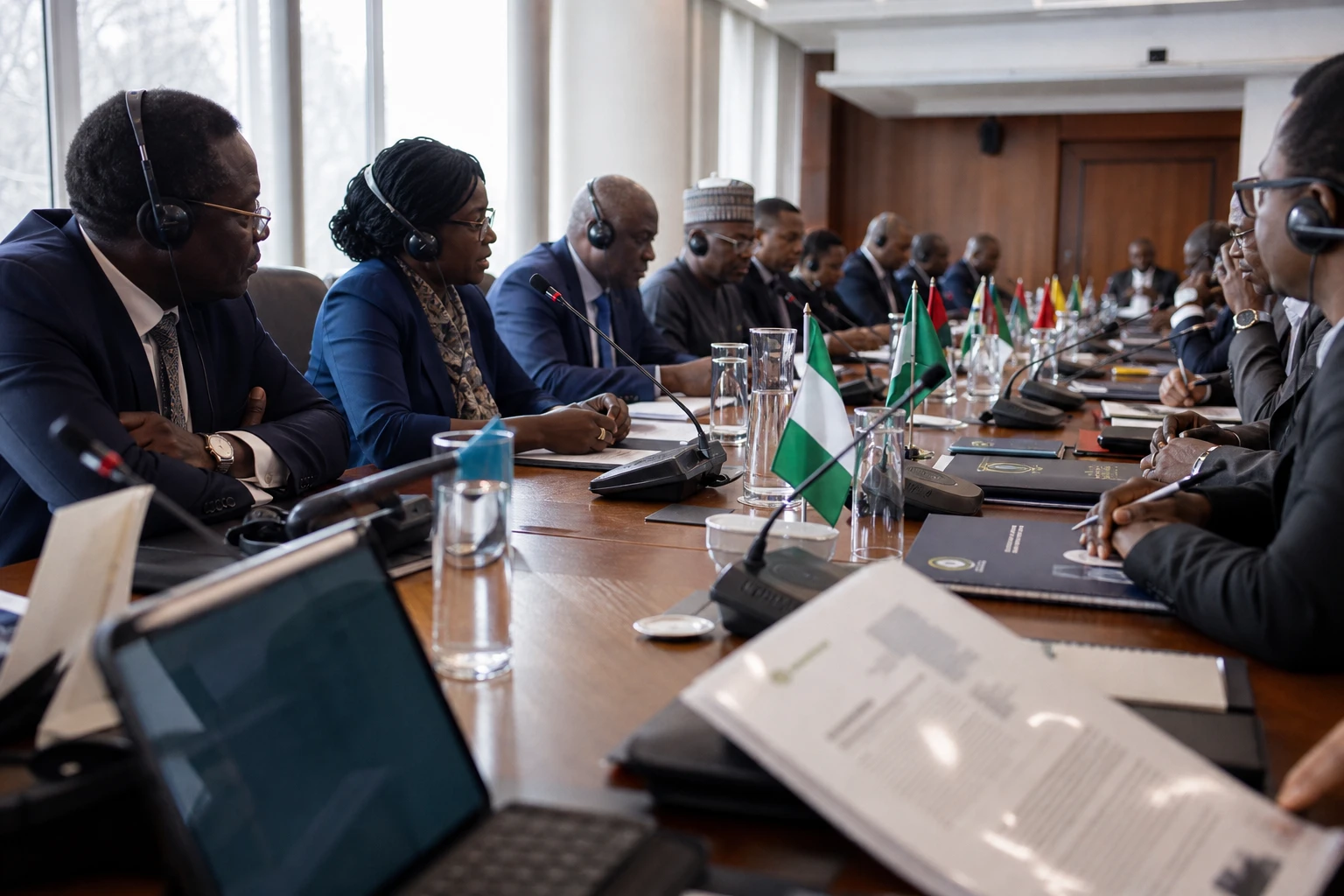
A surplus that says more than just a good number
In Abuja, a trade surplus is never just another statistic. It tells the story of Nigeria’s ability to sell more abroad, limit its dependence on imports and, above all, ease pressure on its currency. In an economy still heavily exposed to oil and turbulence in the foreign exchange market, this kind of signal matters as much to the federal government as it does to businesses and households.
The regional context reinforces this reading. Nigeria remains West Africa’s largest economy and a central player in ECOWAS, whose headquarters are in Abuja. When its trade improves, the movement of goods, customs revenue and West African trade corridors are all affected.
Figures published for the second quarter of 2026
In the second quarter of 2026, Nigeria’s National Bureau of Statistics reported a trade surplus of 12,596.86 billion naira. Total merchandise trade reached 41,444.89 billion naira, up 5.61% year on year and 19.13% from the previous quarter. Exports amounted to 27,020.88 billion naira, or 65.20% of total trade, while imports stood at 14,424.01 billion naira.
The structure of this result remains clear. Crude oil remained the leading export, at 12,914.33 billion naira. Non-crude sales amounted to 14,106.55 billion naira, showing that the export base is broadening, even as oil continues to dominate foreign currency earnings. On the import side, the country bought mainly petrol, petroleum oils, durum wheat, used diesel vehicles and motorcycles.
Nigeria’s main export destinations were India, Spain, the Netherlands, the United States and Togo. Togo’s presence in this group also highlights its role as a regional trade hub. Nigerian exports to Africa reached 6,653.24 billion naira, compared with imports of 1,103.86 billion naira, with Togo, South Africa, Côte d’Ivoire, Ghana and Egypt among the most prominent partners.
Why this improvement matters
The improvement comes after several months in which Nigerian authorities sought to stabilise the country’s external position. The Central Bank of Nigeria has continued its foreign exchange market reforms, emphasising greater transparency and better exchange rate formation. S&P Global Ratings, meanwhile, raised Nigeria’s sovereign rating from « B- » to « B » on 15 May 2026, citing an improved external position, higher foreign exchange reserves and a recovery in growth, while also noting the persistent weakness of the tax base.
In other words, the trade surplus does not solve everything. It helps the federal treasury, supports reserves and may ease demand for foreign currency. But on its own, it does not offset weak formal employment, the weight of fuel and food imports, or the country’s exposure to fluctuations in crude oil prices. Abuja’s challenge is to turn this cyclical improvement into a lasting ability to produce, process and export more non-oil goods.
For businesses, a wider trade surplus may mean a slightly less strained external environment. For households, the effect is more indirect. If reserves strengthen and the foreign exchange market eases, pressure on some imports may fall. But pump prices and the cost of wheat, spare parts and used vehicles remain highly sensitive to macroeconomic policy choices and international prices.
A signal to watch beyond Nigeria
Across the continent, this development matters to the whole of West Africa. Nigeria exports to the region, but also imports finished products and consumer goods from it. If the trend continues, it could strengthen Abuja’s position as a trading hub while fuelling debate about local industrialisation and the value added captured on the continent. The growing influence of AfCFTA, the African Continental Free Trade Area, gives this kind of result an even broader significance, as it tests the ability of African economies to trade more with one another.
What happens next will depend on two main variables. First, whether quarterly surpluses prove consistent. Second, whether Nigeria can maintain its monetary and fiscal reforms without slowing activity. If non-oil exports continue to grow and imports of strategic goods decline, the country will be able to consolidate a more robust external balance. At regional level, this is being closely watched, because a more stable Nigeria has an impact on the entire West African economy.



