Algeria
 Egypt
 Libya
 Morocco
 Sudan
 Tunisia
 Benin
 Burkina Faso
 Cabo Verde
 Côte d'Ivoire
 Ghana
 Guinea
 Guinea-Bissau
 Liberia
 Mali
 Mauritania
 Niger
 Senegal
 Sierra Leone
 The Gambia
 Togo
 Cameroon
 Central African Republic
 Chad
 DR Congo
 Equatorial Guinea
 Gabon
 Republic of the Congo
 São Tomé and Príncipe
 Burundi
 Comoros
 Djibouti
 Eritrea
 Ethiopia
 Kenya
 Madagascar
 Malawi
 Mauritius
 Mozambique
 Rwanda
 Seychelles
 Somalia
 South Sudan
 Tanzania
 Uganda
 Angola
 Botswana
 Eswatini
 Lesotho
 Namibia
 South Africa
 Zambia
 Zimbabwe
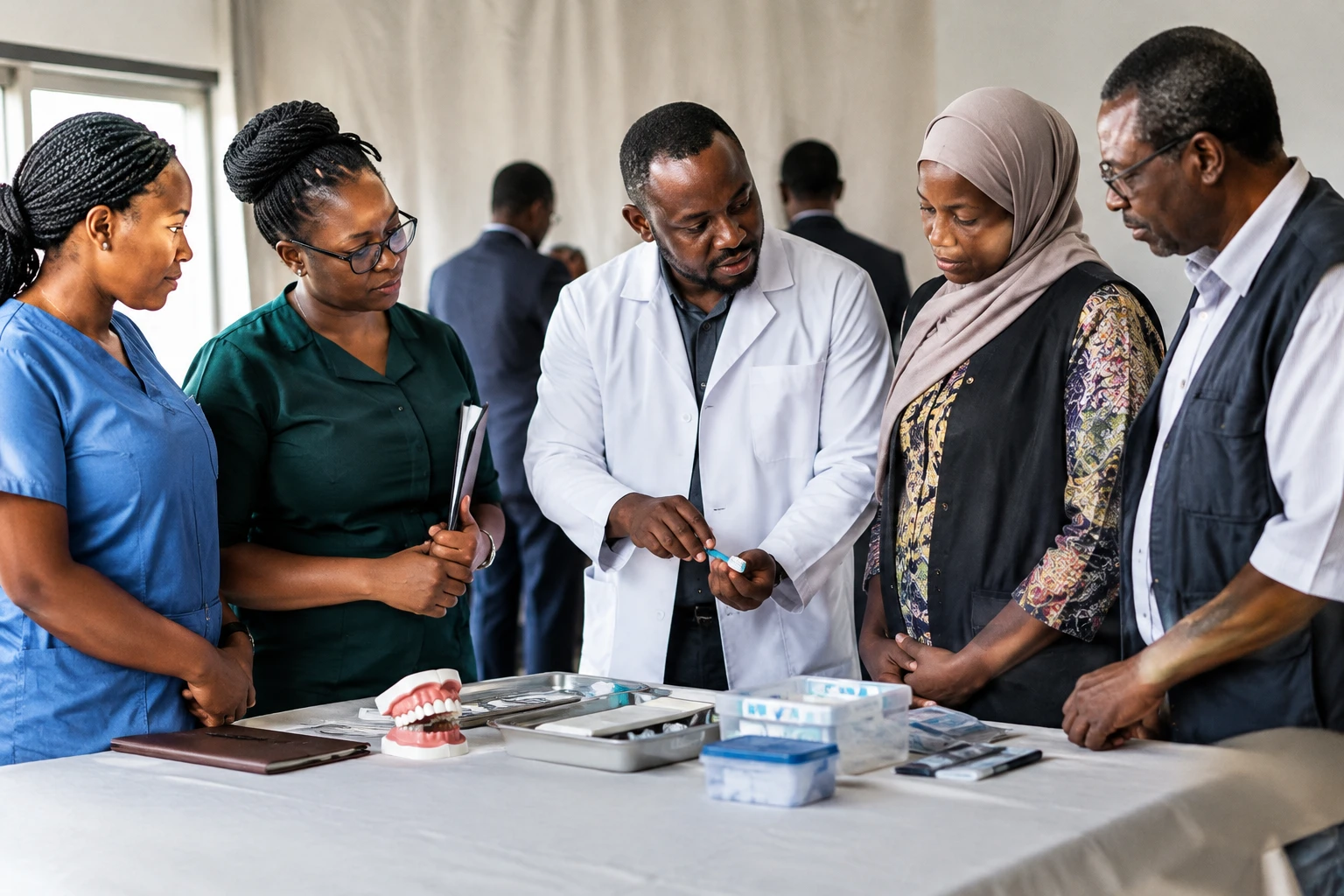
For a Nigerian family, a cavity can become a health problem long before a dental clinic is within reach. The new federal plan aims to bring prevention and care closer to schools and primary health centres. Its challenge will be to turn national goals into accessible services in communities.
A national plan amid unequal access
The federal government launched the National Strategic Oral Health Plan for 2026-2030 in Abuja on 9 November 2026. The Minister of State for Health and Social Welfare, Iziaq Adekunle Salako, presented an estimated budget of 70 billion naira over five years. The authorities say that more than 80% of Nigerians have never seen a dentist and that two in three children live with untreated cavities. These figures were attributed to the minister in reports of the announcement.
Nigerian media report that the bill will not fall solely to the federal government. According to ThisDay, about 49% of the expected funding would come from states and local governments, 30% from the federal government, with the remainder being sought from partners. The minister described the 70 billion naira as the minimum required. The amount is therefore an estimated need, not proof that the funds are already available.
The programme provides for school-based prevention, better access to fluoride toothpaste and the integration of oral healthcare into primary health services. It also aims to strengthen the training and distribution of professionals, improve referrals between centres and specialist services, and extend provision to Nigeria’s 774 local government areas. The plan also links dental health with maternal and child care, nutrition and the prevention of non-communicable diseases.
Noma screening, a public health priority
Efforts to combat noma feature prominently in the strategy. This infectious disease can rapidly destroy facial tissue and lead to disability or death. It mainly affects young children weakened by malnutrition and limited access to care. The World Health Organization classified it as a neglected tropical disease in 2023. Early detection and treatment can limit the damage.
The ministry says that health workers, traditional birth attendants and traditional healers have been trained in 19 states to recognise suspicious signs and refer patients. Noma surveillance has also been integrated into the national disease surveillance and response system, according to the official account published by the Nigerian Ministry of Information.
The plan builds on earlier initiatives, but their existence alone does not establish their reach or effectiveness. Nigeria adopted a national oral health policy in 2012. It also introduced a programme to combat noma for 2019-2021, with WHO support, according to information provided on the initiative. The challenge now is to make screening part of routine care rather than limiting it to occasional campaigns.
Staff, funding and implementation
The availability of professionals is a major constraint. The ministry estimates the ratio at about one dentist for every 38,000 people. An article by ThisDay, however, reports a different ratio of one dentist for every 30,000 people. The reports do not explain this discrepancy; it is therefore appropriate to note that both point to a shortage, without presenting a single figure as definitively established. The concentration of specialists in major cities may make access even more difficult in rural and remote areas.
For households, integrating basic dental care into primary health centres could reduce travel and encourage earlier diagnosis. But the impact will depend on the availability of trained staff, functioning equipment and referral pathways to specialists. Consultations, treatment and travel can also weigh differently on families according to their income and place of residence. The plan recognises these needs, aiming for a fairer distribution of professionals and stronger local infrastructure.
The announced funding will also depend on budget decisions at several levels. States and local governments are expected to provide a major share of the proposed allocation; their capacity to fund services and implement the plan will therefore be decisive. Partners can contribute, but a sustainable system requires predictable public resources and expenditure monitoring. The federal government has also announced that the Federal Executive Council approved a bill establishing a National Oral Health Centre, which has been sent to the National Assembly. This body could strengthen coordination if the bill is passed and it receives adequate resources.
Regional impact to be measured over time
In Nigeria, health is governed through a system in which the federal government, states and local authorities must coordinate policies, budgets and services. This division of responsibilities makes implementation across the country as important as the announcement in Abuja. The strategy also forms part of the broader goal of universal health coverage: integrating dental care into frontline services rather than keeping it separate.
Across West Africa, community screening and the integration of preventive care could inform exchanges between countries facing similar difficulties in accessing professionals. ECOWAS, a regional cooperation organisation, offers a possible framework for sharing experience and public health practices; however, no regional initiative specifically linked to this plan has been announced in the information available. For Nigeria and its neighbours, the central question will remain practical: will the funds be mobilised, and will children and families be able to receive care before diseases worsen?