Algeria
 Egypt
 Libya
 Morocco
 Sudan
 Tunisia
 Benin
 Burkina Faso
 Cabo Verde
 Côte d'Ivoire
 Ghana
 Guinea
 Guinea-Bissau
 Liberia
 Mali
 Mauritania
 Niger
 Senegal
 Sierra Leone
 The Gambia
 Togo
 Cameroon
 Central African Republic
 Chad
 DR Congo
 Equatorial Guinea
 Gabon
 Republic of the Congo
 São Tomé and Príncipe
 Burundi
 Comoros
 Djibouti
 Eritrea
 Ethiopia
 Kenya
 Madagascar
 Malawi
 Mauritius
 Mozambique
 Rwanda
 Seychelles
 Somalia
 South Sudan
 Tanzania
 Uganda
 Angola
 Botswana
 Eswatini
 Lesotho
 Namibia
 South Africa
 Zambia
 Zimbabwe
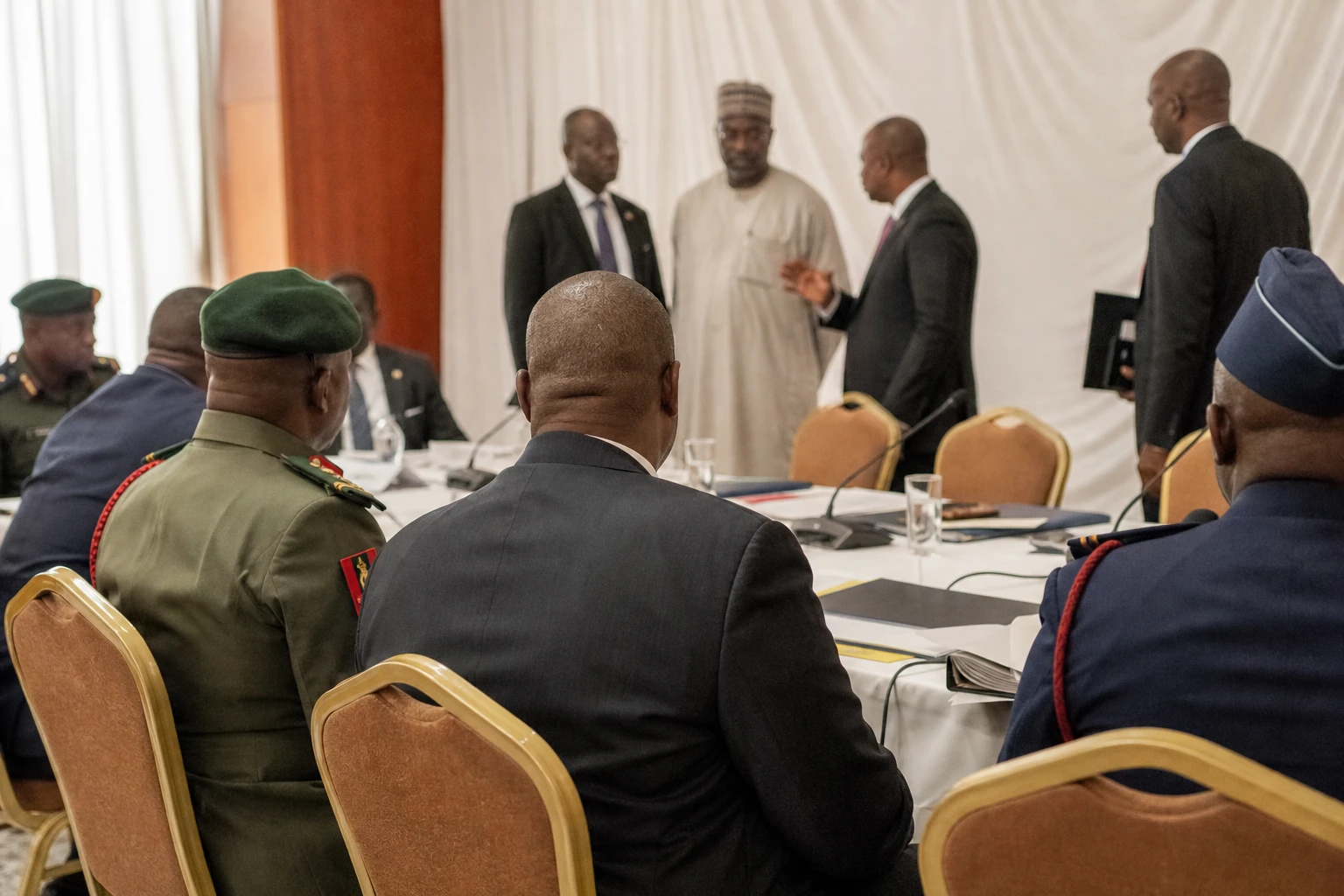
A signal to troops in a country under security pressure
In Nigeria, military pay is never just a matter of wages. It affects troop morale, the state’s ability to hold ground and, more broadly, confidence in the security apparatus. In a country of more than 210 million people, where armed violence persists from the north-east to the centre of the country, the issue carries immediate political weight.
The decision announced by Bola Tinubu is part of a broader sequence of measures. From Abuja, the presidency has been making a series of gestures towards the armed forces: increased resources, modernisation, additional recruitment and support for military families. The executive presents this approach as a response to insecurity, but also as an investment in national cohesion.
What the pay rise entails
The Nigerian president has approved a pay rise of between 30% and 80% for armed forces personnel, depending on rank. According to a statement from the presidency, the measure is due to take effect on 1 September and will cover around 250,000 personnel. Officers above the rank of colonel will receive a 30% increase. Those between colonel and warrant officer will receive a 50% increase. Soldiers and staff sergeants, meanwhile, will see their pay rise by 80%.
The core of the measure is clear: to address the gap between the level of risk faced in the field and the pay of those at the bottom of the military hierarchy. The government is making the case in terms of public duty. “The men and women who contribute to keeping us safe at home must be supported and recognised,” the presidential statement said. This approach echoes another announcement made in December 2024, when the Ministry of Defence confirmed the payment of a military pay rise along with three months of arrears.
The precise structure of the measure is significant. In the Nigerian armed forces, the hierarchy is rigid and pay differentials shape the day-to-day life of units. A larger increase for the lowest ranks is therefore primarily intended for soldiers exposed to operations, remote postings and extended missions. This is also where social pressures are felt most quickly, amid high inflation and a high cost of living.
Why Abuja has chosen this moment
The timing sheds light on the decision. Since the end of 2025, the Nigerian government has toughened its security response. Bola Tinubu has declared a national security emergency and ordered the recruitment of 20,000 additional police officers, while calling for operations against armed groups to be stepped up. The presidency has also referred to increased support for equipment, intelligence and military housing.
This tougher approach responds to a reality familiar to Nigerians. The country continues to face Boko Haram and its splinter group, Islamic State West Africa Province, as well as bandit violence, kidnappings for ransom and communal tensions in several states. The north-east remains the epicentre of the jihadist insurgency, while the north-west and some areas of the centre are experiencing highly mobile attacks.
In this context, the pay rise serves several objectives at once. It is intended to reduce demotivation, limit departures and support discipline. It also allows the government to show that it is not merely asking soldiers to make sacrifices, but is responding to their demands. Finally, it sends a signal to the rest of the administration: security remains Abuja’s budgetary and political priority.
This analysis remains incomplete, however, if financial constraints are overlooked. Nigeria is emerging from years of difficult economic reforms, with inflation weighing on real wages and household purchasing power. In such an environment, every public-sector pay rise involves a sensitive trade-off. The federal government must support the security forces without triggering a cascade of demands from other civil servants.
What it means for soldiers, families and the informal economy
For rank-and-file military personnel, the expected effect is straightforward: higher monthly income and, potentially, some breathing space for families and at barracks. In practice, the impact will depend on how quickly the measure is implemented, whether payments are made in full and how any arrears are handled. In 2024, the Ministry of Defence had already described the payment of three months of arrears as a test of the credibility of the presidential pledge.
For families, the stakes are just as tangible. Long deployments, geographical separation and rising prices put military households under strain, as they often depend on a single salary. That is why Abuja has also highlighted parallel support programmes for soldiers’ widows and wives, as well as funds to help with small businesses. In other words, the executive is now addressing not only pay, but the social ecosystem of the armed forces.
In Nigeria’s large informal economy, the pay rise could have a modest but real impact. Some of the additional income is often spent near barracks, in local markets and on neighbourhood services. This will not alter the country’s macroeconomic balance, but it will provide small-scale support for local consumption. If inflation quickly erodes the nominal gain, however, the social benefit will remain limited.
Implications beyond Abuja
Beyond Nigeria, this pay rise reflects a regional trend: several West African states are seeking to balance security, fiscal discipline and social protection in an unstable environment. For ECOWAS, which groups West African countries, Nigeria’s position remains central because the country carries weight in regional security, migration flows and economic balances.
The continental significance is twofold. On the one hand, it is a reminder that no lasting security reform can ignore the pay and living conditions of deployed forces. On the other, it raises a question of approach: how can armies be strengthened without reducing security policy to a succession of pay announcements? In Nigeria’s case, the answer will depend as much on pay as on equipment, intelligence, logistics and coordination with the federal states.
The issue will therefore need to be followed in Abuja in the coming weeks, as the effective implementation of the pay rise, its date of application and its impact on troops will show the measure of the decision. If payments are made, the government will be able to claim a concrete gesture in support of the army. If they are delayed, the political message will quickly lose its force.