
 Algeria
 Egypt
 Libya
 Morocco
 Sudan
 Tunisia
 Benin
 Burkina Faso
 Cabo Verde
 Côte d'Ivoire
 Ghana
 Guinea
 Guinea-Bissau
 Liberia
 Mali
 Mauritania
 Niger
 Senegal
 Sierra Leone
 The Gambia
 Togo
 Cameroon
 Central African Republic
 Chad
 DR Congo
 Equatorial Guinea
 Gabon
 Republic of the Congo
 São Tomé and Príncipe
 Burundi
 Comoros
 Djibouti
 Eritrea
 Ethiopia
 Kenya
 Madagascar
 Malawi
 Mauritius
 Mozambique
 Rwanda
 Seychelles
 Somalia
 South Sudan
 Tanzania
 Uganda
 Angola
 Botswana
 Eswatini
 Lesotho
 Namibia
 South Africa
 Zambia
 Zimbabwe
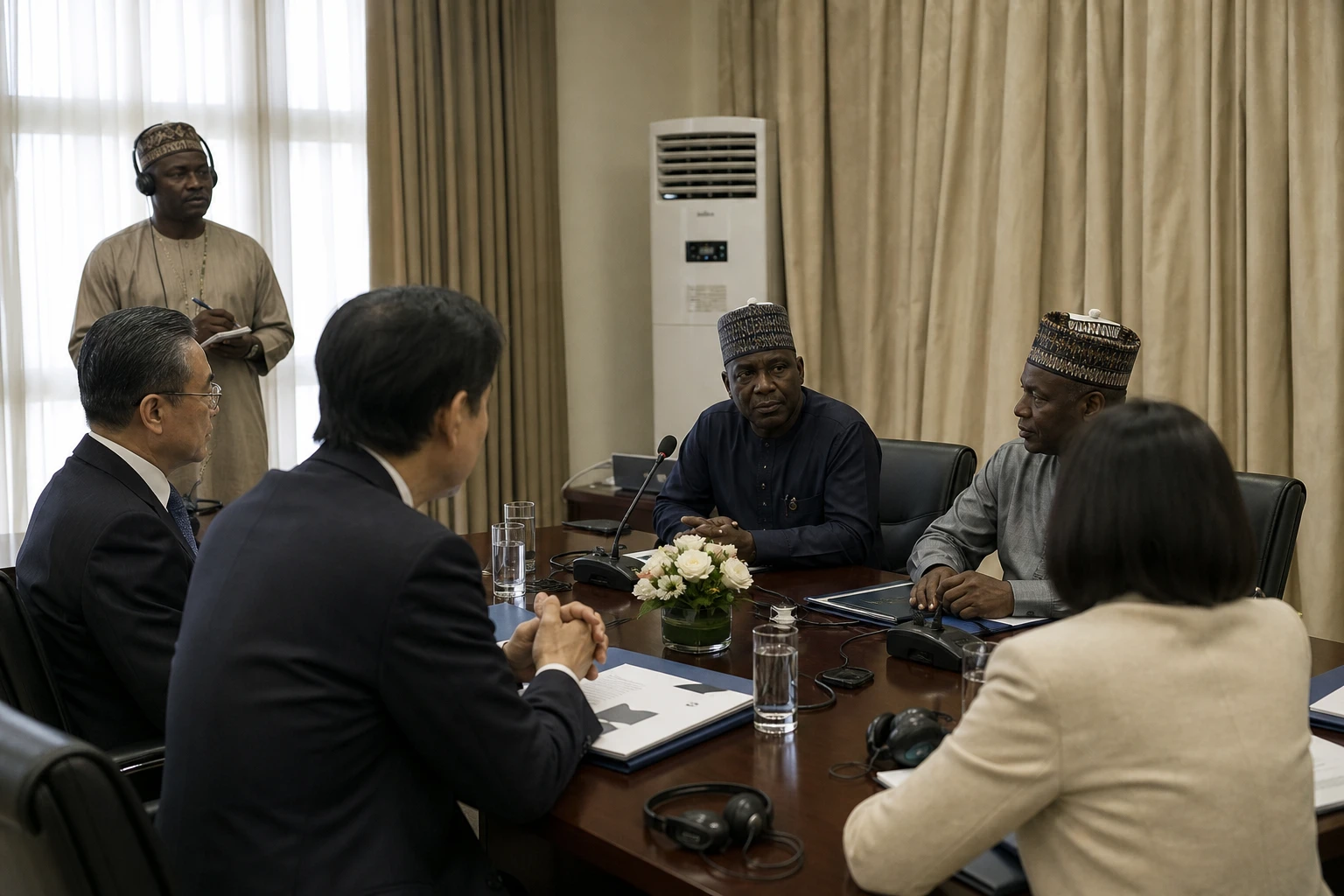
Abuja seeks partners to move up the value chain
In Abuja, the debate is no longer just about cargoes moving from one port to another. It is now about how to turn a longstanding trade relationship into an industrial, agricultural and technological lever for Nigeria. As economic diversification remains a priority, closer ties with Bangkok come at a time when Nigerian authorities are seeking partners able to transfer expertise, not just buy raw materials.
This shift matters to Nigerians because it affects tangible sectors: agricultural processing, inputs, information technology, renewable energy and, eventually, some uses of mineral resources. In other words, the discussion goes beyond conventional diplomacy. It concerns farm productivity, local companies’ ability to improve quality, and access to solutions suited to a large domestic market.
A longstanding relationship, long limited to a few products
Nigeria and Thailand established diplomatic relations in 1962. Since then, ties have been underpinned by trade, energy and a few agricultural segments. On the Thai side, Abuja is presented as a major partner in Africa, particularly for exports of crude oil, natural gas and precious stones. Trade has been built on a useful but narrow foundation.
Available data confirm this limited but real depth. Bilateral trade reached $744.4 million in 2024, according to International Trade Centre data, while a Thai source subsequently reported a volume of $1.2 billion in 2025, pointing to an upward trend that is still concentrated in a limited number of flows. This difference in scale may reflect distinct measurement methods and reference periods; above all, it shows that the relationship is expanding.
Rice illustrates this history well. Thailand has long relied on Nigeria for sales of parboiled rice, while Nigeria exports energy and mining products to the Thai market. The pattern is conventional: one country supplies resources, the other provides processed goods and expertise. The new development is the desire to extend this pattern into more strategic areas.
What the two capitals want to change
The most recent round of discussions took place on 25 and 26 August 2026 in Abuja. A memorandum of understanding on technical co-operation was signed, after which Nigeria’s vice-presidency said the two countries wanted to strengthen co-operation in technology, agriculture, trade and renewable energy. On the Nigerian side, Kashim Shettima called for a move away from a simple exchange of goods towards a more strategic relationship.
Thailand, for its part, highlighted its Thailand-Africa Initiative, a policy aimed at deepening economic and development ties with the continent, particularly in agriculture and technical co-operation. Bangkok sees Nigeria as a gateway to West Africa, while Abuja is seeking partners able to support local processing, mid-level skills and agricultural value chains.
The proposed areas of co-operation are broad, but there is a clear rationale. In agriculture, Thailand has useful experience in equipment suited to medium-sized farms, light mechanisation and certain production techniques. In digital technology, opportunities exist in services, payment solutions and the digitalisation of supply chains. In energy, the challenge is to support decentralised projects, which are useful in a country where reliable access to electricity remains a major factor in competitiveness.
The political message is also clear. Nigeria no longer wants to be seen solely as an oil supplier. Thailand, meanwhile, is not limiting itself to exporting rice or consumer goods. Both countries are trying to shift their relationship towards co-operation that is more useful to businesses, farmers and government bodies. This is as much a change in approach as a change in sectors.
Issues extending beyond bilateral ties
For Nigeria, the stakes are primarily domestic. Better-structured co-operation with Bangkok could support diversification policy, encourage targeted investment and bring expertise that can be put to immediate use. In a context where the informal economy remains vast and job creation depends on light industrialisation and agro-processing, each partnership of this kind matters more than a mere communiqué.
For Thailand, the goal is different but complementary. The country is seeking to strengthen its presence in Africa as part of a strategy for a lasting economic footprint. Nigeria is West Africa’s largest market and a central player in ECOWAS, the Economic Community of West African States. For Bangkok, working with Abuja therefore means positioning itself in a regional market of more than 400 million people, with potential links to agribusiness, trade and services.
The continental significance is also evident in the approach. More and more African countries are seeking agreements that go beyond raw materials and funding announcements. They want partnerships that include training, technology, logistics and local processing. Nigeria-Thailand ties fit this trend: less dependence on a single sector, greater complementarity and a relationship conceived in terms of value chains.
What happens next remains to be seen. The business forum announced in Lagos should clarify whether these intentions will lead to contracts, joint ventures or pilot projects. That is where the strength of the closer ties will be tested. In this kind of relationship, the real question is not how often officials visit, but whether they can generate lasting productive activity, visible in Nigeria’s farms, factories and digital services.



