
 Algeria
 Egypt
 Libya
 Morocco
 Sudan
 Tunisia
 Benin
 Burkina Faso
 Cabo Verde
 Côte d'Ivoire
 Ghana
 Guinea
 Guinea-Bissau
 Liberia
 Mali
 Mauritania
 Niger
 Senegal
 Sierra Leone
 The Gambia
 Togo
 Cameroon
 Central African Republic
 Chad
 DR Congo
 Equatorial Guinea
 Gabon
 Republic of the Congo
 São Tomé and Príncipe
 Burundi
 Comoros
 Djibouti
 Eritrea
 Ethiopia
 Kenya
 Madagascar
 Malawi
 Mauritius
 Mozambique
 Rwanda
 Seychelles
 Somalia
 South Sudan
 Tanzania
 Uganda
 Angola
 Botswana
 Eswatini
 Lesotho
 Namibia
 South Africa
 Zambia
 Zimbabwe
When network quality also depends on the rules of the game
In Nigeria, the debate over telecoms is no longer confined to coverage or the price of data packages. It now concerns a broader question: can operators continue to invest heavily when towers, fibre and radio sites remain exposed to outages, vandalism and administrative delays? In a country where mobile connectivity has become basic infrastructure for commerce, payments and public services, the answer matters far beyond the operators.
The discussion is also taking place in a regional environment in which West Africa is seeking to accelerate digital integration. ECOWAS sees connectivity as a lever for the movement of goods, services and data, while the Nigerian market remains by far the largest in the sub-region. In Abuja, telecoms regulation falls to the Nigerian Communications Commission, the authority that also sets deadlines and procedures for tariff approvals.
Investment is already high, but remains vulnerable
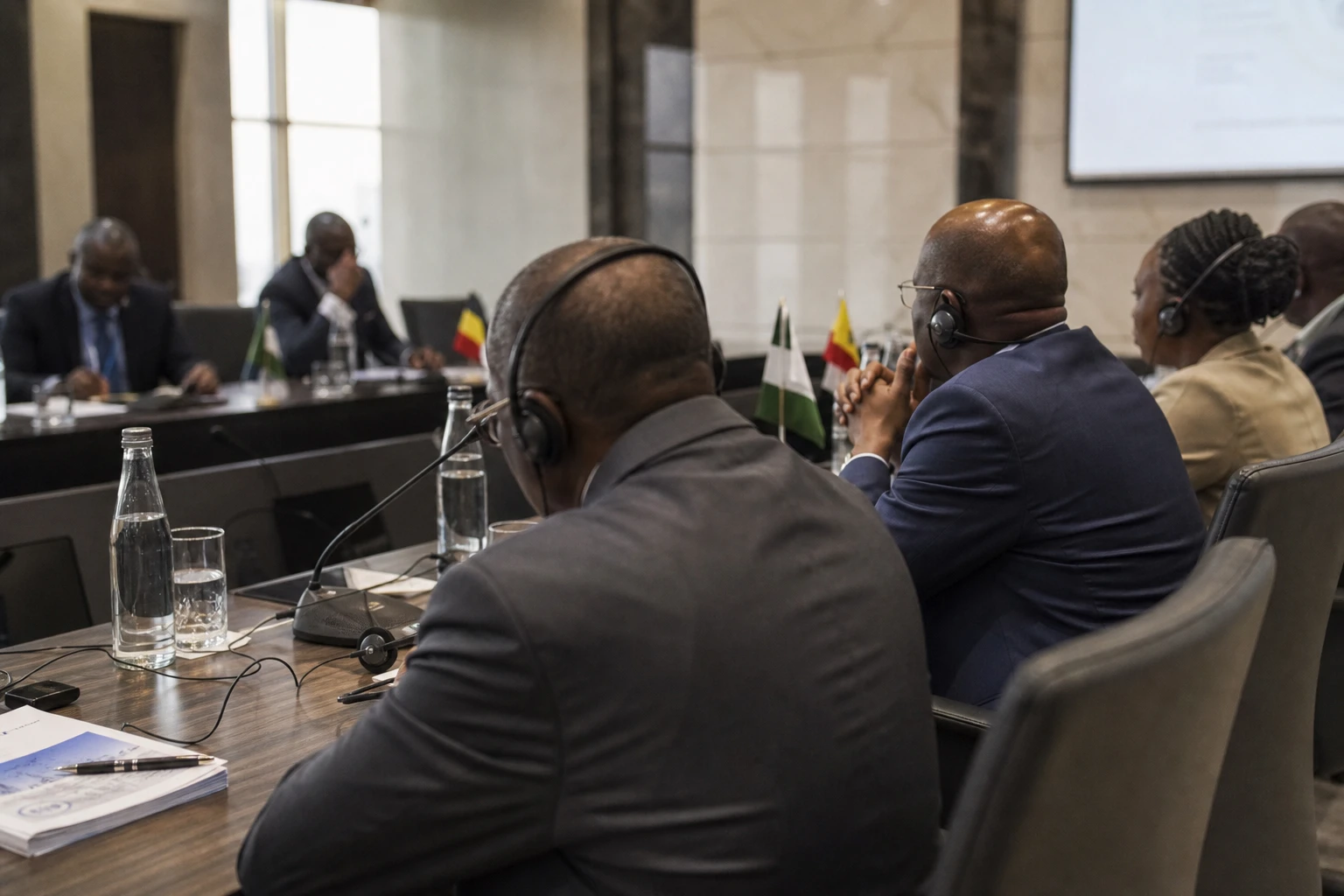
Meeting in Lagos, operators grouped under the Association of Licensed Telecoms Operators of Nigeria said their investment strategy depended on a more stable framework. Gbenga Adebayo, the organisation’s president, summarised their expectations in seven points: consistency in public policy, regulatory predictability, asset protection, simplified rights of way, reduced double taxation, action against vandalism and faster deployment approvals. ALTON says it represents licensed telecoms service providers recognised by the NCC.
This message has not come out of nowhere. The sector has already committed substantial sums. Nigerian media and ALTON report investment of about 2.13 to 2.3 trillion naira in 2025, followed by a new plan of close to 1.86 to 1.8 trillion naira in 2026 to extend networks and modernise technology. The overall picture is consistent with the scale of the market: the NCC recorded 185.7 million mobile subscribers in March 2026 and more than 153 million internet subscribers in the spring.
These figures explain the pressure on operators. With such a large user base, even a brief network outage affects revenue, digital payments and small-business activity. In major cities such as Lagos, Abuja and Port Harcourt, the impact is felt in banking apps, logistics and on-demand services. In rural areas, it is more acutely felt through disrupted coordination, commercial delays and poor service continuity.
The 2025 tariff increase changed the equation, but did not solve everything
Gbenga Adebayo also defended the 50% tariff increase approved by the NCC in 2025. In his view, the revision marked a turning point after 12 years without a significant adjustment. The NCC nevertheless notes that the regulator retains direct authority over tariffs, review timelines and operator compliance. In other words, the financial viability of networks still depends on a delicate balance between profitability, consumer protection and public oversight.
This is precisely the point the sector is making: investment follows confidence, and confidence requires clear rules. The logic is not merely financial. It also concerns the ability to absorb energy costs, fund imported equipment, deploy fibre and maintain sites in areas that are sometimes difficult to access. In 2025 and 2026, the NCC also strengthened compensation mechanisms for users affected by prolonged poor service, while explicitly identifying fibre cuts and vandalism as cases to be considered.
Nigeria’s telecoms sector is therefore caught between two imperatives. Operators want to protect their margins so they can continue investing. The authorities, meanwhile, must ensure that tariffs, already a sensitive issue for households, do not become a barrier to access. That is the real challenge: financing network expansion without undermining digital adoption, particularly among lower-income subscribers and in the informal economy, which increasingly depends on mobile services.
A Nigerian signal that resonates far beyond Abuja
The Nigerian case extends beyond national borders. In its latest Mobile Economy Africa 2026 report, the GSMA estimates that mobile technologies generated $240 billion for the African economy in 2025, or 7.8% of the continent’s GDP, and could drive more than $76 billion in network investment between 2024 and 2030. But these projections depend on clear policies: available spectrum, investment incentives, affordability and regulatory certainty.
The same organisation warns that network resilience has become a matter of economic security. It is urging African governments to treat telecoms as critical infrastructure, on a par with energy or water, and to strengthen the protection of sites. This view directly echoes ALTON’s concerns in Nigeria, where protecting fibre and antennas is no longer a technical detail but a condition of digital sovereignty.
For Nigeria, the issue is immediate. The country remains a major anchor of West Africa’s digital economy. If Abuja can stabilise the regulatory framework, secure infrastructure and clarify tax levies, the market can still support new areas of growth: 5G, cloud services, payments, local content and business uses. Conversely, if uncertainty takes hold, investment will continue, but at a defensive pace, focused on repairs rather than expansion.
The issue therefore goes beyond a simple industry demand. It concerns Nigeria’s ability, with Lagos as its economic capital and Abuja as its political centre, to turn a very large telecoms market into a lasting engine of productivity, employment and regional integration. For West Africa, it is also a test of governance: a robust network depends not only on technology but on the quality of the institutions that oversee it.



