Algeria
 Egypt
 Libya
 Morocco
 Sudan
 Tunisia
 Benin
 Burkina Faso
 Cabo Verde
 Côte d'Ivoire
 Ghana
 Guinea
 Guinea-Bissau
 Liberia
 Mali
 Mauritania
 Niger
 Senegal
 Sierra Leone
 The Gambia
 Togo
 Cameroon
 Central African Republic
 Chad
 DR Congo
 Equatorial Guinea
 Gabon
 Republic of the Congo
 São Tomé and Príncipe
 Burundi
 Comoros
 Djibouti
 Eritrea
 Ethiopia
 Kenya
 Madagascar
 Malawi
 Mauritius
 Mozambique
 Rwanda
 Seychelles
 Somalia
 South Sudan
 Tanzania
 Uganda
 Angola
 Botswana
 Eswatini
 Lesotho
 Namibia
 South Africa
 Zambia
 Zimbabwe
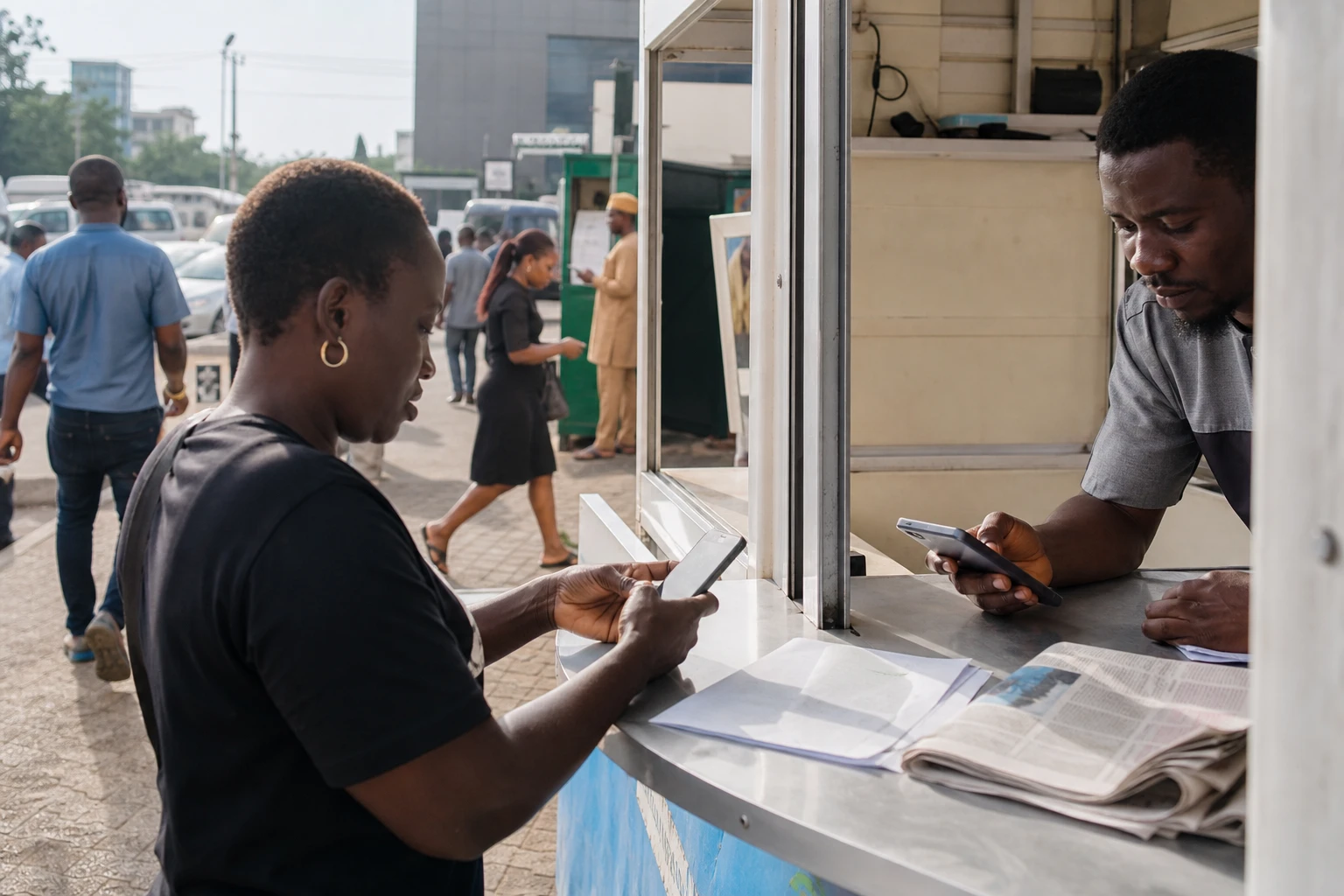
In Abuja, the tone of Nigeria’s economic debate is changing. After several years of pressure on the foreign exchange market, the country now has an external buffer capable of financing several months of imports. This improvement gives the Central Bank of Nigeria more room to manoeuvre, but has yet to resolve the difficulties faced by households and businesses.
Reserves strengthen the country’s external position
Nigeria’s gross external reserves stood at $55.25 billion on 18 September 2026, according to data presented by the Central Bank of Nigeria at a meeting of its Monetary Policy Committee. Governor Olayemi Cardoso described the amount as the highest level in more than 18 years.
At this level, the reserves would cover about 11.3 months of imports of goods and services. This is an important indicator for a country that still relies heavily on foreign currency earnings from hydrocarbons, diaspora remittances and international investment.
The increase since the start of the year has been marked. The stock stood at $48.35 billion at the end of the first quarter of 2026, then reached $51.39 billion at the end of June. The rise over a few months therefore points to a gradual strengthening, rather than a one-off movement.
The development has been reported by several Nigerian media outlets, including Premium Times and The Punch. Cross-checking confirms the announced amount, the date of 18 September and the duration of import cover.
External accounts benefit from a wider surplus
The recovery in reserves is part of a broader improvement in the external accounts. The current-account surplus reached $7.54 billion in the second quarter of 2026, up from $4.49 billion in the previous quarter. The increase was 67.92%.
The current account measures trade in goods and services, as well as certain income and transfers with the rest of the world. A surplus means that foreign currency inflows exceeded outflows over the period in question.
The balance of payments, which also includes financial flows, recorded a surplus of $3.51 billion in the second quarter. It had been positive by $2.38 billion in the first quarter. These provisional figures were reported by TheCable and ThisDay.
Export earnings, diaspora remittances and changes in imports have contributed to this improvement. However, the available data call for caution. Some financial inflows also rely on portfolio capital, which can enter and leave more quickly than direct investment. The strength of reserves will therefore depend on Nigeria’s ability to stabilise sustainable sources of foreign currency.
The naira benefits from easing pressure
The build-up in reserves is easing pressure on the foreign exchange market. The Central Bank has greater scope to meet importers’ foreign currency needs and limit disorderly movements in the naira. It cannot, however, control the exchange rate on its own, as this also depends on market supply and demand.
Nigerian authorities have also observed an appreciation in the national currency since 2025. Finance Minister and Coordinator of Economic Policy Taiwo Oyedele said in September that the naira had appreciated by more than 12% between the first half of 2025 and the first half of 2026.
This development can reduce the cost of imports priced in dollars. It can also give businesses that buy equipment or raw materials abroad greater visibility. Its effects, however, are not the same for all players. Exporters may see their earnings converted into naira decline, while businesses reliant on imported inputs benefit from a more stable exchange rate.
For households, an improvement in the external position does not automatically translate into lower prices. The cost of transport, food, housing and energy also depends on domestic production, logistics and available incomes.
Disinflation remains fragile
Headline inflation fell to 15.39% in August 2026, from 15.43% in July, according to figures from the National Bureau of Statistics of Nigeria. The decline was limited, but extended the slowdown seen in recent months.
Food inflation stood at 19.57% year on year. Food products account for a central share of the budgets of many Nigerian families. The moderation in the overall index therefore does not yet mean consumers are back in a comfortable position.
Pressure also varies by region. Large cities are benefiting more from improved foreign currency supplies and competition between suppliers. In rural areas, transport costs, storage difficulties and fluctuations in agricultural production may continue to support prices.
The next test will be transmission to the real economy
Nigeria is thus entering a more favourable phase in terms of its external position. Higher reserves, a stronger current-account surplus and relative easing in the foreign exchange market can support confidence among investors and businesses.
The main challenge now will be transmitting this improvement to the real economy. The Central Bank will have to preserve reserves without fuelling fresh inflationary pressures. The government, for its part, will need to turn external earnings into productive investment, infrastructure and local production capacity.
This trajectory is also of interest to the Economic Community of West African States, ECOWAS. Nigeria is the region’s largest economy and plays a central role in West African trade, payments and financial stability. A more predictable naira can facilitate some regional transactions, but a sustained appreciation will need to be balanced against the competitiveness of Nigerian exports.
The coming months will show whether reserves are maintained, inflation continues to ease and external surpluses rest on a sufficiently diversified base. For Abuja, the challenge is no longer just to rebuild available dollar reserves. It is now to turn this safety margin into steadier growth and better-protected purchasing power.