
 Algeria
 Egypt
 Libya
 Morocco
 Sudan
 Tunisia
 Benin
 Burkina Faso
 Cabo Verde
 Côte d'Ivoire
 Ghana
 Guinea
 Guinea-Bissau
 Liberia
 Mali
 Mauritania
 Niger
 Senegal
 Sierra Leone
 The Gambia
 Togo
 Cameroon
 Central African Republic
 Chad
 DR Congo
 Equatorial Guinea
 Gabon
 Republic of the Congo
 São Tomé and Príncipe
 Burundi
 Comoros
 Djibouti
 Eritrea
 Ethiopia
 Kenya
 Madagascar
 Malawi
 Mauritius
 Mozambique
 Rwanda
 Seychelles
 Somalia
 South Sudan
 Tanzania
 Uganda
 Angola
 Botswana
 Eswatini
 Lesotho
 Namibia
 South Africa
 Zambia
 Zimbabwe
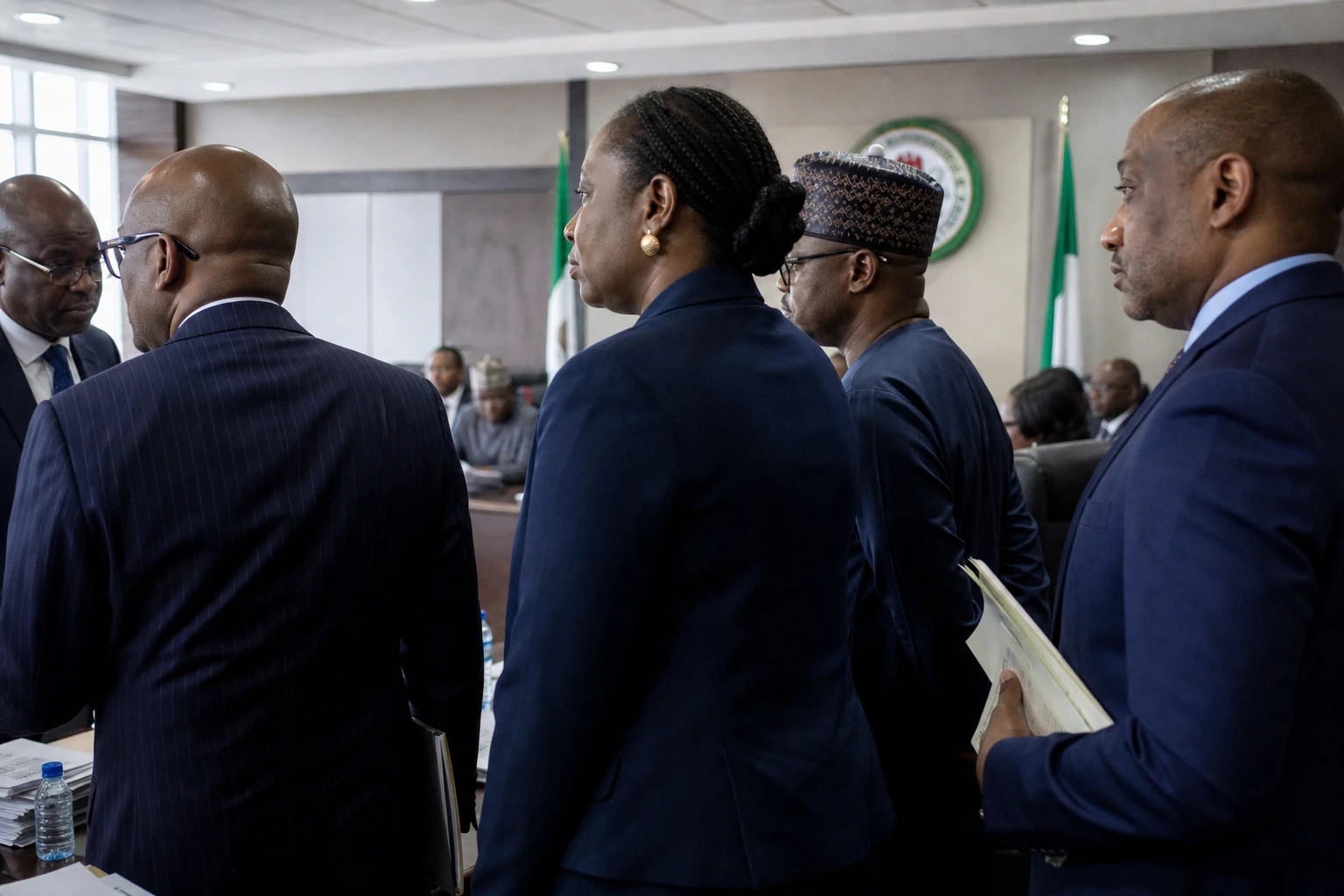
Macroeconomic improvement, but not yet in shopping baskets
In Abuja, the economic debate is no longer limited to Bola Tinubu’s supporters and critics. It is now playing out in homes, markets and on public transport. Nigeria is showing signs of recovery, but one question remains central for Nigerians: when will growth begin to be felt in everyday life?
The country is emerging from a period of major reforms. Since 2023, the president has scrapped the petrol subsidy and liberalised the foreign exchange market further. On paper, these choices have helped reduce some distortions, support public finances and improve transparency in the foreign exchange market. On the street, they have chiefly caused an immediate price shock. The gap between national indicators and purchasing power therefore remains the real test of the second term Bola Tinubu intends to defend in 2027. The Independent National Electoral Commission has published the timetable for the 2027 general election, with the presidential vote set for 16 January 2027.
This is not just a Nigerian story. It matters across West Africa, where Nigeria’s size, its role as a regional currency benchmark, its imports, remittances and political weight within ECOWAS, the Economic Community of West African States, all carry considerable influence. When Abuja falters, neighbouring markets, supply chains and political expectations follow.
Figures are rising, but everyday life remains under pressure
Official data point to a recovery in activity. Nigeria’s gross domestic product grew by 4.43% year on year in the second quarter of 2026, up from 3.89% in the first quarter, according to the National Bureau of Statistics. The same agency also says annual inflation fell to 15.43% in July 2026, while food prices rose by 20.31% year on year. The slowdown is real. It does not mean prices are falling. It means they are rising less quickly than before. For households whose budgets are already swallowed up by food and transport, the distinction does little to change what is left at the end of the month. The National Bureau of Statistics publishes these figures amid methodological revisions to the consumer price index and GDP, a reminder of the need to read the series with caution.
The International Monetary Fund confirmed in June 2026 that poverty stood at 63% of the population under the national poverty line, and that 27 million Nigerians had faced food insecurity in autumn 2025. The institution also noted that the reforms had strengthened macroeconomic stability and investor confidence, while increasing social pressure in the short term. This echoes the World Bank’s position: for several months, it has called for the gains from reforms to “flow back” to the population through more stable prices, better public services and stronger social safety nets. The IMF’s 2026 report and recent World Bank work on Nigeria converge on this point.
The country also faces another structural challenge: employment. Millions of young people enter the labour market each year. Current growth, driven mainly by certain services, is not yet enough to absorb this demographic pressure. This is where the difference between a statistical recovery and an improvement people actually experience comes into play.
The social cost of decisions taken in 2023
Nigeria’s paradox lies in this: the reforms that supported the external accounts and signs of stabilisation were initially paid for by consumers. Ending the petrol subsidy drove up fuel prices. In a country where road transport dominates and many households and businesses still rely on generators, higher fuel costs quickly feed through to almost all prices. The naira, which depreciated sharply after foreign exchange controls were eased, also pushed up the cost of imported goods and inputs paid for in foreign currency.
To cushion the blow, the government did introduce targeted cash transfers. The IMF said in 2026 that about 9.2 million households had been enrolled in a programme intended to reach 15 million. But coverage remains incomplete, and the amounts paid have been considered too small given the scale of the adjustment. In other words, the compensation mechanism has yet to catch up with the pace of rising costs. This is crucial to understanding the current social fragility in Abuja, Lagos, Kano and Port Harcourt, as well as in rural areas where access to markets is more expensive.
The government is now seeking to change the narrative. In July 2026, the finance minister announced a “shared prosperity” dashboard, intended to track multidimensional poverty, real income per capita and inequality. The idea is simple: to show that success is measured not only by GDP, but also by households’ ability to eat, travel, work and save without falling into hardship. This is a political as well as an economic turning point.
A credibility battle for Abuja and a signal for West Africa
The issue extends beyond the 2027 presidential election. For Bola Tinubu, the challenge is to prove that a harsh adjustment can lead to stronger, more inclusive growth. For his opponents, the question is the reverse: how can they talk of recovery when the cost of living remains the public’s foremost concern? Between these two readings, the reality is more nuanced. Nigeria has regained macroeconomic momentum. It has yet to regain shared prosperity.
The next stage will therefore be closely watched: the government’s ability to bring down food inflation, stabilise energy, fund social safety nets and create productive jobs. The IMF believes Nigeria will need sustained investment in electricity, infrastructure and agriculture, as well as a more predictable security environment, to turn growth into lasting gains. This reading matters across the continent because it sums up a dilemma shared by several major African economies: reforms can correct imbalances, but without credible social protection or mass employment, they remain politically costly.
At the regional level, Abuja is also sending a signal to ECOWAS. West Africa’s largest economy remains a barometer of monetary stability, intra-regional trade and investor sentiment. If prices genuinely fall, wages recover and growth becomes visible beyond statistical tables, the government will be able to argue that it has delivered on its promise of recovery. Otherwise, the 2027 campaign will be fought less over GDP curves than over a very concrete question: who in today’s Nigeria can actually feel the effects of the recovery?



