Algeria
 Egypt
 Libya
 Morocco
 Sudan
 Tunisia
 Benin
 Burkina Faso
 Cabo Verde
 Côte d'Ivoire
 Ghana
 Guinea
 Guinea-Bissau
 Liberia
 Mali
 Mauritania
 Niger
 Senegal
 Sierra Leone
 The Gambia
 Togo
 Cameroon
 Central African Republic
 Chad
 DR Congo
 Equatorial Guinea
 Gabon
 Republic of the Congo
 São Tomé and Príncipe
 Burundi
 Comoros
 Djibouti
 Eritrea
 Ethiopia
 Kenya
 Madagascar
 Malawi
 Mauritius
 Mozambique
 Rwanda
 Seychelles
 Somalia
 South Sudan
 Tanzania
 Uganda
 Angola
 Botswana
 Eswatini
 Lesotho
 Namibia
 South Africa
 Zambia
 Zimbabwe
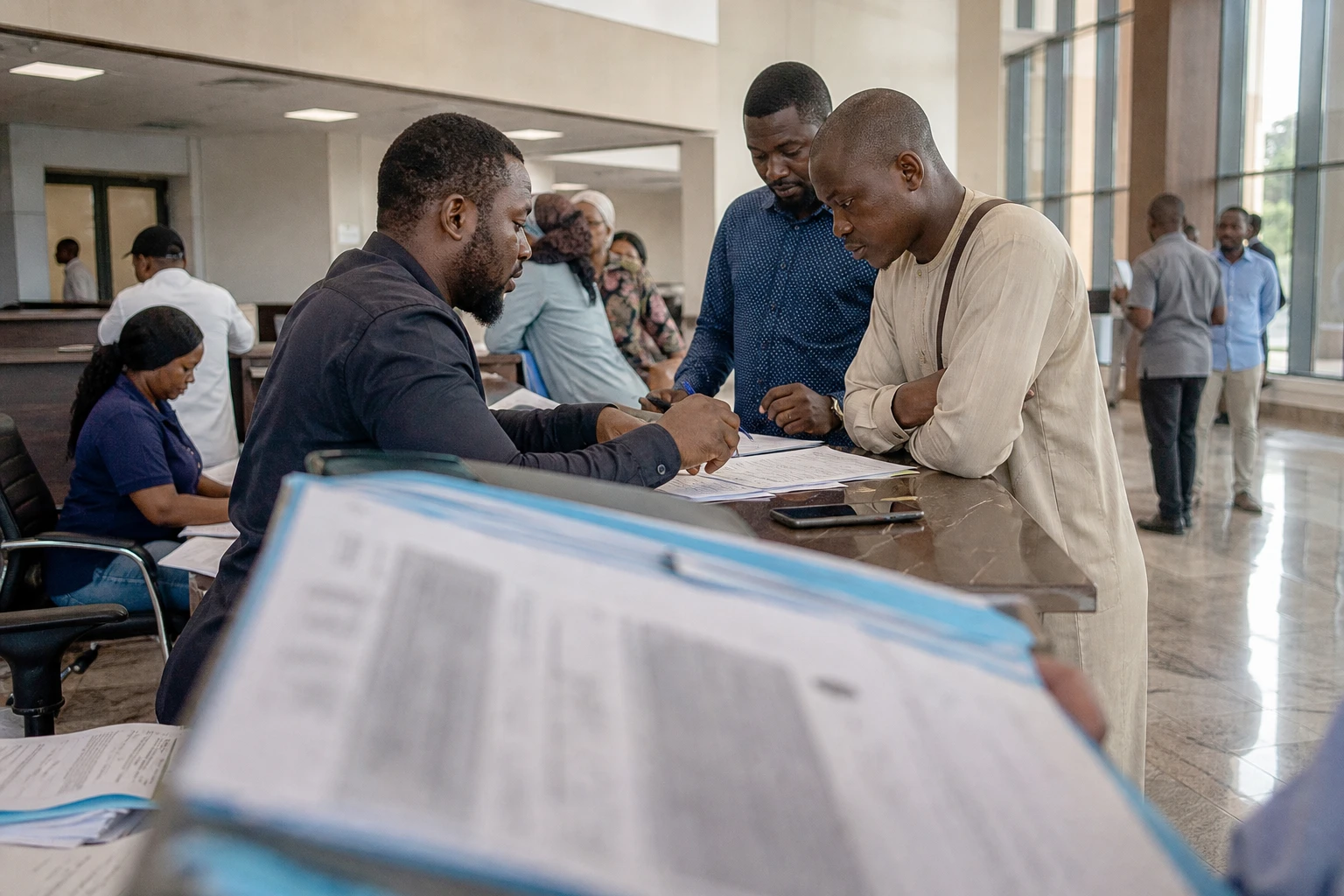
A register designed to secure the market, but under scrutiny from traders
In Nigeria, the mobile phone has become a work tool before it is a comfort item. It is used to sell, pay, learn and stay in touch. That is precisely why any new charge on devices immediately attracts scrutiny, especially in a country where access to smartphones is still far from universal. In 2024, the GSMA estimated that only 27% of Nigeria’s population owned a smartphone, and that the cost of an entry-level device still absorbed a significant share of the income of the poorest households.
The debate this time centres on the Device Management System, or DMS, a scheme that the Nigerian Communications Commission (NCC) wants to use to register devices compatible with mobile networks. The idea is not new. The NCC presents the system as a central register intended to better track SIM-enabled phones, limit counterfeit or non-approved devices and strengthen the traceability of handsets. Its own documents indicate that the technical rules published in 2024 provided the basis for this framework.
In Abuja, a technical issue quickly becomes a question of price
In the federal capital, Abuja, the issue quickly moved out of the regulator’s offices and into the commercial supply chain. The Association of Mobile Phones and Allied Products Traders of Nigeria, which brings together device retailers and importers, has challenged the fees planned for the registration of newly imported phones. It does not reject the principle of the DMS. It argues, however, that the cost could be passed down the supply chain and ultimately reflected in the price paid by the end buyer. Nigerian media also reported these concerns during the week of 18 September 2026.
According to information published in the local press, the scheme provides for a per-device fee on new imports, with different amounts depending on the category of phone. Industry players say they understand that a rate of about 670 naira per IMEI could apply to some devices, while higher-end handsets would be taxed more heavily. At this stage, the NCC has not provided a detailed public response to traders’ concerns about passing the cost on to consumers.
This uncertainty carries significant weight. Nigeria’s phone market is vast, but highly sensitive to exchange-rate movements, taxes, freight costs and the cost of living. When the naira depreciates, importers adjust their margins. When electricity costs rise, shops pass some of the expense on through prices. In this context, an additional levy, even if described as modest, could alter the price structure of entry-level devices, where most demand is concentrated.
A digital inclusion issue, not just regulation
The heart of the debate goes beyond technical compliance. In Nigeria, access to a smartphone determines access to mobile internet, banking services, online commerce and a growing range of public and private services. The GSMA notes that network coverage has expanded considerably in the country, but that the real obstacle is usage, not just network availability. In other words, networks are more widespread, but many Nigerians are still shut out of the digital world because they cannot afford a device.
The same report also notes that the average price of an entry-level smartphone has fallen over several years, but that progress has been partly offset by inflation and declining purchasing power. The GSMA estimates that in 2024 an entry-level device still represented 56% of monthly income for the poorest 40% and 73% for the poorest 20% in Nigeria. This figure explains why traders fear a price increase, however slight, if the DMS becomes an additional cost for importers and distributors.
The Minister of Communications, Innovation and Digital Economy, Bosun Tijani, is also being urged to intervene in the matter. Traders want a delay of three to six months before the DMS’s financial provisions take effect. They say they need time to adapt to the new procedures and to sell or register stock already in circulation. Their request highlights a point often overlooked in digital reforms: in Nigeria, regulatory timetables must take account of a vast, fragmented market that is heavily dependent on imports.
What this issue says about Nigeria and West Africa
Regionally, Nigeria does not operate in isolation. As West Africa’s largest economy and a central member of ECOWAS, it often sends signals that extend beyond its borders. A system such as the DMS can be seen as a tool of digital sovereignty and a way to combat fraud. But it can also become a test of the balance between market oversight and inclusion. If the final cost of devices rises, the impact will be felt first by low-income urban households, small informal businesses, students and self-employed workers who rely on phones to sell, place orders or receive payments.
The issue is also continental. Across Africa, the question is not only how to connect people, but how to make that connection affordable. Operators and regulators are seeking to combat stolen phones, cloned devices and non-approved imports. But they must do so without turning a security tool into a barrier to access. In Nigeria, the debate is particularly sensitive because the country has one of the continent’s largest mobile-user bases and the usage gap remains deep, both between urban and rural areas and between affluent and vulnerable households.
What happens next will depend on the NCC’s response and the federal government’s ability to preserve the register’s purpose while limiting its impact on prices. If the regulator stays the course, it will have to make its case on two fronts at once: the DMS’s usefulness for the Nigerian market and its neutrality for consumers. Only under both conditions can the reform avoid becoming yet another driver of higher prices in shops in Abuja, Lagos or Kano.