
 Algeria
 Egypt
 Libya
 Morocco
 Sudan
 Tunisia
 Benin
 Burkina Faso
 Cabo Verde
 Côte d'Ivoire
 Ghana
 Guinea
 Guinea-Bissau
 Liberia
 Mali
 Mauritania
 Niger
 Senegal
 Sierra Leone
 The Gambia
 Togo
 Cameroon
 Central African Republic
 Chad
 DR Congo
 Equatorial Guinea
 Gabon
 Republic of the Congo
 São Tomé and Príncipe
 Burundi
 Comoros
 Djibouti
 Eritrea
 Ethiopia
 Kenya
 Madagascar
 Malawi
 Mauritius
 Mozambique
 Rwanda
 Seychelles
 Somalia
 South Sudan
 Tanzania
 Uganda
 Angola
 Botswana
 Eswatini
 Lesotho
 Namibia
 South Africa
 Zambia
 Zimbabwe
The real test is no longer geology
Nigeria is not short of oil. What it still lacks is confidence. Investors are no longer looking only at the size of its reserves. They are looking at site security, stable rules and speed of execution. In a more selective global market, Abuja must now prove that its promises translate into bankable projects, not just talk of potential.
This shift matters for a country that remains one of the continent’s major energy powers and whose economy is still heavily dependent on hydrocarbons. Nigeria set out its reforms in the 2021 Petroleum Industry Act, which was intended to clarify the fiscal and regulatory framework for upstream oil. Since 2023, the government has also made a series of adjustments to make the sector more predictable for operators.
Reforms, but also regional competition
The debate is taking place in Abuja, Nigeria’s federal capital, but it extends well beyond the country’s borders. In the Gulf of Guinea and other African basins, producer states are competing for the same capital, which is often scarcer than before. Companies compare taxation, security, permitting times, infrastructure quality and the predictability of rules. Nigeria can no longer rely on its status as an oil giant alone.
This competition is all the fiercer because deepwater projects require billions of dollars and have long development cycles. Nigerian regulators themselves acknowledge that the contest is now about the competitiveness of the terms on offer. Reforms count only if they withstand political change and reduce the uncertainty that has long held back final investment decisions.
What the union said, and why it matters
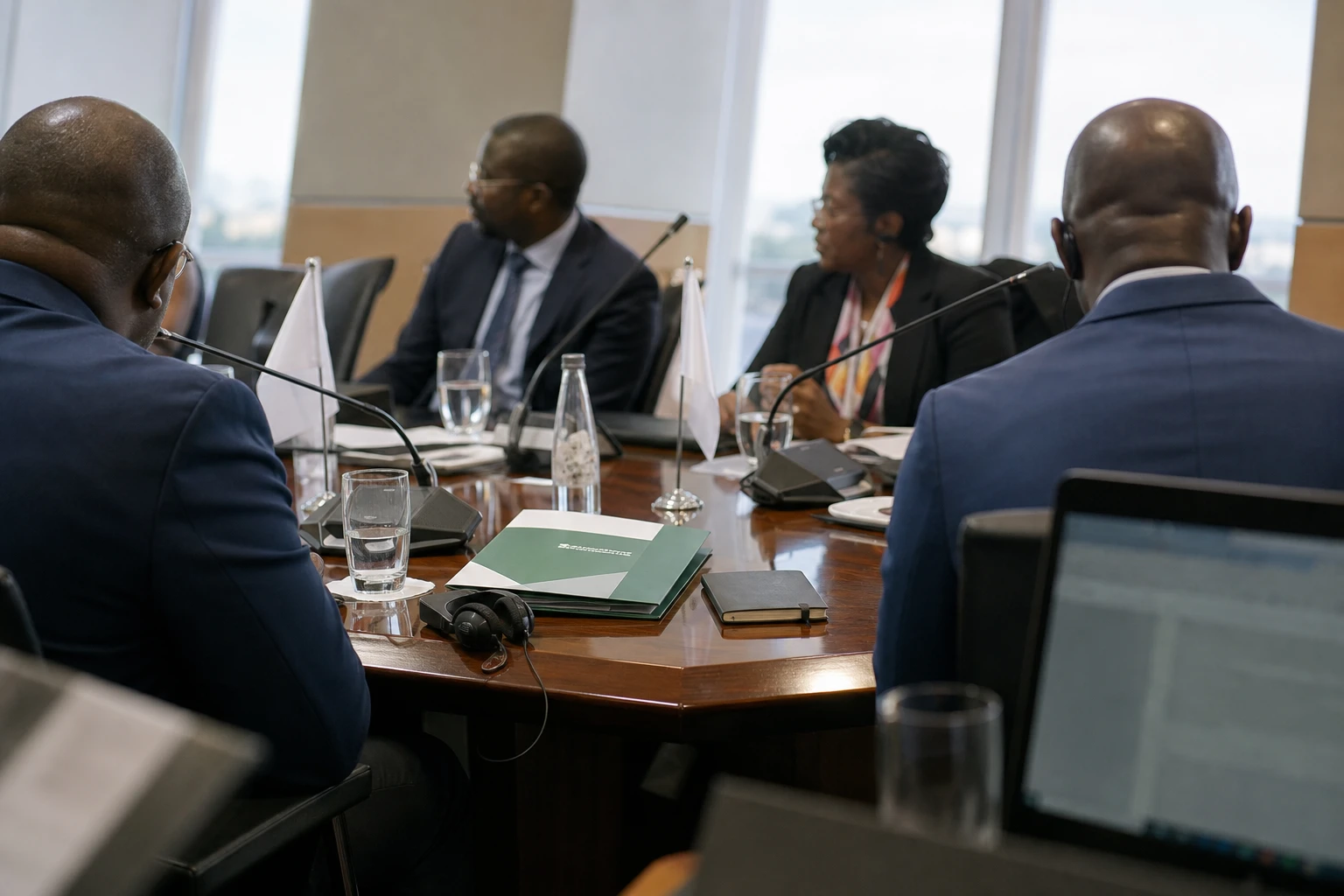
The warning came from PENGASSAN, Nigeria’s main union representing oil and gas professionals. Meeting in Abuja from 19 to 21 August 2026 for the fifth edition of its Energy and Labour Summit, the union said reserves were no longer enough to attract capital. Its message is clear: without competitive taxation, stronger security, stable regulation and effective execution, reserves remain a theoretical asset.
The union is not alone in making this case. Operator executives, including those from Chevron, have also stressed in Abuja the need for a predictable policy for oil and gas investment. This convergence between unions, regulators and companies shows that the issue is no longer a conflict between labour and capital. The real challenge is Nigeria’s ability to secure long-term projects.
In its argument, PENGASSAN also took aim at regulatory changes it considers too frequent. The union wants new provisions to be better aligned with the existing legal framework and says no tax reform should be imposed without meaningful consultation. For workers, this affects jobs, site safety and project continuity. For the state, it affects revenues, foreign exchange and the country’s credibility with investors.
Positive signs are emerging, but need to be consolidated
Abuja can nevertheless point to concrete progress. In June 2026, Nigerian crude production reached 1.56 million barrels per day, its highest level in several years, according to regulator data cited by Reuters. In July 2026, crude production remained above OPEC’s quota of 1.5 million barrels per day, although it edged down slightly. The figures show an improvement, but not yet a lasting breakthrough.
The regulator, the Nigerian Upstream Petroleum Regulatory Commission, also says it has approved more than $57 billion in field development plans since 2024. It expects a further $30 billion to $50 billion in potential investment across 22 offshore projects between 2026 and 2030. It has also presented several licences from recent licensing rounds, signalling an effort to get the market moving again.
ExxonMobil’s return to deep offshore projects symbolises this tentative revival. In July 2026, the company announced with its partners a $1 billion investment in the Usan Infill project, which is expected to add up to 40,000 barrels per day. Its strategic value lies in being a development that draws on existing infrastructure, making it faster and less risky than a wholly new project.
Gas, refining and the wider African impact
Nigeria also wants to escape the familiar trap of being resource-rich but lacking local processing. Its gas reserves are substantial, at around 210 to 215 Tcf according to recent publications by the regulator. Yet value added remains low because of a shortage of pipelines, storage, industrial outlets and a sufficiently robust commercial chain. The debate is therefore not just about crude. It also concerns gas, electricity, fertilisers, petrochemicals and domestic refining.
This matters across West Africa. When ECOWAS’s largest market stabilises its rules, it can encourage more infrastructure, greater trade flows and improved regional energy security. Conversely, if reforms stall halfway, the effects are quickly felt: less investment, more delays and prolonged dependence on imports of refined products. Nigeria is therefore playing for stakes that go beyond its own national balance sheet.
The next test will be continuity. Reform announcements have already begun to produce some signs of progress, but the market is now waiting for final investment decisions, faster permits and consistent enforcement of the rules. Abuja’s credibility will be measured at this level: not by the abundance of its reserves, but by its ability to turn them into production, jobs and sustainable revenues.



