
 Algeria
 Egypt
 Libya
 Morocco
 Sudan
 Tunisia
 Benin
 Burkina Faso
 Cabo Verde
 Côte d'Ivoire
 Ghana
 Guinea
 Guinea-Bissau
 Liberia
 Mali
 Mauritania
 Niger
 Senegal
 Sierra Leone
 The Gambia
 Togo
 Cameroon
 Central African Republic
 Chad
 DR Congo
 Equatorial Guinea
 Gabon
 Republic of the Congo
 São Tomé and Príncipe
 Burundi
 Comoros
 Djibouti
 Eritrea
 Ethiopia
 Kenya
 Madagascar
 Malawi
 Mauritius
 Mozambique
 Rwanda
 Seychelles
 Somalia
 South Sudan
 Tanzania
 Uganda
 Angola
 Botswana
 Eswatini
 Lesotho
 Namibia
 South Africa
 Zambia
 Zimbabwe
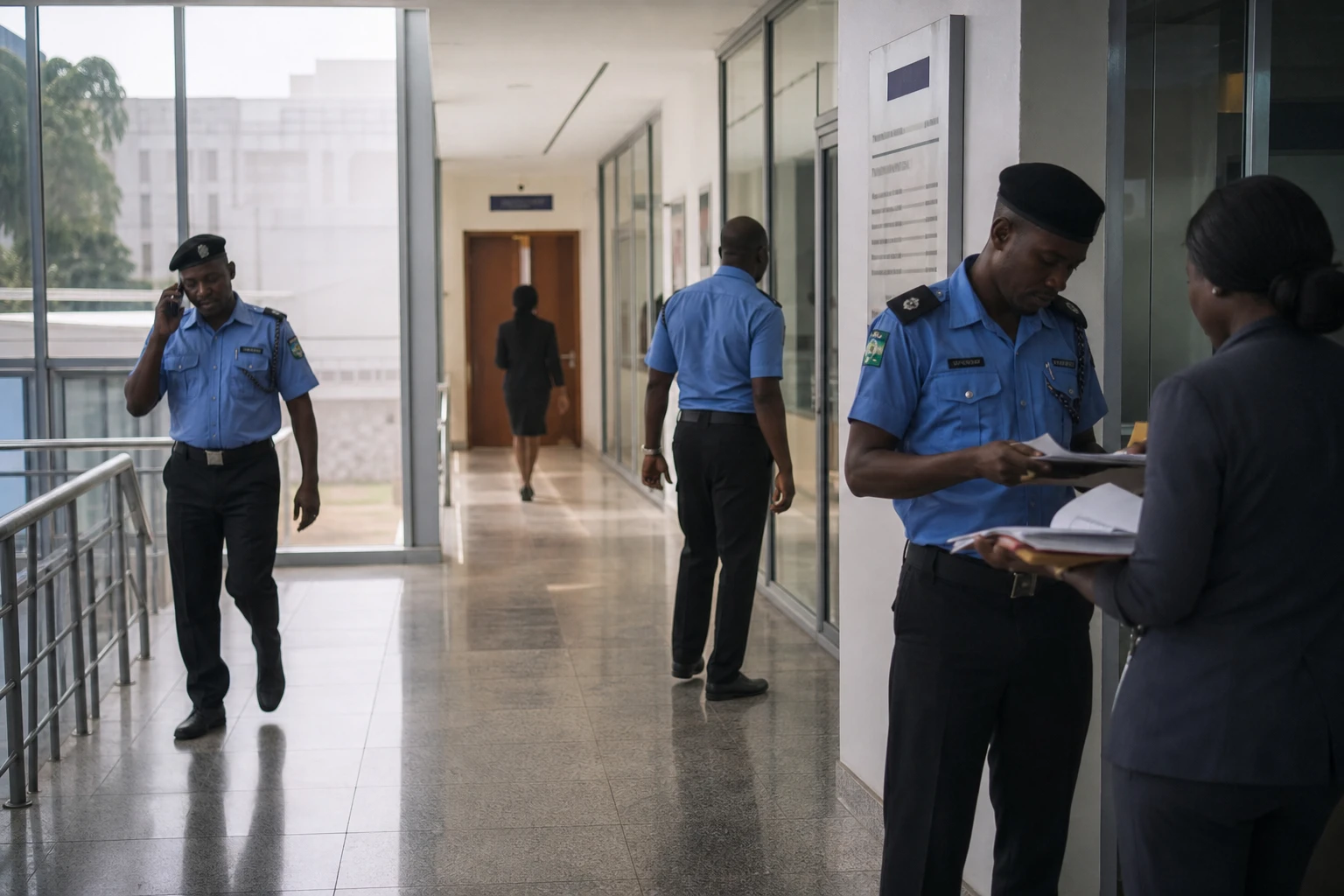
In north-western Nigeria, the frontline remains fluid
In Sakaba, Kebbi State, a dirt road can become a flashpoint between the state and highly mobile armed groups within minutes. Such attacks are a reminder of a familiar reality in Nigeria: in several rural areas of the north-west, security still depends on scattered patrols, rapid reinforcements and often fragile local intelligence.
The heart of the problem extends beyond a single village. Kebbi, whose capital is Birni Kebbi, belongs to Zone 10 of the Nigerian police, which also covers Sokoto and Zamfara, three states regularly affected by violence linked to armed bandits and other criminal groups. The region is also close to the border with Zamfara, a corridor through which attackers move quickly, often on motorbikes, before disappearing into wooded areas or along secondary tracks.
It was against this backdrop that a clash broke out on Monday, 10 August 2026, in Sakaba local government area. According to the Nigerian police, ten officers and two civilians were killed. Two other officers were injured. The police also said 17 attackers had been killed in the exchange of fire. The incident was reported from Abuja, where the federal police headquarters is located, and confirmed by several independent media outlets.
The officers belonged to the 44 Police Mobile Force, a unit deployed for high-risk operations. According to information made public, they had been sent to the area as part of a special mission to combat armed groups. The clash took place near Makuku, in an area where security forces were trying to intercept heavily armed men travelling on motorbikes.
The civilian victims were identified as Mohammadu Magwawara, 50, and Muhammadu Tiritiri, 45. A third civilian, Shehu Abubakar, 41, was seriously injured. The bodies were taken to Dirin Daji General Hospital, while the injured man was transferred to the Federal University Teaching Hospital in Birnin Kebbi. These details appear in the police report carried by the media and in the AP account.
A local attack, but a national warning
In Nigeria, the term “bandits” refers to armed groups active mainly in the north-west and north-central regions, involved in kidnappings, extortion, cattle theft and village raids. In the north-west, these groups take advantage of vast terrain, isolated roads and an uneven state presence. This geography directly affects people in rural areas, small traders, farmers and travellers using secondary roads without permanent protection.
The significance of the attack also lies in what it says about the pressure on the security forces. Nigeria does not simply lack material resources; it also has to manage a highly asymmetric balance of power. Mobile units are deployed quickly, but armed groups often choose the place, time and escape route. In this kind of operation, the state protects main roads, while the most remote villages remain exposed for longer. That is where the human cost is heaviest.
Kebbi’s situation is part of an already tense series of events. In March 2026, two police officers had already been killed in an attack on a border checkpoint in the state, according to the Nigerian press. In February 2026, the police had also confirmed 33 deaths after simultaneous attacks in another part of Kebbi. These repeated incidents show that violence is no longer an isolated event, but a continuing strain on local administrations and rural communities.
The contrast between Abuja and Sakaba is also political. In Abuja, the chain of command announces operations, reinforcements and investigations. On the ground, residents focus above all on how long it takes for help to arrive, the availability of medical care and whether they will be safe the next day. For them, an attack such as the one in Makuku goes beyond official death tolls: it can close schools, shut weekly markets, delay travel and force families to scale back farming activities.
What this latest episode means for Nigeria and the region
The attack is also a reminder that security in north-western Nigeria is not solely a domestic concern. Porous borders, the movement of small arms and the mobility of armed groups also affect regional stability in West Africa. Although each country has its own dynamics, criminal networks and escape routes often disregard the administrative boundaries that ECOWAS, the regional economic community, is seeking to make more secure.
For Abuja, the challenge is immediate: maintain the state’s presence in rural areas, strengthen local intelligence and prevent units sent as reinforcements from becoming isolated targets themselves. For Kebbi, the challenge is even more tangible: reopen roads, reassure villages and stop the local economy from adapting permanently to fear. Across the continent, the case is a reminder that no lasting stability can be built without local security, better-equipped police and credible cross-border co-operation.



