Algeria
 Egypt
 Libya
 Morocco
 Sudan
 Tunisia
 Benin
 Burkina Faso
 Cabo Verde
 Côte d'Ivoire
 Ghana
 Guinea
 Guinea-Bissau
 Liberia
 Mali
 Mauritania
 Niger
 Senegal
 Sierra Leone
 The Gambia
 Togo
 Cameroon
 Central African Republic
 Chad
 DR Congo
 Equatorial Guinea
 Gabon
 Republic of the Congo
 São Tomé and Príncipe
 Burundi
 Comoros
 Djibouti
 Eritrea
 Ethiopia
 Kenya
 Madagascar
 Malawi
 Mauritius
 Mozambique
 Rwanda
 Seychelles
 Somalia
 South Sudan
 Tanzania
 Uganda
 Angola
 Botswana
 Eswatini
 Lesotho
 Namibia
 South Africa
 Zambia
 Zimbabwe
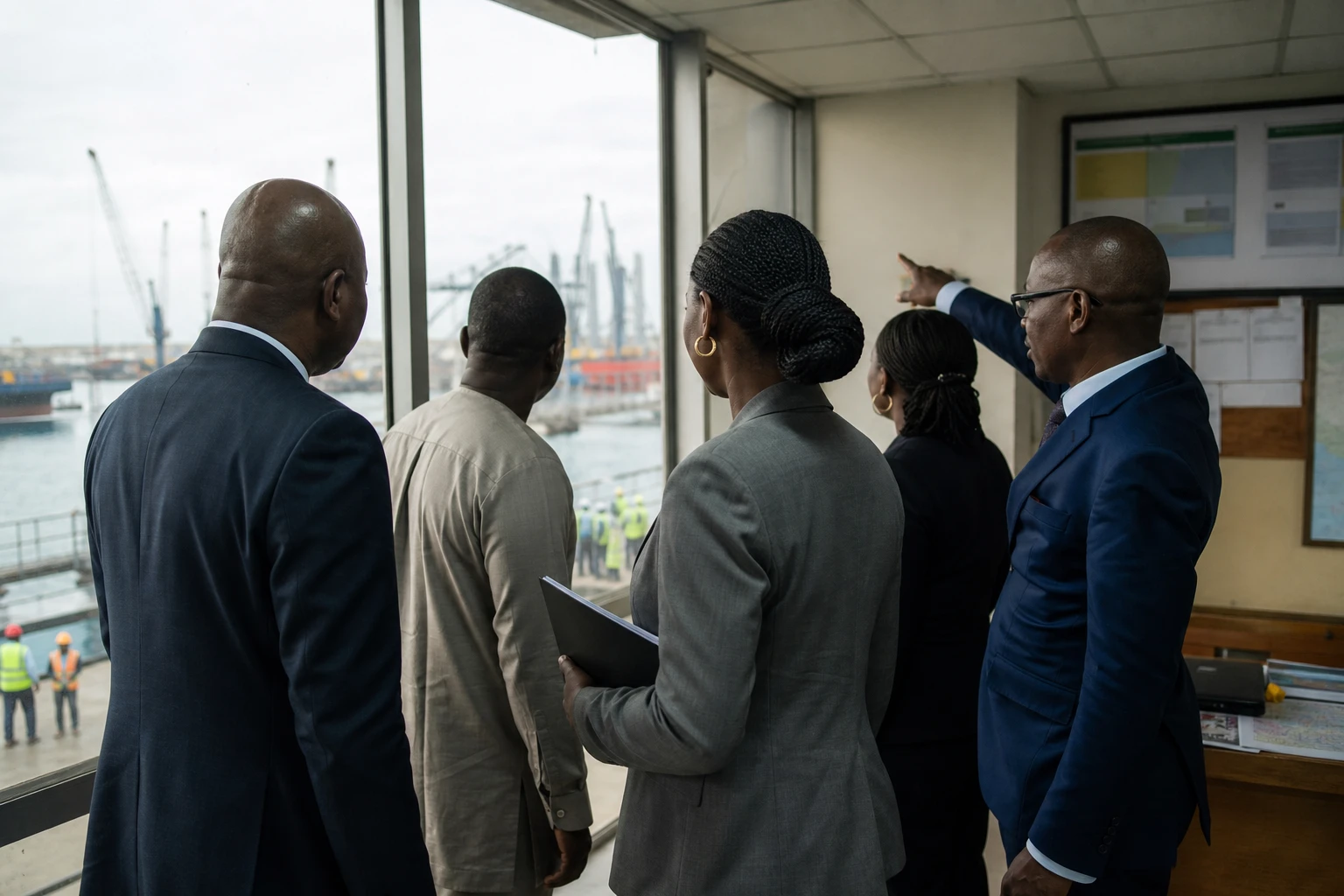
For Nigeria, modernising the eastern ports is about more than maritime infrastructure. It directly affects the cost of imports, the smooth flow of exports and businesses’ ability to access regional markets without depending on a single corridor.
The federal government approved the modernisation of four port facilities outside Lagos on 27 September 2026: Onne and Rivers, in Rivers State; Delta, in the state of the same name; and Calabar, in Cross River State. The announcement was made by Adegboyega Oyetola, Nigeria’s Minister of Marine and Blue Economy.
A port network still out of balance
Nigeria has a vast coastline and one of Africa’s leading domestic markets. Yet much of its international freight remains concentrated around Lagos, particularly at the Apapa and Tin Can Island port complexes. This concentration puts additional pressure on roads, terminals and supply chains in the country’s commercial capital.
The decision announced in September follows an earlier approval to modernise Apapa and Tin Can Island. Abuja’s stated aim is to build a more balanced system in which Lagos remains a major hub, but is no longer the sole gateway for foreign trade.
The four ports involved are already listed by the Nigerian Ports Authority, the federal body responsible for port administration. Onne and Rivers are in Rivers State, Delta serves Warri among other locations, while Calabar provides maritime access to the country’s far south-east.
This distribution matters to manufacturers and traders. An importer based in the Niger Delta, the south-east or the country’s central states should not necessarily have to route goods through Lagos before transporting them long distances by road.
Existing infrastructure to be brought back up to capacity
The programme is expected to cover quays, access channels, cargo-handling equipment, operational efficiency and connections with other modes of transport. Minister Adegboyega Oyetola said the work should improve cargo handling, reduce the time ships spend in port and make shipments more predictable.
Existing capacity shows that these ports are not starting from scratch. Onne is particularly important for energy and industrial activities. The Nigerian Ports Authority describes Onne as a multipurpose facility, equipped for heavy-duty operations and with land available for further development.
The port of Rivers, located in Port Harcourt, also plays a strategic role in the economic activities of Rivers State and the Niger Delta region. Delta, at Warri, has natural access to the south’s industrial and energy basins. Calabar, meanwhile, can serve as an outlet for the south-east and strengthen trade with countries around the Gulf of Guinea.
Historical figures cited in communications about the programme give an indication of the available headroom. In 2017, the four facilities reportedly handled nearly 37 million tonnes of goods and recorded 1,831 ship movements. Onne accounted for about 26.05 million tonnes, ahead of Delta, Rivers and Calabar. These old figures, however, do not provide a measure of current operational conditions.
The real test will be on land
A more efficient port is not enough if goods remain stuck on the way out. Access roads, truck parking areas, customs procedures, container availability and corridor security will matter as much as cranes or quays.
This constraint was evident at Onne in August 2026. Representatives of customs agents, maritime workers and local stakeholders denounced the condition of internal roads, the lack of truck staging areas and the costs associated with the truck call-up system. They even threatened to suspend their activities, showing that a port’s theoretical capacity does not guarantee the smooth movement of goods in practice.
The Nigerian Shippers’ Council, the body responsible for protecting the interests of maritime transport users, has also warned that Onne, Calabar and Port Harcourt are underused. According to the Council, this situation drives up logistics costs and limits the efficiency of supply chains.
For small businesses and informal-economy operators, the stakes are immediate. Shorter delays reduce storage costs, penalties and stock shortages. For agricultural and industrial exporters, better connections can also improve access to ships and make international contracts more reliable.
The benefits will not be the same everywhere. Port cities could gain jobs in cargo handling, transport and maintenance. Nearby communities, meanwhile, will expect road infrastructure, local jobs and greater consideration of the impacts on them. Without these guarantees, port modernisation risks concentrating gains around the terminals.
A question for ECOWAS and the Gulf of Guinea
The reform goes beyond the national level. Nigeria is West Africa’s largest economy and the biggest market in the Economic Community of West African States, ECOWAS. Its ports can therefore serve as gateways for neighbouring countries, provided road and rail corridors are reliable.
More competitive ports at Onne, Rivers, Delta and Calabar could change freight routes in the Gulf of Guinea. They could also support trade with Cameroon, Equatorial Guinea and other economies along the West African coast. To achieve this, shorter delays will need to go hand in hand with clear tariffs, digital procedures and coordination between government agencies.
Abuja now wants to modernise existing infrastructure while preparing new deep-water ports, including the Ibom, Bonny, Bakassi and Gateway projects. This strategy broadens Nigeria’s maritime offering, but also raises a question of sequencing: should existing facilities be fully utilised before more new projects are launched?
The next step will be practical. The government will need to set out the funding, timetable, priority works and expected additional capacity. Operators will be watching three indicators in particular: the number of ship calls, the volume of cargo handled and the total cost of transport to the end customer. It is these results, rather than the political announcement, that will show whether Nigeria’s port activity is becoming less concentrated.