
 Algeria
 Egypt
 Libya
 Morocco
 Sudan
 Tunisia
 Benin
 Burkina Faso
 Cabo Verde
 Côte d'Ivoire
 Ghana
 Guinea
 Guinea-Bissau
 Liberia
 Mali
 Mauritania
 Niger
 Senegal
 Sierra Leone
 The Gambia
 Togo
 Cameroon
 Central African Republic
 Chad
 DR Congo
 Equatorial Guinea
 Gabon
 Republic of the Congo
 São Tomé and Príncipe
 Burundi
 Comoros
 Djibouti
 Eritrea
 Ethiopia
 Kenya
 Madagascar
 Malawi
 Mauritius
 Mozambique
 Rwanda
 Seychelles
 Somalia
 South Sudan
 Tanzania
 Uganda
 Angola
 Botswana
 Eswatini
 Lesotho
 Namibia
 South Africa
 Zambia
 Zimbabwe
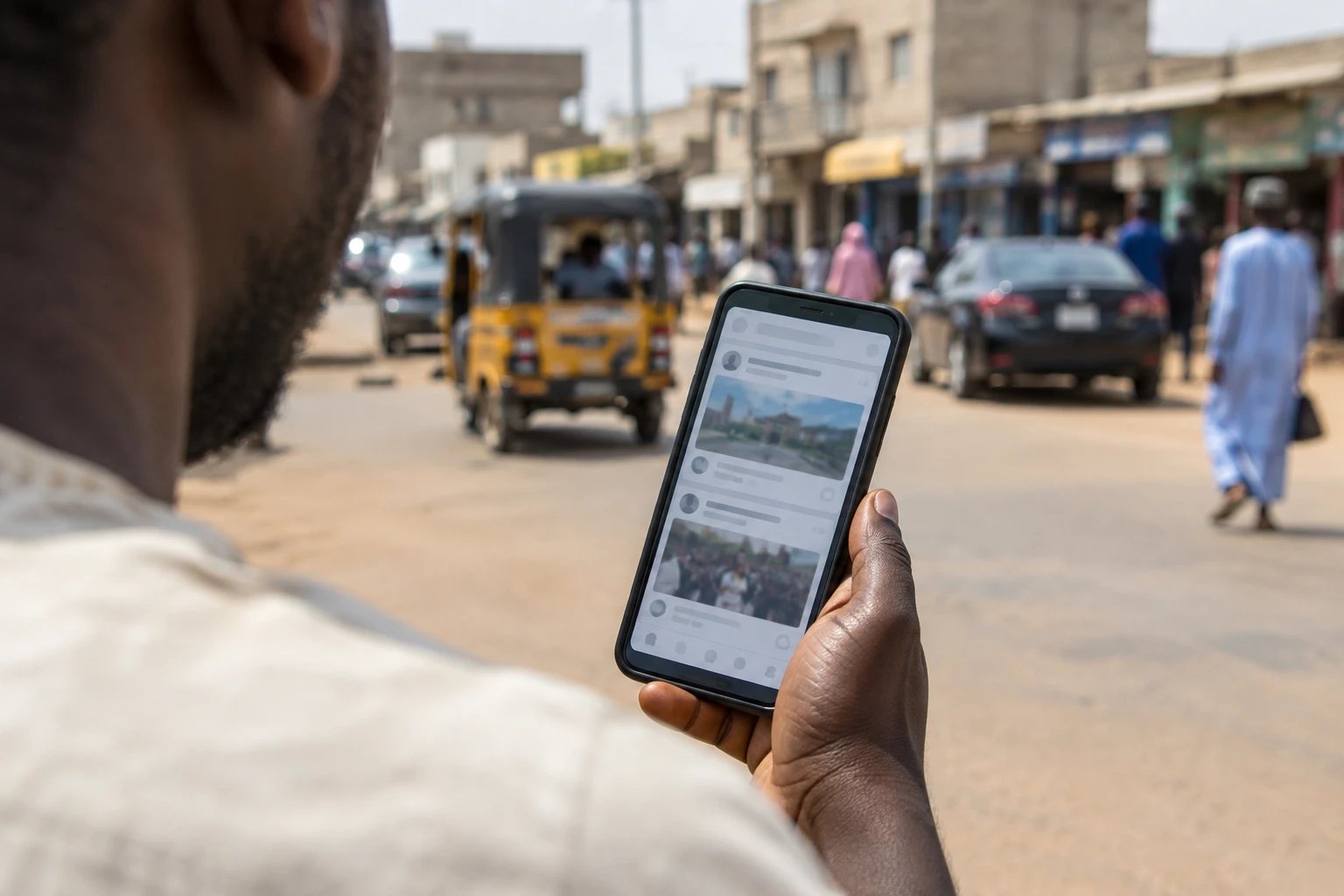
In northern Nigeria, the killing of a religious leader can affect far more than a community of worshippers. The murders of preachers have sometimes reignited local rivalries, fuelled reprisals or deepened distrust of the authorities. But each case has its own story: drawing comparisons is not enough to establish a common sponsor or motive.
Attacks in different contexts
Northern Nigeria is not a uniform region. Boko Haram’s violence has been concentrated in the North-East, particularly around Maiduguri, the capital of Borno State. Elsewhere, local conflicts and tensions between Muslim movements have also made headlines. ECOWAS, the West African regional organisation, monitors cross-border security issues, but criminal investigations are primarily the responsibility of Nigerian authorities.
This diversity matters when seeking to understand the killings of religious leaders. A victim may have criticised an armed group, provoked doctrinal opposition or been caught up in a dispute whose circumstances remain unclear. Attributing all these crimes to Boko Haram from the outset would erase these differences and turn suspicions into certainties.
The events in Sokoto in 2007 also show that a murder can trigger violence against people who have not been implicated by a judicial investigation. Caution in identifying those responsible is therefore essential, both to establish the facts and to avoid fuelling reprisals.
The Masusuka case: established facts and a claim to verify
On Monday 26 October 2026, Sheikh Yahaya Ibrahim Masusuka and another man, identified by police as Adamu Abubakar, were killed outside the religious leader’s residence in Dutsin-Ma, Katsina State. Local police said two men on a motorcycle had opened fire, then announced the launch of an investigation. The two victims were taken to hospital.
Masusuka was known for teachings centred on the Qur’an and for advocating coexistence between people of different faiths. These details shed light on his profile but are not enough to establish the motive for the crime. Nigerian outlet Premium Times reported police confirmation of the attack. Public broadcaster NTA also reported on the investigation and noted that the information available does not, on its own, confirm an ideologically motivated targeted killing.
A claim of responsibility by Ansaru was later reported by Premium Times. However, police had not confirmed the attribution in the information consulted. The claim must therefore remain attributed to the group and cannot stand in for the conclusion of an investigation. Available reports also differ on some details of the timing, which should not be presented as definitively established.
Seven names, different trajectories and levels of certainty
Archives on northern Nigeria record several murders of religious leaders over the past two decades. They show a succession of cases, but not a homogeneous series in which a perpetrator has been established in every instance.
On 1 February 2014, Sheikh Muhammad Auwal Albani Zaria was attacked with his family as they returned home to Zaria, Kaduna State. His wife and son were also killed. Nigerian broadcaster Channels Television reported witness accounts and his death in hospital. The deaths of his family members set this case apart from attacks targeting a single religious leader.
In Maiduguri, Sheikh Goni Tijjani was killed at his home on 9 May 2011. Sheikh Ali Jana’a was shot dead outside his home on 29 October that year. Allegations that they had links to Boko Haram or passed information to security forces circulated in connection with the killings. These should not be confused with responsibility established in court. An Amnesty International report documents, among other things, Jana’a’s murder and the climate of suspicion in the city.
Sheikh Ibrahim Birkuti, meanwhile, was killed in Biu, Borno State, in June 2011. Reports at the time said he had criticised Boko Haram; this opposition fuelled suspicions about the motive, but was not enough to establish the identity of the killers. Sheikh Ja’afar Mahmoud Adam, an influential preacher from Kano, was assassinated on 13 April 2007 during dawn prayers. Historical research recalls that responsibility was disputed. The Council on Foreign Relations notes that the explanations put forward do not allow the case to be reduced to an unequivocal attribution to Boko Haram.
Finally, Sheikh Umaru Danmaishiyya was seriously wounded by gunfire in Sokoto on 18 July 2007 and died the following day. His assassination was followed by clashes and arrests targeting members of the Shia community, although the authorities had not established their responsibility. The Islamic Human Rights Commission documented the arrests and subsequent violence. This precedent shows the human cost of collective accusations made before the facts have been clarified.
Next steps: investigation, protection and trust
For residents of Katsina, the immediate priorities are establishing the facts and ensuring the safety of witnesses and the victims’ relatives. For state authorities and the federal police, a credible investigation must distinguish evidence from claims and rumours. It will also need to establish whether the attack targeted the religious leader, his companion or both.
Across Nigeria, these cases raise questions about protecting religious voices, without conflating doctrinal criticism, political opposition and armed involvement. In the North-East, the murders of religious leaders took place during a period when the Boko Haram insurgency was expanding. In Sokoto in 2007, Danmaishiyya’s murder instead triggered local sectarian violence. The context therefore changes from one state to another.
The regional significance also lies in the risk of spillover: armed groups and criminal networks operate in areas where West African borders are difficult to control. For ECOWAS, security cooperation matters; for Nigerians, trust in the police, the justice system and local mediation is just as tangible. In Dutsin-Ma, what happens next will depend on the findings of the investigation, whether the claim attributed to Ansaru is confirmed, and the measures taken to prevent further attacks.



