
 Algeria
 Egypt
 Libya
 Morocco
 Sudan
 Tunisia
 Benin
 Burkina Faso
 Cabo Verde
 Côte d'Ivoire
 Ghana
 Guinea
 Guinea-Bissau
 Liberia
 Mali
 Mauritania
 Niger
 Senegal
 Sierra Leone
 The Gambia
 Togo
 Cameroon
 Central African Republic
 Chad
 DR Congo
 Equatorial Guinea
 Gabon
 Republic of the Congo
 São Tomé and Príncipe
 Burundi
 Comoros
 Djibouti
 Eritrea
 Ethiopia
 Kenya
 Madagascar
 Malawi
 Mauritius
 Mozambique
 Rwanda
 Seychelles
 Somalia
 South Sudan
 Tanzania
 Uganda
 Angola
 Botswana
 Eswatini
 Lesotho
 Namibia
 South Africa
 Zambia
 Zimbabwe
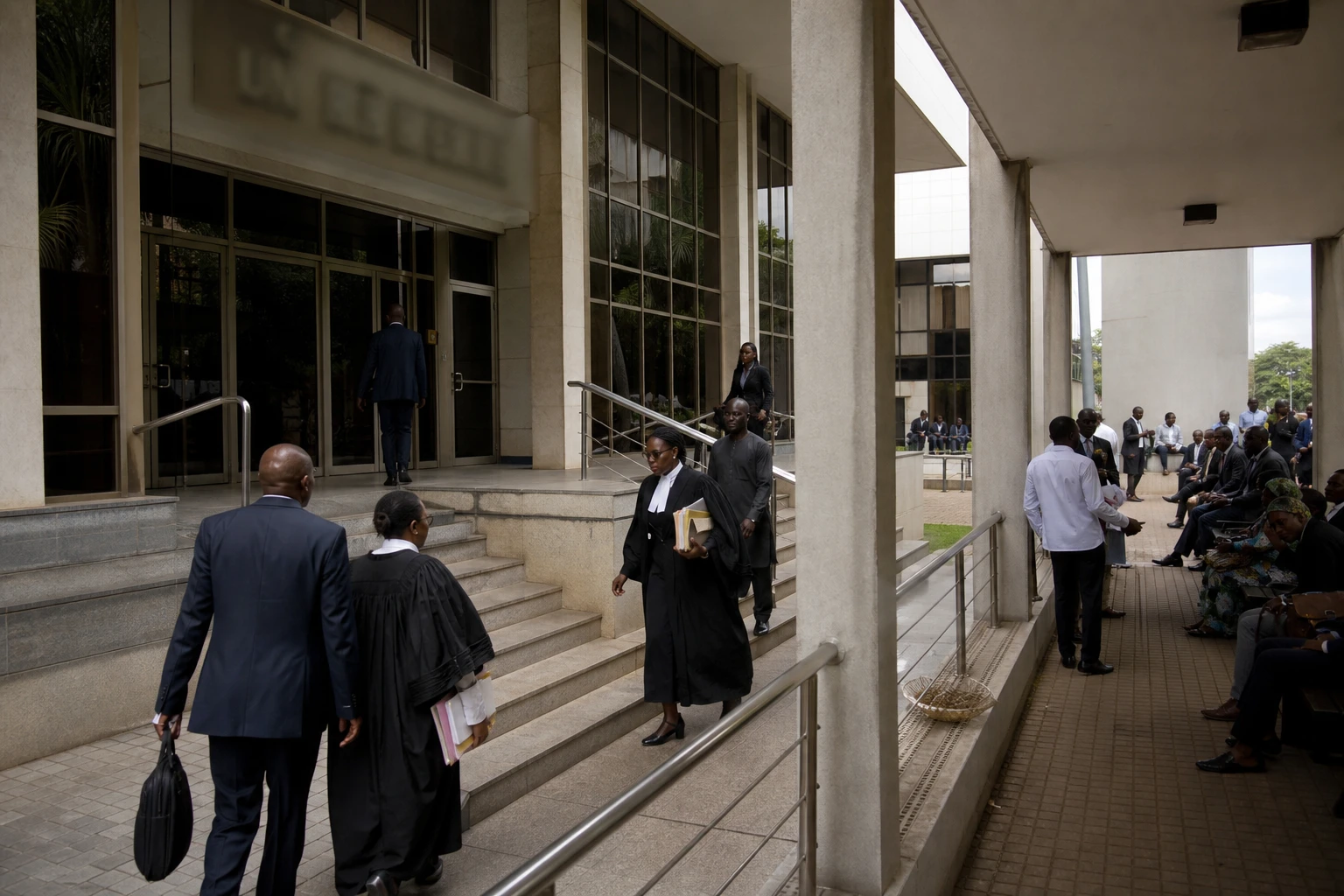
A court ruling that goes beyond two men
In Abuja, a conviction can say much more than a simple verdict. It also tells of the pressure on the Nigerian state in its fight against armed groups operating between the country’s north and the Sahel. On 20 July 2026, the Federal High Court sentenced two senior Ansaru commanders to life in prison, following a terrorism case closely monitored by security services.
Nigeria continues to face several security flashpoints at once: jihadism in the North-East, banditry in the North-West, kidnappings on roads and attacks on infrastructure. In this context, the Ansaru case is not an isolated episode. It is part of a broader security architecture, at a time when Abuja is also seeking to show that its courts can handle terrorism cases without undue delay.
The facts accepted by the court
The two men sentenced are Mahmud Muhammad Usman, described as Ansaru’s self-proclaimed emir, and Abubakar Abba, also known as Malam Mamuda. According to the evidence submitted to the court, they were arrested in August 2025 and then charged with 32 counts relating to terrorism, kidnappings and collaboration with al-Qaeda-affiliated networks.
Their trial gathered pace after both defendants changed their position. They had initially denied the charges. Abba then changed his plea on 9 July, before both men ultimately pleaded guilty on 20 July. Judge Emeka Nwite then sentenced them to life in prison, under Nigeria’s Administration of Criminal Justice Act 2015, often used in federal criminal proceedings.
Among the allegations is the 2013 kidnapping of French engineer Francis Collomp. The case file also mentions operational links with armed groups active in the Sahel and Maghreb. These details give the case a cross-border dimension, extending beyond Nigerian territory alone.
The Department of State Services, or DSS, has announced its intention to appeal. A service official, quoted anonymously by the press, said a life sentence was too lenient given the crimes alleged. The service is therefore challenging not only the verdict but also the level of the sentence.
What the case says about Nigeria today
From a judicial perspective, the case makes one important point: Abuja wants to respond to jihadist violence institutionally, not just militarily. In recent months, the authorities have brought a growing number of terrorism cases to trial, with heavy sentences handed down in several federal courts. Premium Times has reported several death sentences and prison terms in recent weeks in cases involving terrorism or logistical support for armed groups.
But the debate is also about deterrence. For the DSS, a life sentence may seem insufficient when defendants are linked to deadly attacks, kidnappings and regional networks. For advocates of more procedurally rigorous justice, however, the issue lies elsewhere: impose severe punishment, yes, but in accordance with the rules of evidence and the rights of the defence. The trial of the two men illustrates the fragile balance between security effectiveness and judicial safeguards.
The reference to Ansaru also highlights a regional reality. Several sources describe the group as affiliated with al-Qaeda and embedded in a shifting Sahelian environment, where the borders between Nigeria, Niger and the Sahel remain porous to weapons, fighters and funding. This is one of the points linking the case to ECOWAS, the Economic Community of West African States, as well as to broader security dynamics around the Sahel.
The precedent set by other high-profile cases also shapes how this one is viewed. In November 2025, another life sentence was handed down to Nnamdi Kanu, the leader of the separatist IPOB movement, in a separate but politically significant case. This reflects a consistent approach: the Nigerian state wants to show that it remains in control of the most sensitive cases, whether involving jihadist terrorism or domestic armed opposition.
Regional significance and the next signal to watch
At continental level, this conviction matters in at least three arenas. First, Nigeria, where internal security remains a test of the federal government’s credibility. Second, West Africa, where ECOWAS must contend with threats that cross borders. Finally, the wider Sahel, where al-Qaeda-affiliated groups continue to exploit transit zones, local conflicts and illicit economies.
The next development to watch is the appeal announced by the DSS. If it is formally lodged, it will show whether Nigeria’s executive wants to take judicial repression further or will accept an already very heavy sentence. It will also be important to see whether the case leads to further prosecutions based on digital and operational evidence seized during the 2025 arrests. In Nigerian counter-terrorism cases, one day’s verdict often provides the basis for further proceedings.



