Algeria
 Egypt
 Libya
 Morocco
 Sudan
 Tunisia
 Benin
 Burkina Faso
 Cabo Verde
 Côte d'Ivoire
 Ghana
 Guinea
 Guinea-Bissau
 Liberia
 Mali
 Mauritania
 Niger
 Senegal
 Sierra Leone
 The Gambia
 Togo
 Cameroon
 Central African Republic
 Chad
 DR Congo
 Equatorial Guinea
 Gabon
 Republic of the Congo
 São Tomé and Príncipe
 Burundi
 Comoros
 Djibouti
 Eritrea
 Ethiopia
 Kenya
 Madagascar
 Malawi
 Mauritius
 Mozambique
 Rwanda
 Seychelles
 Somalia
 South Sudan
 Tanzania
 Uganda
 Angola
 Botswana
 Eswatini
 Lesotho
 Namibia
 South Africa
 Zambia
 Zimbabwe
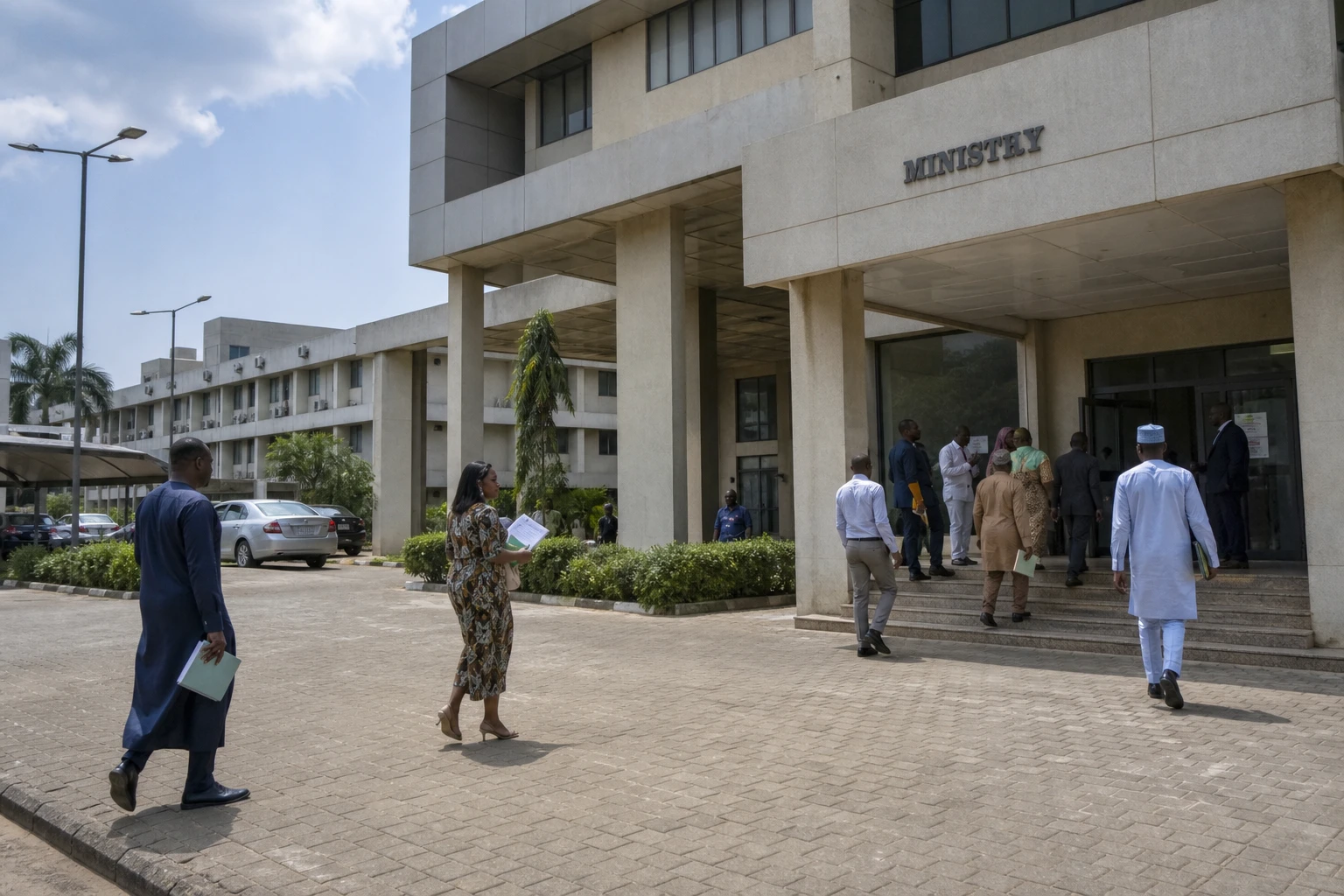
In Nigeria, the battle for jobs also plays out in fields, warehouses and processing plants. In Abuja and across rural states, the challenge is no longer simply to produce more. It is also to cut losses, finance farms and connect producers to markets.
That is the aim of the Nigeria AgriConnect Compact, launched on 28 September 2026 with the ambition of supporting the creation of 2.56 million jobs by 2031. The programme also aims to improve food and nutrition security for nearly three million people.
A programme focused on value chains
The Compact brings together the Nigerian federal government, the Federal Ministry of Agriculture and Food Security, the World Bank Group, the International Fund for Agricultural Development (IFAD) and several partners. It forms part of President Bola Tinubu’s economic agenda and the national policy on agricultural technology and innovation.
The initiative plans to mobilise around $5 billion over five years. The funding is expected to combine public resources, financing from development partners and private investment. However, the announced amount is a mobilisation target. It does not represent an immediate disbursement to farmers.
AgriConnect will prioritise rice, maize, wheat, cassava and several livestock value chains. Its approach covers the entire economic journey, from seeds and production through to storage, transport, processing and sales.
This approach matters for smallholders. A larger harvest does not guarantee higher income if roads are impassable, produce lacks buyers or post-harvest losses remain high. The programme therefore aims to strengthen links between farmers, cooperatives, processors, banks and buyers.
IFAD presents the targets of the Nigeria AgriConnect Compact as indicative. Average yields of rice, maize and wheat are expected to rise by 30% by 2031. For cassava, the targeted increase is 35%. The programme also plans to improve productivity in cattle, small ruminants, pigs and poultry.
Agricultural potential remains underused
Agriculture accounts for around 26% of Nigeria’s gross domestic product and employs nearly 30% of the working population, according to figures provided by IFAD. The country has about 37 million hectares of arable land. Nearly half is reportedly underused.
The contrast is striking. Nigeria has a large domestic market, a sizeable population and growing demand for grain, animal protein and processed products. Yet productivity remains below that of several comparable countries. Difficulties in accessing credit, inputs, irrigation and advisory services continue to slow investment.
Digital transformation is therefore one of the programme’s key levers. The Federal Ministry of Agriculture and Food Security is working, among other things, on a national farmers’ register. Such a tool should make it possible to better identify farmers, their locations and their needs.
On 29 September 2026, Minister Abubakar Kyari argued for the creation of a more reliable digital database. The aim is to reduce duplication in the distribution of fertilisers, credit and assistance. Targeting will be crucial to ensure that funding does not mainly benefit operators who are already well organised.
Nigeria’s Federal Ministry of Information reports on the debate over a digital farmers’ register. The project is also intended to support weather, market, insurance and technical advisory services.
A promise tested by food pressures
AgriConnect comes at a difficult time for Nigerian households. IFAD estimates that more than 31 million people are facing acute food insecurity. Inflation, economic hardship, insecurity in some areas and climate shocks are weighing on both production and prices.
The consequences are not the same everywhere. In rural areas, producers face high input costs, transport problems and limited access to finance. In cities, consumers feel the impact most acutely through rising prices for grain, cassava, meat and processed products.
Women and young people have a particular place in this equation. Many work in processing, trade, logistics and agricultural services. However, they often face greater difficulties in accessing land, credit and equipment. The quality of the jobs created will therefore depend on financing conditions and the formalisation of activities.
Security is also a decisive factor. In some parts of the north and centre, violence and displacement disrupt agricultural calendars. They make it harder to reach farmland and drive up transport costs. A productivity policy will not deliver results without better protection for production areas and trade routes.
A stake for the West African market
The programme’s success would extend beyond Nigeria’s borders. As West Africa’s largest economy, Nigeria has a significant influence on trade within the Economic Community of West African States (ECOWAS), the regional organisation tasked with promoting economic integration among its members.
A sustained rise in Nigerian production could strengthen regional supplies of rice, maize, cassava and animal products. It could also boost trade with neighbouring countries. But it could increase pressure on producers in other markets if imports, subsidies and trade standards are not better coordinated.
The World Bank’s overall AgriConnect framework rests on three pillars: improving producer organisation, expanding access to capital and strengthening market opportunities. In Nigeria, implementation will have to take account of the diversity of its states, the differences between commercial and family farms, and the size of the informal sector.
The next step will be implementation. The projects to be financed, beneficiaries, monitoring mechanisms and the share actually mobilised from the private sector will need to be specified. Results will have to be measured on farms, in markets and in households, not only in institutional announcements.
For Nigeria, AgriConnect is an attempt to move from an agricultural policy centred on production to a food systems strategy. The target of 2.56 million jobs will be credible only if productivity gains translate into more stable incomes, viable rural businesses and more accessible food.