Algeria
 Egypt
 Libya
 Morocco
 Sudan
 Tunisia
 Benin
 Burkina Faso
 Cabo Verde
 Côte d'Ivoire
 Ghana
 Guinea
 Guinea-Bissau
 Liberia
 Mali
 Mauritania
 Niger
 Senegal
 Sierra Leone
 The Gambia
 Togo
 Cameroon
 Central African Republic
 Chad
 DR Congo
 Equatorial Guinea
 Gabon
 Republic of the Congo
 São Tomé and Príncipe
 Burundi
 Comoros
 Djibouti
 Eritrea
 Ethiopia
 Kenya
 Madagascar
 Malawi
 Mauritius
 Mozambique
 Rwanda
 Seychelles
 Somalia
 South Sudan
 Tanzania
 Uganda
 Angola
 Botswana
 Eswatini
 Lesotho
 Namibia
 South Africa
 Zambia
 Zimbabwe
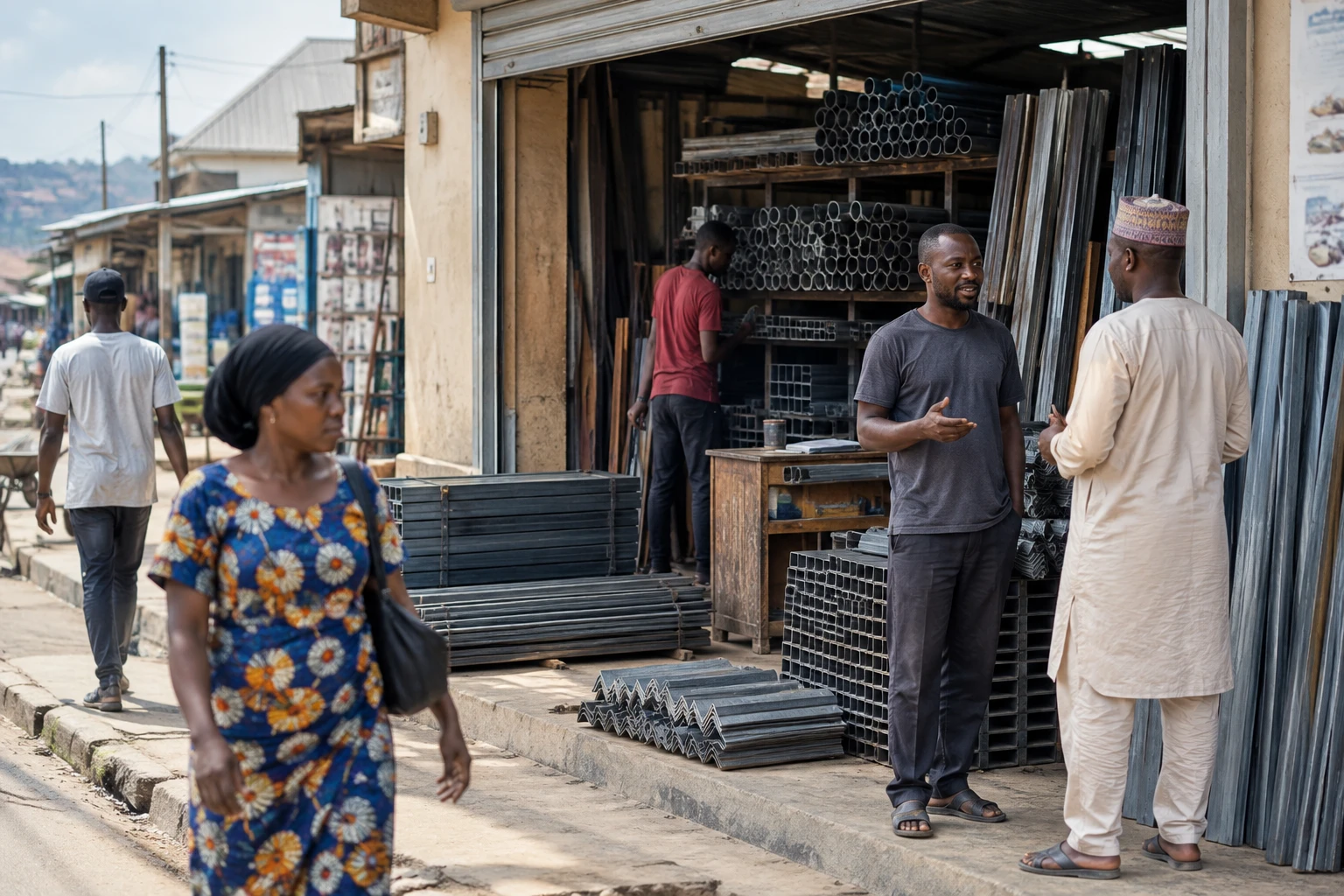
For Nigeria, the value of a deposit is measured not only by the volume of ore it contains. The question is also whether that ore can supply local industry, create jobs and meet the needs of communities near the site. The Agbaja project in Kogi State is back in the spotlight following a change of ownership announced on 2 November 2026.
A mining project revived by a new buyer
Australian company Macro Metals has signed a binding sale agreement with RSIN.SG Pte. Ltd. The deal covers all the shares in KCM Mining Limited, which owns the Agbaja iron ore project. The stated price is US$5.67 million. The parties are targeting completion on 7 December, subject to the conditions set out in the contract and the necessary approvals.
The timetable includes an early deadline: RSIN must pay $700,000 into an escrow account by 7 November at the latest. Part of the price, $350,000, is to be withheld for 12 months as a contractual guarantee. The buyer must also meet several conditions, including a five-year extension of the community development agreement linked to the project. These terms were reported by Mining.com.au and corroborated by NNR Markets.
Agbaja is in Kogi State, in central Nigeria. Published project data refer to a probable reserve of 205 million tonnes, with an average iron grade of 45.7%. A 2022 scoping study envisaged an integrated operation combining mining and processing, with potential production of 500,000 tonnes of steel billets a year for 25 years. It estimated the required investment at $557 million at the time. These are study projections, not confirmed production: the project has not yet entered operation.
From ore to steel: the industrial wager
The change of buyer could alter Agbaja’s prospects, as RSIN is already active in Nigeria’s mining and steel sectors. Its subsidiary, RSIN Nigeria Limited, operates an ore-processing plant in Keffi, Nasarawa State. The group is also involved, alongside Inner Galaxy Group, in developing Stellar Steel in Ogun State.
Nigeria’s Ministry of Steel Development has described Stellar Steel as an investment of about $450 million intended to produce, among other things, steel products. The project illustrates the authorities’ ambition to develop local processing rather than rely solely on extraction or imports of finished goods. But investment announcements and projected timelines are not enough to prove that a plant is already operating at full capacity. Agbaja could complement this strategy, although RSIN has not yet said whether the two projects will be linked.
The challenge therefore goes beyond simply owning the mine. Turning ore into steel requires equipment, reliable energy, transport infrastructure and commercial markets. Success will also depend on the ore’s actual quality and the ability to master the technical stages of processing. The 2022 study envisaged local production of billets, semi-finished products used to make steel goods. That ambition remains to be realised.
Local benefits are not automatic
For people in Kogi, the stakes will be measured in jobs, purchases from local businesses, infrastructure and protection of land and water. These benefits do not follow automatically from an asset sale. Nigerian mining law provides for a community development agreement to govern the licence holder’s social and economic contributions to host communities. The requirement to extend the existing agreement therefore makes local commitments one of the transaction’s concrete conditions.
This dimension is particularly important in a sector where benefits can be concentrated among investors and industrial centres, while the disruption and changes in land use are felt first by nearby communities. The community agreement must therefore be more than a formality: its commitments and their monitoring will weigh in the assessment of the project’s impact. The sale alone does not yet establish how many jobs are expected or when any work might begin.
At national level, the deal forms part of efforts to build an economy less dependent on raw material exports and imports of manufactured goods. The Federal Ministry of Steel Development estimates that Nigeria imports about $4 billion worth of steel a year. Competitive local production could reduce that bill and support construction and industry. But this impact will depend on costs, the regularity of supply and Nigerian producers’ ability to meet demand.
A signal to watch in West Africa
Nigeria is West Africa’s largest industrial market and a member of ECOWAS, the Economic Community of West African States. If Agbaja comes to fruition, it could strengthen regional steel value chains, provided production finds buyers beyond the domestic market and infrastructure allows it to be transported. At this stage, that is a possibility, not an announced outcome.
The immediate next step is the planned completion on 7 December 2026. After that, the decisive factors will be RSIN’s industrial plans, permits, technical due diligence findings and implementation of the community agreement. The project will also help show whether announced investments in Nigerian steel can draw on local resources, rather than remaining separate projects on paper.
For now, the agreement transfers control of a promising but still undeveloped asset. Its importance to Nigerian industry will depend less on the transaction itself than on the decisions made after it closes: investing, processing the ore locally and establishing verifiable commitments with the communities concerned.