Algeria
 Egypt
 Libya
 Morocco
 Sudan
 Tunisia
 Benin
 Burkina Faso
 Cabo Verde
 Côte d'Ivoire
 Ghana
 Guinea
 Guinea-Bissau
 Liberia
 Mali
 Mauritania
 Niger
 Senegal
 Sierra Leone
 The Gambia
 Togo
 Cameroon
 Central African Republic
 Chad
 DR Congo
 Equatorial Guinea
 Gabon
 Republic of the Congo
 São Tomé and Príncipe
 Burundi
 Comoros
 Djibouti
 Eritrea
 Ethiopia
 Kenya
 Madagascar
 Malawi
 Mauritius
 Mozambique
 Rwanda
 Seychelles
 Somalia
 South Sudan
 Tanzania
 Uganda
 Angola
 Botswana
 Eswatini
 Lesotho
 Namibia
 South Africa
 Zambia
 Zimbabwe
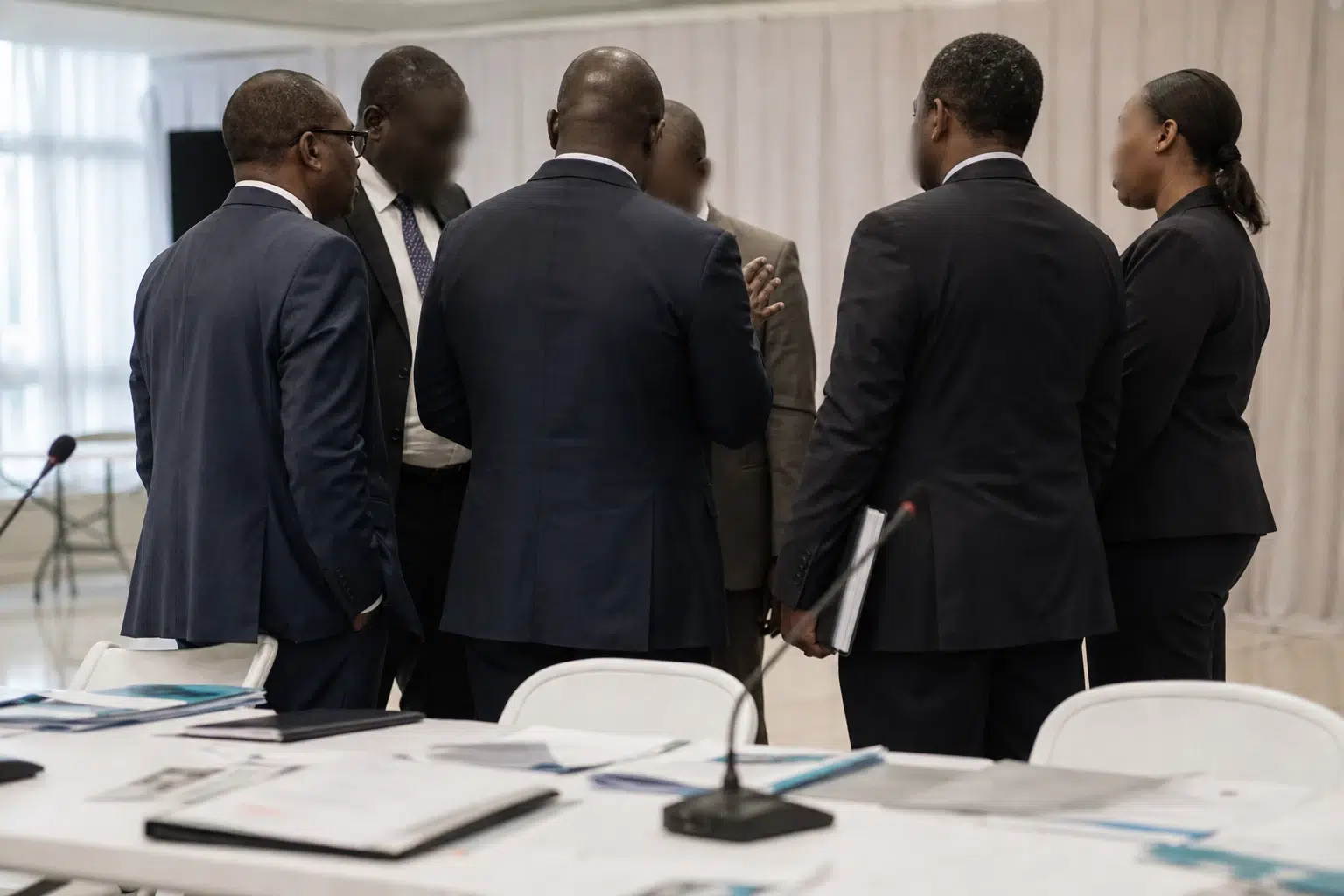
Campaign opens in Abuja as the country comes under pressure
In Nigeria, a presidential campaign is never just a battle of posters. It is also a political test: for the government in power, for the opposition and, above all, for millions of Nigerians seeking answers on the cost of living, security and the credibility of the vote.
The electoral calendar is now set. The Independent National Electoral Commission has listed the presidential election on 16 January 2027 in its public schedule. In January 2026, the commission had already said that no official timetable had yet been published, before subsequently setting out the forthcoming dates. Against this backdrop, the presidential campaign is entering its visible phase as political parties refine their alliances and field teams.
Africa’s most populous country is therefore moving towards a new electoral period, with Abuja as its institutional centre of gravity. Nigeria does not vote in a vacuum. Its election matters across West Africa, where ECOWAS continues to defend constitutional democracy and stability despite regional political upheavals. In Abuja, the question is not only who wins. It is also whether the process will be clear, peaceful and accepted.
Inflation, security and governance: the campaign’s real issues
On paper, the 2027 presidential election will be fought over slogans. In practice, it will be fought over pressing, tangible concerns. Prices remain one of the country’s most sensitive issues. The National Bureau of Statistics says Nigeria’s economy has undergone a rebasing of its indicators, but that does not change the reality for households: daily budgets are still squeezed by the high cost of food, transport and energy.
Analyses by the World Bank on Nigeria note that poverty remained widespread in 2025 and that food inflation hit poorer households hardest. In other words, the campaign will not be fought only at large rallies. It will play out in markets, peri-urban neighbourhoods, bus stations and areas where the informal economy absorbs most of the shocks.
Security remains the other dividing line. The north-east continues to face an insurgency by jihadist groups, while the north-west is marked by kidnappings, armed banditry and violence by criminal groups. Data from ACLED describe a country where political and armed violence remains highly concentrated in certain regions, with direct effects on displacement, farming and cross-border trade.
Nigeria’s defence ministry, too, has issued repeated public statements on the fight against terrorism and banditry. This highlights a central point: the election campaign is taking place in an environment where the state wants to project control, but where parts of the country continue to test its actual capacity to protect citizens.
What this period says about Nigeria and West Africa
For the government, the campaign is an opportunity to defend its record and consolidate a political majority in a federal country where regional balances matter as much as national policies. For the opposition, it opens up space to mobilise again, but within a fragmented system, with parties often riven by internal rivalries and competing candidacies.
For voters, the stakes are more immediate. They concern the tangible value of public promises. Nigerians are looking for commitments on prices, youth employment, road safety, access to electricity and predictable economic rules. A campaign that neglects these issues risks widening the gap between the political class and the public still further.
The country is not just a national player. It is also a pillar of ECOWAS, whose headquarters are in Abuja and which has recently reaffirmed its commitment to democratic governance and regional stability. Institutional tensions or a disputed election in Nigeria would therefore have repercussions well beyond its borders. In a region already unsettled by military transitions and diplomatic realignments, holding a credible election in Abuja matters both for Nigeria and for the balance across West Africa as a whole.
What happens next will depend on adherence to the timetable, the parties’ ability to avoid internal succession crises and how the electoral authorities manage the most sensitive phase: candidate registration, followed by the campaign itself. If the process remains clear, the 2027 presidential election could become a moment of political clarification. If disputes dominate, it could instead add another layer of uncertainty to a country already under strain.
In the months ahead, Abuja will therefore remain the main vantage point—not only for finding out who will take power, but for gauging whether Nigerian democracy can still hold its own in a West Africa where every election, crisis and compromise reshapes the regional balance of power.