
 Algeria
 Egypt
 Libya
 Morocco
 Sudan
 Tunisia
 Benin
 Burkina Faso
 Cabo Verde
 Côte d'Ivoire
 Ghana
 Guinea
 Guinea-Bissau
 Liberia
 Mali
 Mauritania
 Niger
 Nigeria
 Senegal
 Sierra Leone
 The Gambia
 Togo
 Central African Republic
 Chad
 DR Congo
 Equatorial Guinea
 Gabon
 Republic of the Congo
 São Tomé and Príncipe
 Burundi
 Comoros
 Djibouti
 Eritrea
 Ethiopia
 Kenya
 Madagascar
 Malawi
 Mauritius
 Mozambique
 Rwanda
 Seychelles
 Somalia
 South Sudan
 Tanzania
 Uganda
 Angola
 Botswana
 Eswatini
 Lesotho
 Namibia
 South Africa
 Zambia
 Zimbabwe
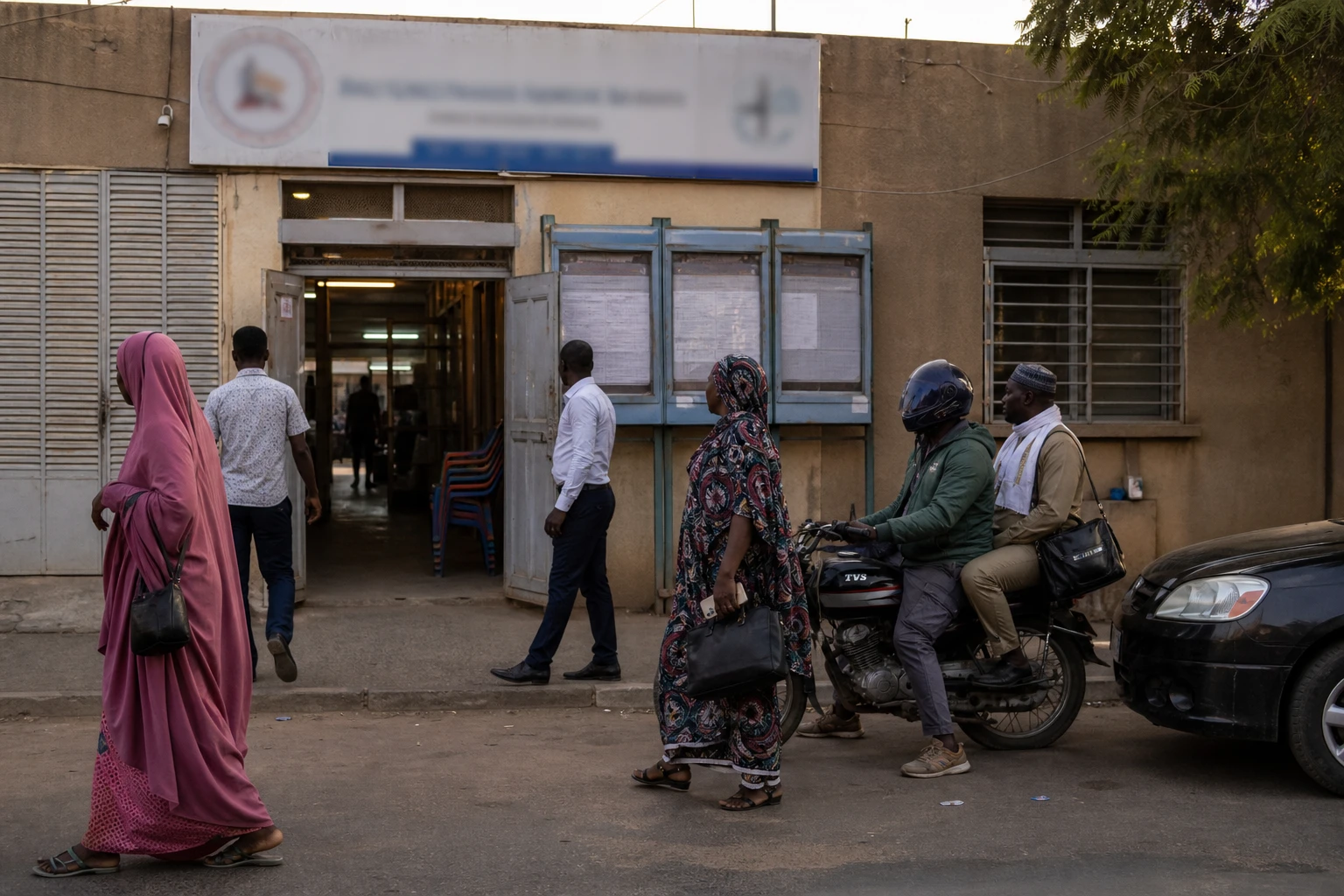
In Niger, a journalist going home can become a matter of state
In Niamey, the silence surrounding Moussa Kaka points to something wider than an individual disappearance. It is also a reminder of the pressure on Niger’s public sphere, in a country where the media have become a sensitive arena since the 2023 coup and the security tensions that followed.
The case touches on security, press freedom and trust in institutions. Against a backdrop of an extended military transition, political sanctions imposed by ECOWAS that have reshaped regional balances, and the Alliance of Sahel States taking centre stage in Niger’s official discourse, every incident involving a journalist immediately takes on national significance.
What is known about the disappearance
Moussa Kaka, director-general of the Radio-Télévision Saraounia group, was last seen on the evening of 31 August, leaving his media organisation’s premises in Niamey. According to information cited by several press freedom organisations, his vehicle has not been found and his family has had no contact with him since that date.
The exact circumstances remain unclear. Family sources have raised the possibility that he was intercepted on his way home, but no public information has established, so far, where he is or the circumstances of his disappearance. Caution is essential: in the absence of corroborated official information, this should be described as a worrying disappearance, not as an incident definitively characterised.
Moussa Kaka’s profile explains the depth of concern. A long-serving Nigerien journalist, former RFI correspondent and well-known figure in the local media landscape, he has already experienced serious legal difficulties in the mid-2000s. His name remains associated with field journalism, rooted in the realities of the country and often exposed to political power struggles.
An already harsh climate for Nigerien media
Since the July 2023 coup, violations of press freedom have increased in Niger. Human Rights Watch has documented severe restrictions, while Reporters Without Borders has noted a rise in arrests, prosecutions and administrative measures targeting critical voices.
The country has already seen several cases involving journalists in 2025 and 2026: detentions, suspensions of press cards, and media outlets being closed or suspended, notably over content deemed sensitive by the authorities. In May 2026, for example, nine French media outlets were suspended in Niger by the National Communications Observatory on national security grounds.
In this context, Moussa Kaka’s disappearance cannot be viewed as an isolated incident. It comes amid close scrutiny of the press, regular appeals by the authorities to state stability, and professional organisations’ reports that they have limited room to operate. In Niamey, newsrooms know that a single piece of content, a share or an invitation to cover an event can trigger an administrative or legal response.
The stakes: security, freedom to inform and institutional credibility
The response of the network of Cameroonian media owners, which has called for the journalist’s release and the protection of his profession, shows that the case extends well beyond Niger. It touches on a broader question: in a Sahel shaped by military transitions and security threats, how far can states go without further undermining the right to inform?
For Nigerien journalists, the stakes are tangible. An unexplained disappearance creates a climate of self-censorship, especially in local newsrooms that depend on a daily presence in the field. For the authorities, the challenge is the opposite: unless the state communicates swiftly and in a verifiable way, it leaves the field open to rumours, families’ concerns and public mistrust.
There is also an institutional dimension. Niger announced in early September 2026 that it had documentation concerning an attempt to destabilise the country that took place in late August in Niamey, amid already heightened tensions following a mutiny or attempted coup reported by several media outlets and the authorities. In such circumstances, there is a strong temptation to classify everything as a matter of national security. But protecting the state should not override the duty to investigate, be transparent and act proportionately.
A Nigerien case, but a West African signal
The significance of this case extends beyond Niamey. Niger has broken with ECOWAS and is now part of a new regional architecture with Mali and Burkina Faso through the AES. In this reshaping bloc, how governments treat the media has become as important a political indicator as statements on sovereignty or security.
For West Africa, the Moussa Kaka case is a reminder of an obvious truth: security is not built against journalists, but with institutions capable of explaining, investigating and responding. If the disappearance remains unanswered, it will weigh on Niger’s image far beyond its borders and deepen already acute concerns about the state of civil liberties in the central Sahel.
The coming days will be decisive. A credible investigation, verifiable official information and the journalist’s whereabouts, if known, will say much more than political statements about the seriousness of the situation. In a country where the transition has become entrenched, the question is not only where Moussa Kaka is. It is also what safeguards Niger still intends to offer those who provide information.



