
 Algeria
 Egypt
 Libya
 Morocco
 Sudan
 Tunisia
 Benin
 Burkina Faso
 Cabo Verde
 Côte d'Ivoire
 Ghana
 Guinea
 Guinea-Bissau
 Liberia
 Mali
 Mauritania
 Niger
 Nigeria
 Senegal
 Sierra Leone
 The Gambia
 Togo
 Cameroon
 Central African Republic
 Chad
 DR Congo
 Equatorial Guinea
 Gabon
 Republic of the Congo
 São Tomé and Príncipe
 Burundi
 Comoros
 Djibouti
 Eritrea
 Ethiopia
 Kenya
 Madagascar
 Malawi
 Mauritius
 Mozambique
 Rwanda
 Seychelles
 Somalia
 South Sudan
 Tanzania
 Uganda
 Angola
 Botswana
 Eswatini
 Lesotho
 Namibia
 Zambia
 Zimbabwe
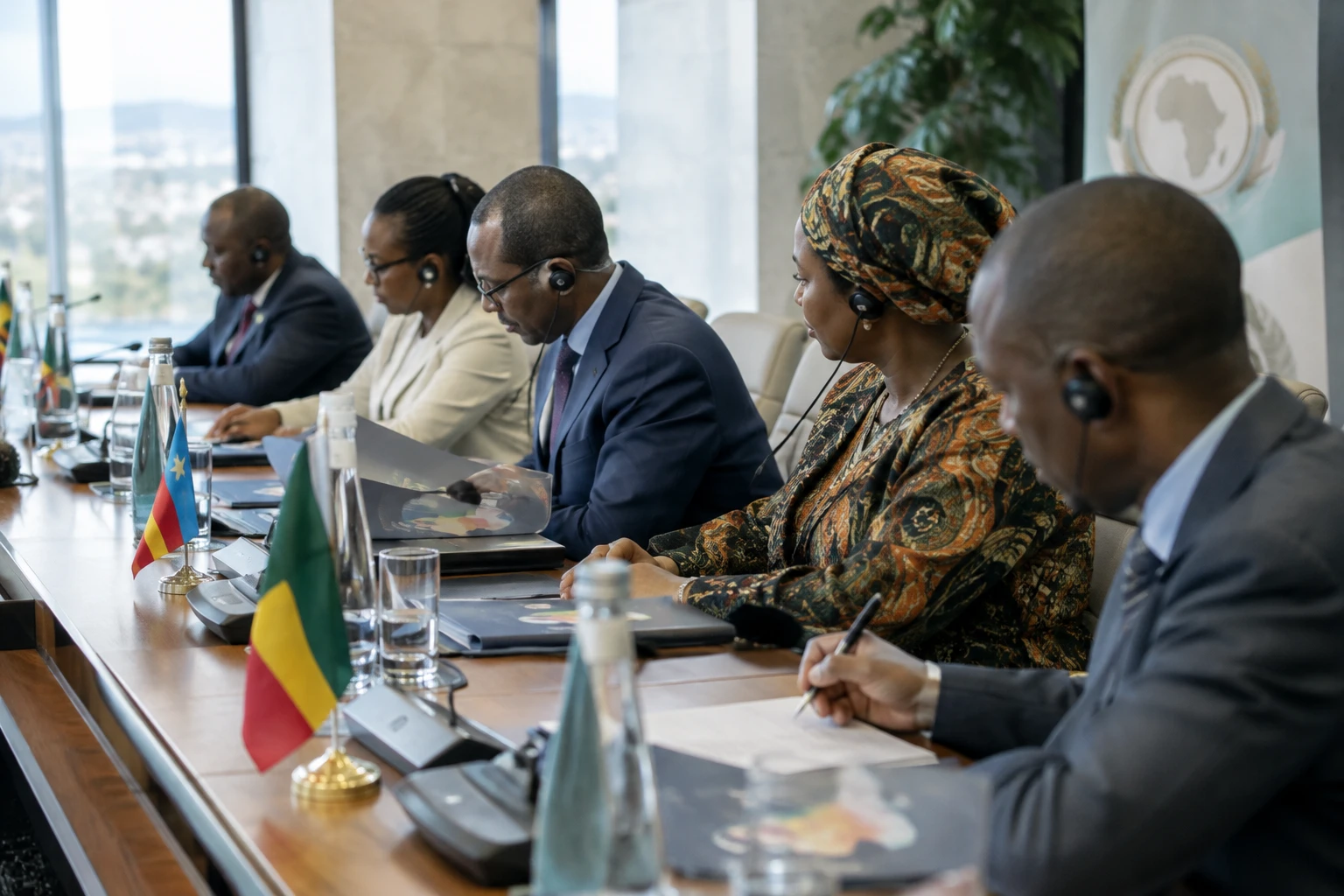
In Arusha, in northern Tanzania, judges at the International Criminal Tribunal for Rwanda established judicial accountability after the 1994 genocide. Three decades later, its former president, South African jurist Navi Pillay, receives the Nobel Peace Prize in a world where institutions of justice are once again being challenged.
The award, announced on 9 October 2026, highlights a question running through the continent: what is international law worth if states choose when to apply it? In an interview broadcast on 14 October, Pillay called for greater efforts to prevent genocide and more consistent cooperation with international courts.
An experience shaped by South Africa and Rwanda
Born in South Africa under apartheid, Navi Pillay first practised as a lawyer. She went on to become the first black woman appointed as a judge to her country’s High Court. Her career took her to the International Criminal Tribunal for Rwanda, then to the International Criminal Court (ICC), before her term as the United Nations High Commissioner for Human Rights.
The tribunal based in Arusha, Tanzania, was tasked with trying the main perpetrators of the genocide committed in Rwanda in 1994. Pillay sat, among other cases, on the Jean-Paul Akayesu case, whose 1998 judgment recognised that rape could constitute an act of genocide, depending on the circumstances. This case law marked international criminal law.
She was awarded the Nobel Prize for her efforts in support of peace and international law. Her career is also linked to the memory of the struggle against apartheid in South Africa and the development of judicial mechanisms established after mass atrocities.
Gaza: an investigative finding, not a court judgment
The award comes as Pillay faces sharp criticism for having chaired an independent inquiry commission of the UN Human Rights Council on the Occupied Palestinian Territory, including East Jerusalem, and Israel. In a report published on 16 September 2025, the commission concluded that Israel had committed genocide in the Gaza Strip.
This is the conclusion of a United Nations commission of inquiry. It is not a judgment delivered by the International Court of Justice or the ICC. These institutions have distinct mandates and procedures. Pillay maintains that the commission applied a legal methodology and examined evidence from field investigations as well as statements by Israeli officials. Israel rejected the conclusion.
In the 14 October interview, Pillay stood by the report’s analysis. She referred to attacks on civilian infrastructure, including a fertility clinic, and journalists killed. These points should be understood as the claims and findings she attributes to the commission’s work, not as facts established by a final criminal judgment.
The distinction also matters to African readers. Rwanda experienced the consequences of a genocide recognised by an international tribunal. But historical experience does not remove the need to examine the evidence, mandates and procedures specific to each situation. Rather, it underscores the human cost of delayed prevention and the need for independent investigations.
State cooperation, a decisive link
The ICC, based in The Hague, tries individuals accused of the most serious crimes when the conditions set out in its Rome Statute are met. It has no police force of its own: the arrest of suspects depends largely on state cooperation. As a result, the Court’s decisions and their implementation can run up against national diplomatic calculations.
Pillay criticised US sanctions targeting the Court and its members, saying they were intended to obstruct their work. She also called on states parties to the Rome Statute to honour their obligations. She points to the experience of the Rwanda tribunal: without arrests and transfers carried out by several countries, including African states, the trials could not have taken place.
This debate resonates in relations between African countries and international institutions. Several governments on the continent have in the past denounced the uneven application of international criminal justice. Pillay acknowledges this criticism and links the issue to the composition of the UN Security Council, where five permanent members have veto power. The African Union has long called for reform that would improve the continent’s representation on the body.
Criticising double standards, however, does not in itself settle the debate over each judicial decision. It highlights a problem of legitimacy and power: influential states can shape international action, while populations exposed to violence await protection and credible investigations. Sanctions, arrest warrants and court rulings have concrete effects, but depend on political choices and national capacities.
Preventing genocide before courts intervene
For Pillay, the lesson of Rwanda is not limited to trials after the fact. The 1948 Convention on the Prevention and Punishment of the Crime of Genocide commits states to act to prevent this crime. She stresses the gap between the existence of legal instruments and the political will to use them in time.
Her call echoes a broader debate about peacekeeping missions, sanctions and Security Council decisions. These tools are neither automatic nor the same from one conflict to another. Their effectiveness depends, among other things, on a mandate, agreement among states and the resources deployed. In Africa, where the African Union and regional organisations also take part in crisis management, coordination with the UN remains a major issue.
Pillay says she also wants to support equality between women and men and initiatives to have a woman appointed UN secretary-general. For her, women’s representation and the fight against violence targeting them remain priorities.
The Nobel Prize draws attention to her career, but replaces neither an investigation nor a court ruling. The next steps to watch are concrete: state cooperation with the ICC, follow-up to United Nations reports and discussions on reform of the Security Council. It is in these decisions that the practical force of the principles championed by the South African jurist will be measured.



