Algeria
 Egypt
 Libya
 Morocco
 Sudan
 Tunisia
 Benin
 Burkina Faso
 Cabo Verde
 Côte d'Ivoire
 Ghana
 Guinea
 Guinea-Bissau
 Liberia
 Mali
 Mauritania
 Niger
 Nigeria
 Senegal
 Sierra Leone
 The Gambia
 Togo
 Cameroon
 Central African Republic
 Chad
 DR Congo
 Equatorial Guinea
 Gabon
 Republic of the Congo
 São Tomé and Príncipe
 Burundi
 Comoros
 Djibouti
 Eritrea
 Ethiopia
 Kenya
 Madagascar
 Malawi
 Mauritius
 Mozambique
 Rwanda
 Seychelles
 Somalia
 South Sudan
 Tanzania
 Uganda
 Angola
 Botswana
 Eswatini
 Lesotho
 South Africa
 Zambia
 Zimbabwe
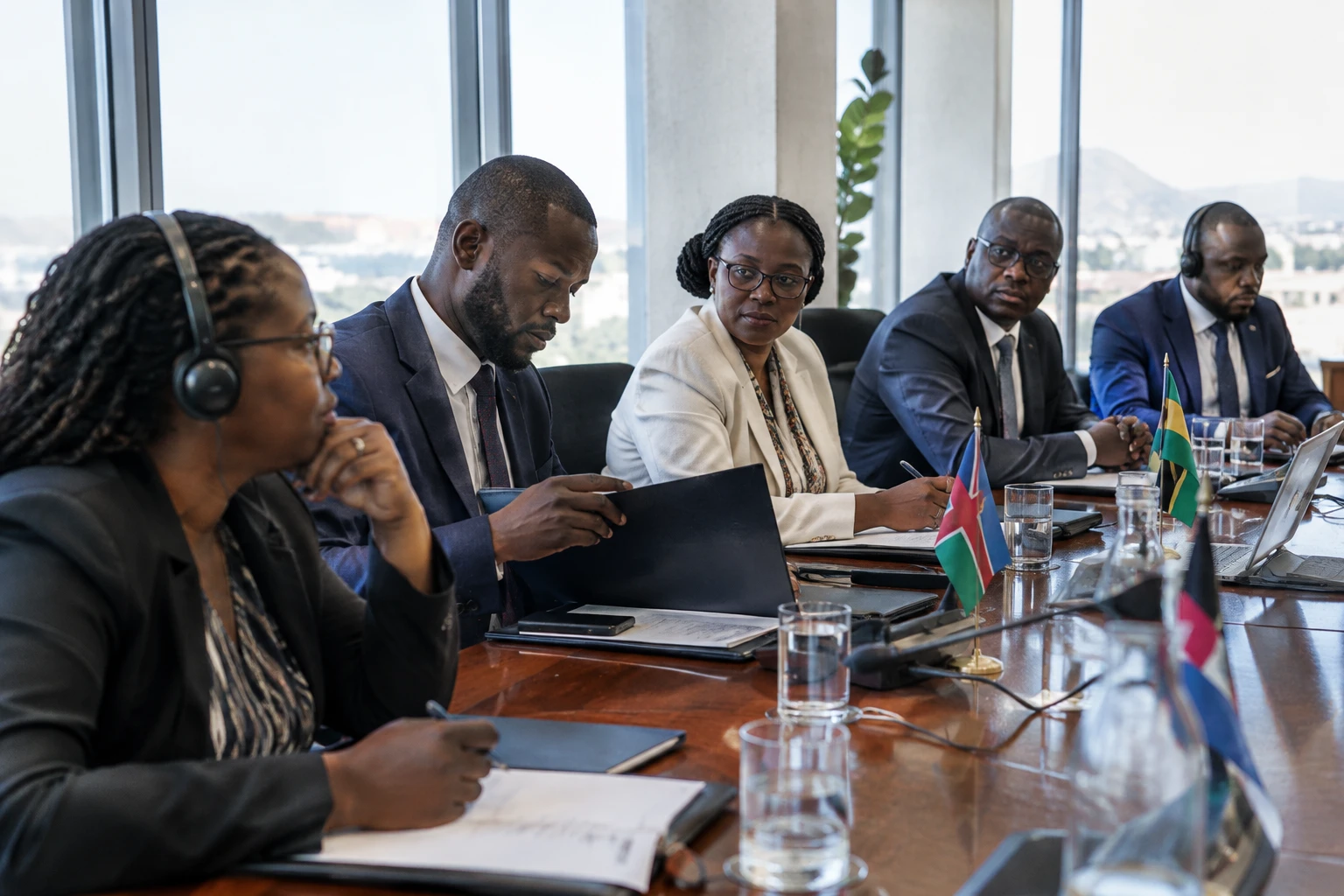
Before oil earns Namibia a single dollar, a question is already being asked: who will control decisions on licences, exploration and production? The debate is as much about how the state is organised as it is about the future management of revenues.
Vote halted in Windhoek
On 15 October 2026, Namibia’s National Assembly was unable to vote on the bill governing the oil sector. Opposition MPs left the chamber at the time of the vote. The Speaker of the Assembly, Saara Kuugongelwa-Amadhila, noted that only 39 MPs remained, while 49 were needed to reach a quorum — the minimum number of members required to conduct business.
The deadlock does not mean the bill was rejected. The vote simply did not take place. Reports by the Namibian press and public broadcaster confirm how the sitting unfolded and that there was no quorum. The bill therefore remains before Parliament, where the governing majority and the opposition are at odds over the distribution of powers.
Namibia is a member of the Southern African Development Community (SADC), a regional cooperation grouping of 16 countries. But this is primarily a domestic issue: it concerns the institutions that will authorise and oversee offshore operations off Namibia’s coast.
Who should oversee exploration?
The bill amends the Petroleum (Exploration and Production) Act of 1991. It provides for the creation of a unit dedicated to the upstream sector, meaning exploration and production activities. This Upstream Petroleum Unit would be placed under the authority of the office of President Netumbo Nandi-Ndaitwah, rather than the ministry responsible for mines and energy.
This transfer is at the heart of the disagreement. The opposition believes it would shift ministerial powers to the presidency and reduce direct accountability to Parliament. It objects in particular to the place of the new unit and the head of state’s role in oil-related decisions.
The government is defending a modernisation of the legal framework, which is more than 30 years old. The Minister of Industries, Mines and Energy, Modestus Amutse, has argued that the bill aims to update the sector’s governance and strengthen rules against conflicts of interest. Government officials have also disputed the suggestion that the president would exercise regulatory functions alone. The disagreement is therefore about the design of oversight, not just the name of the institution responsible for the sector.
The Namibian Parliament’s official register of bills lists the amendment, filed under reference B.12-2025. Its legislative progress is therefore a practical concern: until it is adopted, the existing rules remain in force. The outcome will depend on debate and a possible compromise between parliamentary groups.
Discoveries, but no production yet
Since 2022, discoveries in the Orange Basin in the south of the country have put Namibia at the centre of offshore oil exploration. TotalEnergies confirmed the Venus discovery in 2022, among others. Further exploration has attracted international groups, but a discovery does not mean a field will be developed: a project still has to be defined, investment secured and the necessary approvals obtained.
First production is therefore not imminent. TotalEnergies has said it is targeting first oil in 2030 for the Venus project, subject to investment decisions and approvals. This remains a company forecast, not a guaranteed date. Deepwater development requires substantial infrastructure and capital.
The bill being debated in Windhoek is thus intended to set rules before any first revenues arrive. The issue is not limited to the expected amount of revenue. It also concerns oversight of those revenues, the terms for awarding licences, the prevention of private interests influencing public decisions, and institutions’ ability to account for their choices.
Public choices will determine the benefits
Offshore oil activity can generate revenue and contracts, but its effects will not automatically be spread throughout the economy. Contracts awarded to local businesses, jobs available to Namibian workers and public spending funded by revenues will be decisive. Benefits may initially be concentrated in institutions, specialist companies and coastal areas connected to operations.
For people far from these activities, the impact will depend more on budgetary choices: infrastructure, public services, training and investment in the regions. Those in the informal sector, meanwhile, will not necessarily benefit from technical contracts without appropriate access and training policies. The regulatory framework alone therefore does not guarantee an equitable distribution; it establishes who makes decisions and what obligations they must meet.
Namibia must also balance the exploitation of a new resource with its long-term development commitments. Clear regulation can reassure investors, but public confidence also depends on credible oversight and accessible information. These requirements are not mutually exclusive: they determine the conditions under which projects can move forward.
A debate watched across the region
For SADC countries, the Namibian debate offers a point of comparison as several regional economies seek to attract energy investment. It does not predetermine their choices, since legal frameworks and national trajectories differ. It does, however, highlight a shared challenge: establishing rules for oversight and transparency before revenues become significant.
The next step is parliamentary. Following the adjournment on 15 October, the bill will have to return to the Assembly if the majority wants to continue its consideration. The timetable for a new vote and the possibility of amendments remain to be watched. For Namibians, the key issue is less when the first barrel will be produced than what safeguards will be in place by then.