Algeria
 Egypt
 Libya
 Morocco
 Sudan
 Tunisia
 Benin
 Burkina Faso
 Cabo Verde
 Côte d'Ivoire
 Ghana
 Guinea
 Guinea-Bissau
 Liberia
 Mali
 Mauritania
 Niger
 Nigeria
 Senegal
 Sierra Leone
 The Gambia
 Togo
 Cameroon
 Central African Republic
 Chad
 DR Congo
 Equatorial Guinea
 Gabon
 Republic of the Congo
 São Tomé and Príncipe
 Burundi
 Comoros
 Djibouti
 Eritrea
 Ethiopia
 Kenya
 Madagascar
 Malawi
 Mauritius
 Mozambique
 Rwanda
 Seychelles
 Somalia
 South Sudan
 Tanzania
 Uganda
 Angola
 Botswana
 Eswatini
 Lesotho
 South Africa
 Zambia
 Zimbabwe
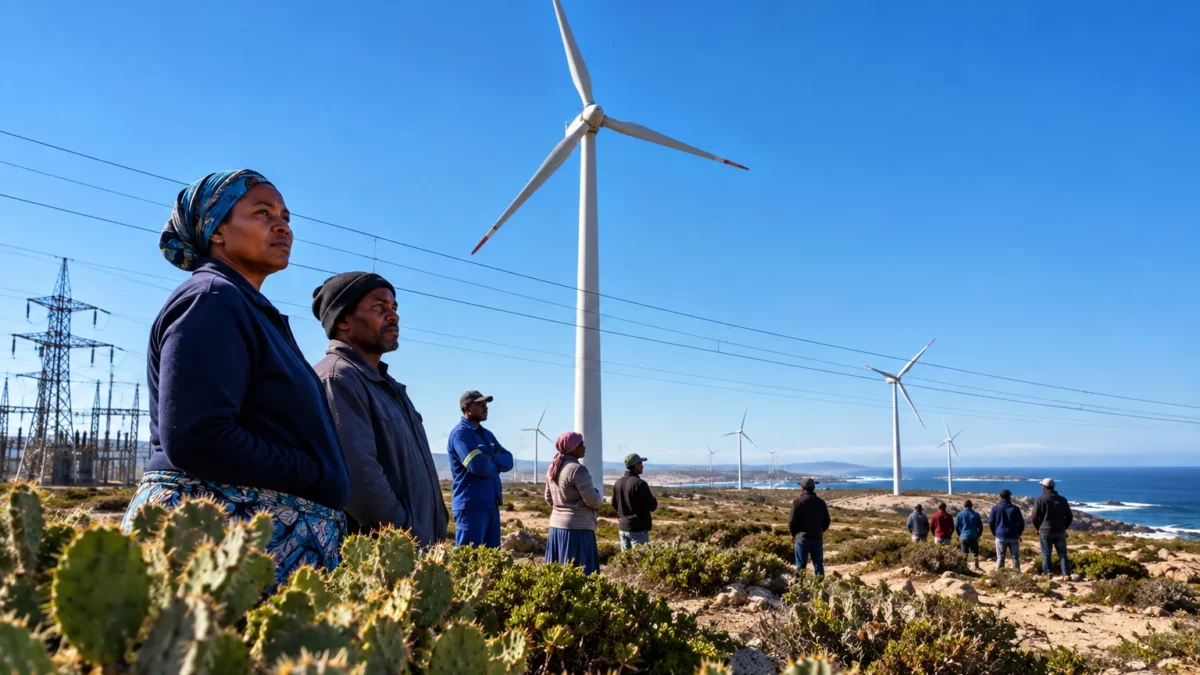
Two major wind power projects are following one another within weeks in Lüderitz, on Namibia’s Atlantic coast. They promise more electricity generated in the country, but will not, by themselves, be enough to end dependence on neighbouring grids.
Electricity security tied to regional balances
Namibia remains closely connected to the Southern African electricity market. It buys a significant share of its power from neighbouring countries and on the regional market, particularly when domestic generation does not meet demand.
This system relies on the Southern African Power Pool (SAPP), a network that enables the countries of the Southern African Development Community (SADC) to trade electricity. These interconnections provide useful flexibility, but also expose importers to the availability and price of regional supply.
Namibian generation has another vulnerability. More than 60% of locally produced electricity comes from hydropower. Recurring droughts can reduce the reliability of this resource, particularly at the Ruacana power station in the north of the country.
The National Energy Compact prepared under Mission 300 estimates that imports covered between 58% and 67% of annual demand over the five years studied up to 2025. It also says that they cost about three times as much as electricity produced by NamPower, the national utility. These estimates appear in Namibia’s National Energy Compact.
Two wind projects around Lüderitz
On 23 November 2026, the authorities launched construction of the 50-megawatt CERIM Lüderitz wind farm, a project developed by CERIM Lüderitz Energy. The company brings together China Energy International and Namibian firm ANIREP.
The announced investment amounts to $86.8 million. The African Development Bank and several commercial banks are among the institutions involved in financing. The project is expected to generate 253.8 gigawatt hours a year. Its promoters estimate this at about 6% of national electricity consumption. NamPower is to purchase the electricity under a 25-year contract.
Project documents specify that the wind farm will be built near Lüderitz and connected to the national grid by a transmission line. This infrastructure is essential: generating more power will improve security of supply only if the electricity can be delivered to consumers.
Another wind farm, Diaz, was inaugurated near Lüderitz on 23 October. Developed by InnoVent, it has an installed capacity of 50 megawatts and is expected to feed up to 44 megawatts into the grid. Namibian public broadcaster NBC also reported the inauguration, while the daily Namibian Sun had detailed the project’s specifications before the ceremony.
These announcements mark a shift for a country where wind capacity had remained limited to a small, 5-megawatt installation for several years. The southern coast offers wind potential, while solar power benefits from abundant sunshine. Diversification therefore means combining these resources more effectively, rather than replacing one dependence with another.
Benefits will also depend on the grid
For NamPower, additional local generation could reduce external purchases and limit exposure to fluctuations in the regional market. But the effect on bills will depend on the prices set in contracts, connection costs and the grid’s ability to integrate variable output.
The wind does not blow all the time. Solar power also varies with the time of day and the weather. These new power stations will therefore need to be coordinated with hydropower, backup generation, interconnections and, eventually, storage solutions. Regional co-operation remains useful: the aim is not necessarily to withdraw from the SAPP, but to be able to buy or sell within it on better terms.
The benefits will not be the same for everyone. Businesses connected to the national grid may benefit from a more diversified supply if the projects meet their targets. For people in remote regions, the impact will also depend on investment in power lines and local access to electricity. Launching a power station alone does not guarantee improved service in every locality.
The two projects also raise questions about the role of Namibian players in the energy transition. ANIREP’s participation in the CERIM project provides a local element to the partnership. The share of jobs, skills and contracts available to the country’s businesses beyond the construction phase remains to be seen.
A step, not yet a turning point
Across SADC, the development of new capacity in Namibia could help diversify regional supply. It could also strengthen trade if generation one day exceeds domestic needs at certain times. For now, the announced projects are aimed first at meeting domestic demand, which is largely covered by imports.
The main indicator to watch will be the commissioning schedule for the CERIM wind farm, followed by its actual output once it is connected. The announced figures convey the scale of the ambition; only operational results will show its actual contribution to Namibia’s energy security. The central question is therefore a practical one: will Namibia be able to turn its wind resources into electricity that is accessible, reliable and delivered where it is needed?