Algeria
 Egypt
 Libya
 Morocco
 Sudan
 Tunisia
 Benin
 Burkina Faso
 Cabo Verde
 Côte d'Ivoire
 Ghana
 Guinea
 Guinea-Bissau
 Liberia
 Mali
 Mauritania
 Niger
 Nigeria
 Senegal
 Sierra Leone
 The Gambia
 Togo
 Cameroon
 Central African Republic
 Chad
 DR Congo
 Equatorial Guinea
 Gabon
 Republic of the Congo
 São Tomé and Príncipe
 Burundi
 Comoros
 Djibouti
 Eritrea
 Ethiopia
 Madagascar
 Malawi
 Mauritius
 Mozambique
 Rwanda
 Seychelles
 Somalia
 South Sudan
 Tanzania
 Uganda
 Angola
 Botswana
 Eswatini
 Lesotho
 Namibia
 South Africa
 Zambia
 Zimbabwe
When a hub stops, the whole chain slows
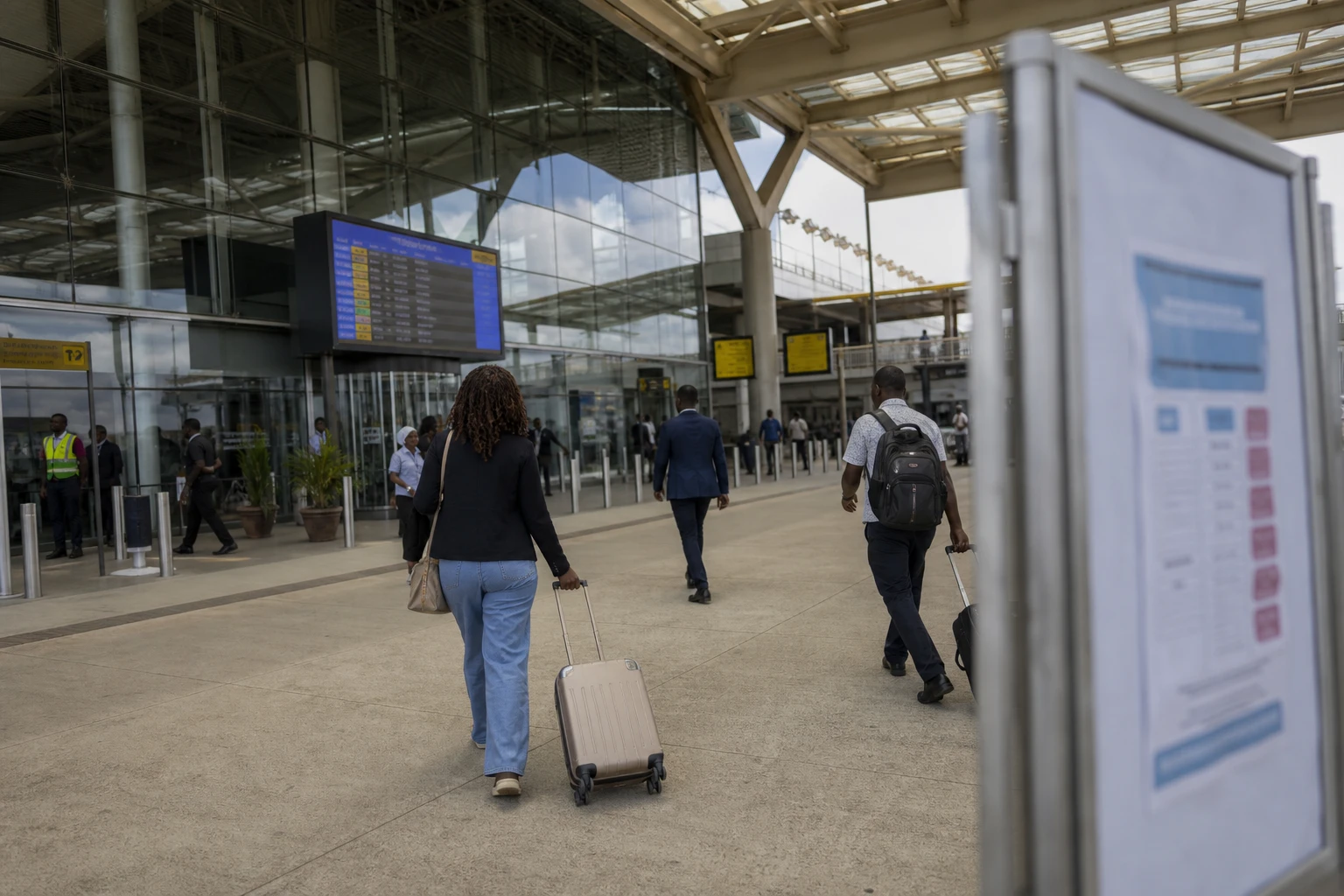
In Nairobi, an airport does more than send planes into the air. It connects Kenya to tourism, freight, business and neighbouring capitals. When traffic is disrupted, the effects quickly spill beyond the terminal, affecting schedules, contracts and the country’s image in the region. The resumption of operations announced on Tuesday at Jomo Kenyatta International Airport (JKIA) therefore signals more than a simple labour dispute: it is a reminder of how strategic a role aviation infrastructure has become in Kenya’s economy.
The labour stand-off has been suspended, not resolved
The slowdown by aviation workers began on Sunday and disrupted operations for two days at JKIA in Nairobi, as well as at other airports across the country. Passengers were stranded, flights delayed or cancelled, and activity only began to return to normal after an agreement to resume work. The sector’s union announced the end of the strike on Tuesday, while the national airline said the return to normal would remain gradual until Wednesday 2 September 2026.
The dispute remains rooted in labour issues. Workers say their conditions are inadequate and are calling for a new collective agreement, as well as clearer rules on the use of volunteer staff. In documents and statements published around the crisis, the same message recurs: employees also want commitments made during discussions to be honoured and participants in the movement to be spared sanctions.
The Kenyan government acted as mediator, alongside the Ministry of Roads and Transport, the Ministry of Labour, the Kenya Civil Aviation Authority, the airport authority and the workers’ union. At the end of the discussions, the parties agreed to an immediate return to work and to continue negotiations. It is a familiar way of ending labour crises in sensitive sectors: restart operations first, negotiate afterwards.
One airport, many interests, one shared vulnerability
JKIA is much more than a gateway for travellers. The airport handles a share of Kenya’s international traffic and plays a central role in regional and intercontinental connections. This explains why a blockage there has knock-on effects on airlines, connecting flights, freight and supply chains. The Ministry of Transport described it as a vital regional hub, while Kenya Airways confirmed that it was working to clear the backlog.
The economic stakes are immediate. Tourism remains one of Kenya’s main pillars. The national statistics office says tourist arrivals continued to rise in 2025, and that the sector still accounted for a significant share of the country’s economy in 2024. KTB, the public agency responsible for tourism promotion, also says tourism makes up a substantial share of GDP and drives demand for air links, conferences and business travel. When JKIA slows down, hotels, travel agencies, transport operators and service providers also bear the shock.
For travellers, the cost is tangible. A two-day strike is enough to derail entire itineraries. Transit passengers, business delegations and diaspora travellers are the first to be affected. For employees, by contrast, the stand-off is a way to make grievances that have gone unanswered heard. This tension is common in infrastructure sectors: even a brief interruption has a visible impact, but it often stems from longer-standing imbalances over pay, staffing or internal governance.
Kenya, the EAC and the spread of disruption
The issue extends beyond Kenya’s borders because Nairobi occupies a particular place in East Africa. Kenya is a member of the East African Community, which brings together eight partner states and seeks to advance regional integration, including in air transport. In this region, disruption at a major airport rarely remains local for long. It affects connections, transport costs and the perceived reliability of an already busy regional corridor.
This is also why the Kenyan authorities stressed the need for stability in the sector. The government sought to prevent a labour dispute from becoming a negative signal to investors, airlines and regional partners. In a country where aviation supports trade, tourism and political and diplomatic travel alike, continuity of service has become an issue of economic sovereignty as much as passenger comfort.
The continental significance is clear. Kenya wants to strengthen its role as a gateway between East Africa and the rest of the world, at a time when several African capitals are seeking to modernise their airport hubs and better integrate their markets. Every crisis at JKIA is a reminder of a simple reality: aviation competitiveness depends as much on runways and terminals as on labour relations, institutional governance and the state’s ability to defuse tensions quickly. The coming days will show whether the agreement reached on Tuesday brings lasting calm or merely a pause before a new round of negotiations.